Home Battery Storage Explained: Backup Power and Savings
A home battery stores electricity to keep your lights on during outages and, with the right utility rates, to save money. This guide explains what home batteries do, what they cost, how much backup you'd really get, when they pay off, and how they compare with a standby generator.
By Pond.com editors Updated 3 min read
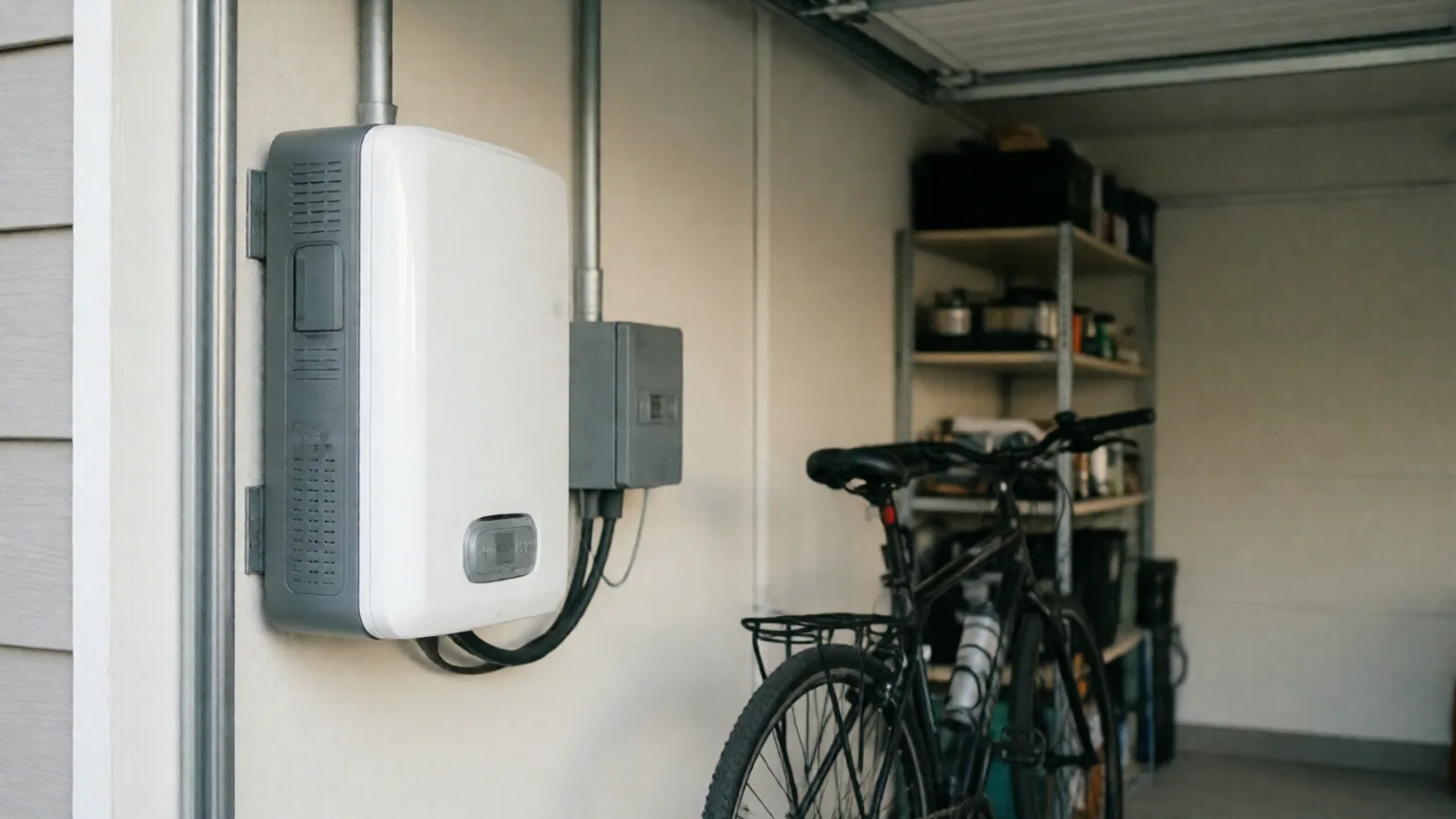
Quick answer
- A home battery stores power from the grid or solar panels and uses it later, including during outages.
- A typical battery of about 10 to 15 kilowatt-hours often costs around $10,000 to $17,000 installed.
- One battery usually backs up essential circuits like the fridge, lights, internet and some outlets, not central air or an electric range.
- Batteries save the most where utilities pay little for extra solar power or charge more at peak times.
- The federal tax credit for batteries owned by homeowners ended after 2025; check state and utility programs.
Power outages are becoming more common in many parts of the US, and more utilities charge different prices at different times of day. A home battery can help with both. It's a big purchase, though, and it doesn't make sense for every home.
This guide is general information, not financial advice. Battery installation involves high-voltage electrical work and must be done by a licensed installer.
What a home battery does
- Backup power: keeps chosen circuits running during an outage, quietly and without fuel.
- Saving with solar: stores your daytime solar power to use in the evening, instead of selling it cheaply to the utility.
- Time-of-use savings: charges when power is cheap and runs your home when it's expensive.
- Utility programs: some utilities pay you to let them draw on your battery during peak demand.
What it costs
A battery of about 10 to 15 kWh often costs around $10,000 to $17,000 installed, depending on the brand, your electrical panel and local labor. Adding a second battery costs less than the first, since some equipment is shared.
The 30% federal tax credit for batteries owned by homeowners ended after December 31, 2025. Some states and utilities still offer rebates, and batteries installed by a company under a lease may still benefit from a commercial credit.
How much backup you'll get
| What you run | A 13.5 kWh battery might last |
|---|---|
| Fridge, lights, internet, phone chargers | A day or more |
| Essentials plus a gas furnace fan | Most of a day |
| Central air conditioning or electric heat | A few hours |
With solar panels recharging it each day, essential circuits can often run for days. Most installers set up a "backup panel" with your most important circuits, rather than backing up the whole home.

When a battery pays off
- Your utility pays little for extra solar power, so storing it is worth more than exporting it. See net metering explained.
- You have time-of-use rates with a big gap between peak and off-peak prices.
- Your utility offers battery programs that pay you.
- Outages are frequent or costly, for example if you work from home or rely on medical equipment.
If your utility offers full net metering and outages are rare, a battery may be hard to justify on savings alone.
Battery or generator?
| Home battery | Standby generator | |
|---|---|---|
| Fuel | Electricity or solar | Natural gas or propane |
| Backup length | Hours to days, longer with solar | As long as fuel lasts |
| Noise and fumes | Silent, no fumes | Noisy, exhaust outdoors |
| Daily savings | Yes, with solar or time-of-use rates | No |
| Maintenance | Very little | Regular servicing |
| Typical installed cost | About $10,000 to $17,000 | Often $8,000 to $15,000 or more |
For a cheaper way to run a few essentials, see portable power stations vs generators.
Choosing a battery
- Usable capacity (kWh): how much energy it stores.
- Power output (kW): how much it can run at once, which matters for starting well pumps or air conditioners.
- Warranty: years and guaranteed capacity at the end.
- Compatibility with your solar panels and inverter.
- Installer quality: get several quotes, and check licenses and reviews. See how to get solar quotes and avoid scams.
Common questions
It depends on what you power. A 13.5 kWh battery running only essentials such as a fridge, lights, internet and phone chargers can often last a day or more, and much longer with solar panels recharging it. Running air conditioning or electric heat drains it in hours.
Usually, yes. Many batteries can be added to an existing system, though you may need a new inverter or extra equipment. Check whether your utility needs to approve the change and whether your solar warranty is affected.
Most come with a 10-year warranty that guarantees they'll keep around 70% of their original capacity. Many will keep working longer, but plan for gradual capacity loss over time.