Fish & Wildlife
Keeping goldfish and koi healthy, and making your pond welcoming to frogs, dragonflies, birds and other wildlife.
Fish ponds

Koi
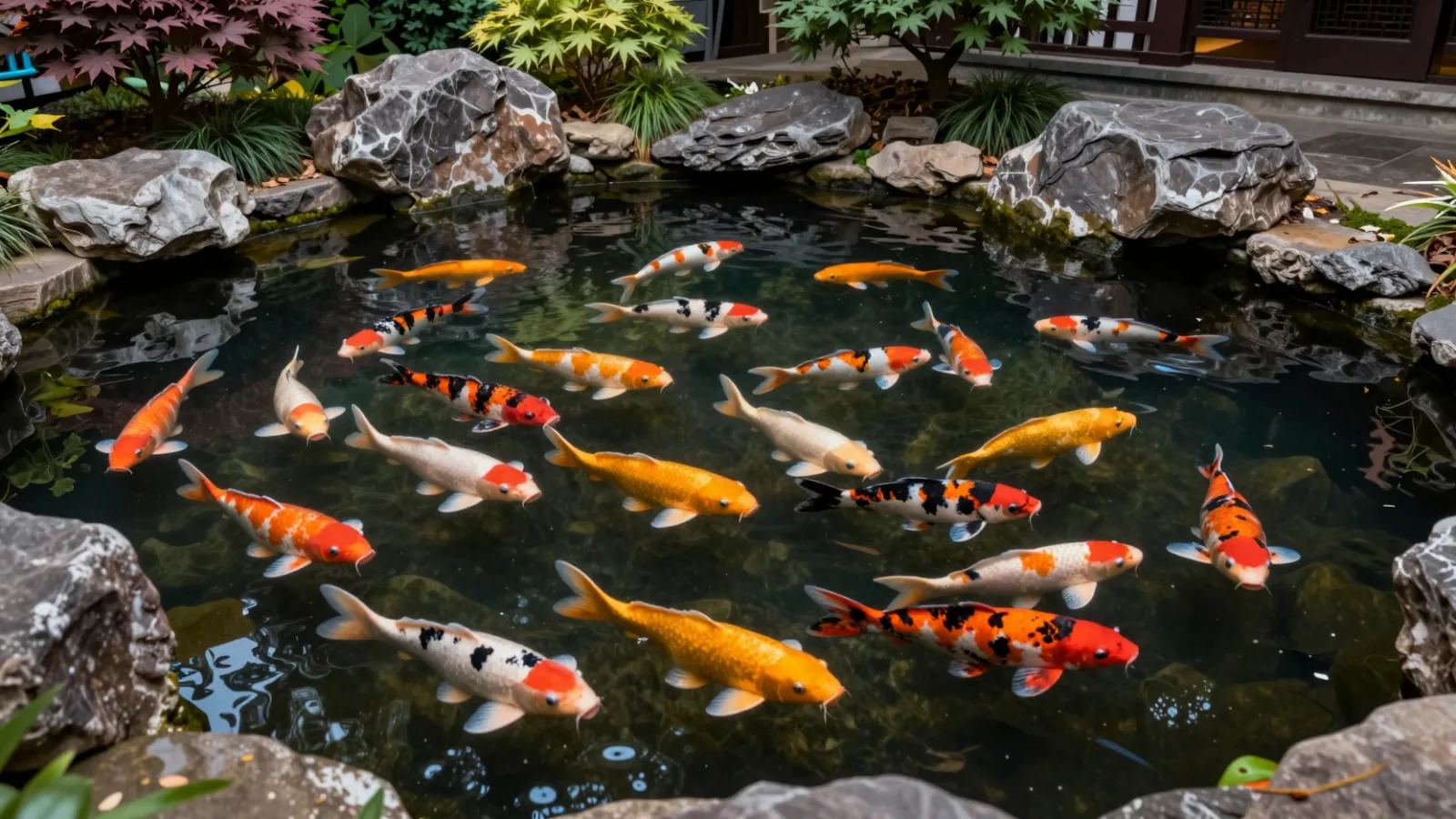
Fish, frogs and other pond life
Fish bring color and movement to a pond, and a well-planted pond quickly attracts its own wildlife. Both do best in clean, well-oxygenated water with places to hide and a pond that isn't overstocked.
Our fish pond guide covers choosing hardy fish, how many your pond can hold, feeding, and keeping water quality where fish need it. If you want the bigger, longer-lived fish that many pond owners dream of, koi ponds explains the extra depth, volume and filtration koi need.
Cold weather changes how fish behave. Pond fish in winter explains what's normal, when to stop feeding and the warning signs to watch for, and how to winterize a pond covers getting the pond ready.
For wildlife, plants matter as much as water. Marginal and floating plants give cover for frogs and insects and shade for fish; see pond plants. Strong filtration is still important in a fish pond, so check your setup against our guides to pond pumps and pond filters.
Common questions
A common rule of thumb for goldfish is about 1 inch of fish per 10 gallons of water, and much less for koi, which grow large and need at least 1,000 gallons. Start with fewer fish than you think, because they grow and breed, and good filtration matters more than any rule.
Wait at least a week or two after filling so the water reaches a stable temperature and you have treated it for chlorine. Add a few fish first, test the water regularly while the filter's bacteria build up, and add more gradually.
Give animals a way in and out with a gently sloping edge or a beach of stones, plant marginal and floating plants for cover, and avoid chemicals. Frogs, dragonflies and birds usually find a new pond on their own within a season.
Deep areas of at least 3 feet, overhangs or fish caves to hide in, and netting or a perimeter wire all help. Decoys work for a while but predators soon learn to ignore them.