Heat Pump Water Heaters Explained: Are They Worth It?
A heat pump water heater uses far less electricity than a standard electric tank by moving heat from the air instead of creating it. Here's how it works, what it costs and saves, the space and wiring it needs, the downsides to know about, and how to find rebates.
By Pond.com editors Updated 2 min read
Quick answer
- A heat pump water heater moves heat from the surrounding air into the water, using about a quarter to a third of the electricity of a standard electric tank.
- It often costs more upfront but can save hundreds of dollars a year compared with an electric tank.
- It needs space and airflow, usually in a garage, basement or large utility room, and it cools the room around it.
- Many models need a 240-volt circuit, but plug-in 120-volt models make replacing a gas heater easier.
- Rebates from utilities and state HEAR programs can cover a big share of the cost where available.
Water heating is often the second-biggest energy cost in a home, after heating and cooling. A heat pump water heater, sometimes called a hybrid water heater, can cut that cost a lot, especially if you now use a standard electric tank.
This article is general information. Water heater installation often needs a permit and should be done by a licensed plumber or electrician.
How it works
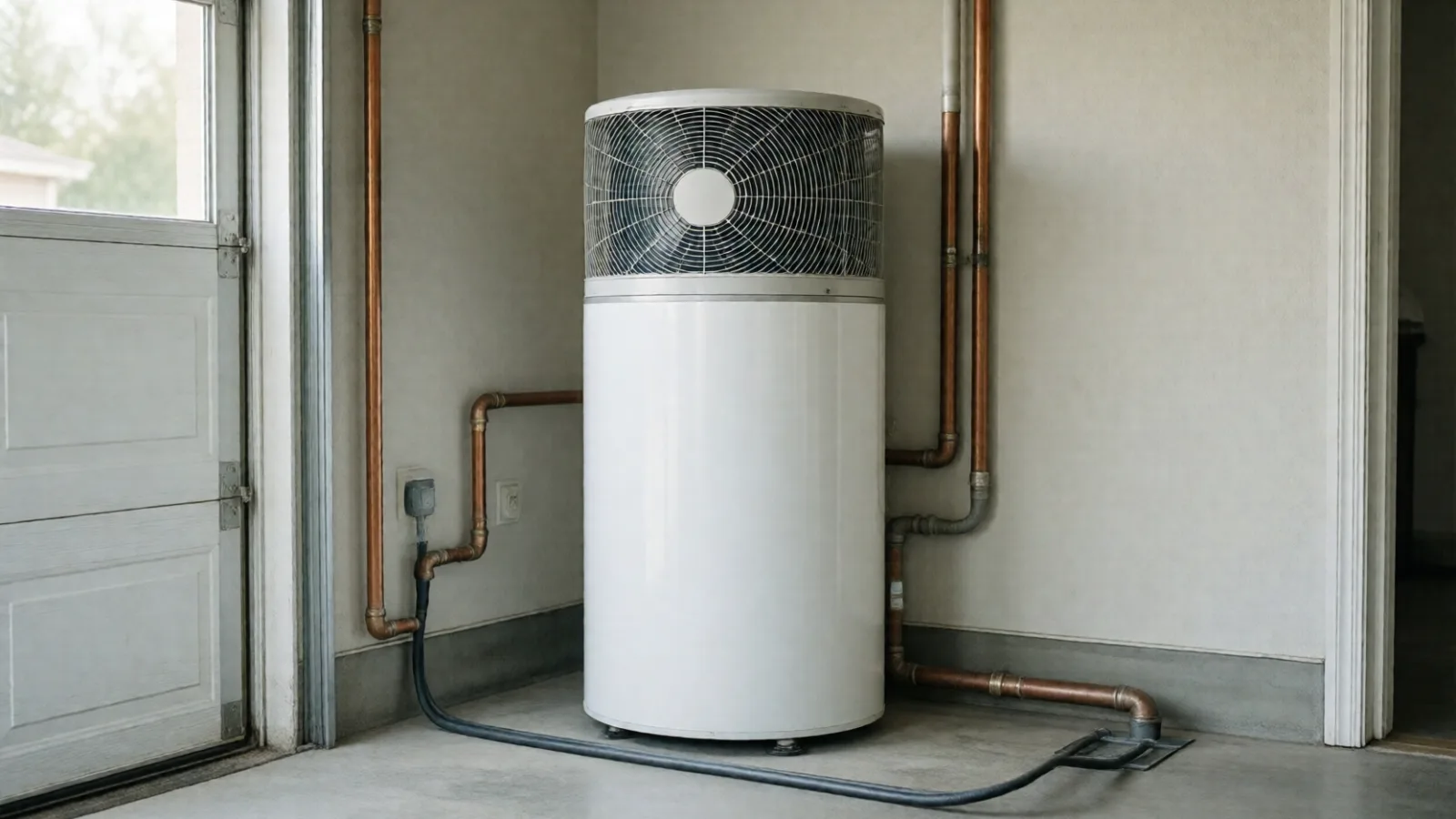
Instead of heating water directly with an electric element, a heat pump water heater pulls warmth from the surrounding air and moves it into the tank, like a refrigerator working in reverse. It has backup electric elements for times of high demand, and most models let you choose between efficiency, hybrid and electric modes.
Costs and savings
- Upfront cost: often about $1,500 to $3,500 for the unit, plus installation, which varies with your wiring and plumbing.
- Energy use: typically a quarter to a third of a standard electric tank's.
- Savings: compared with an electric tank, a family of four can often save several hundred dollars a year. Savings against a gas water heater depend on local gas and electricity prices.

What it needs
- Space and air: most need a room of several hundred cubic feet, or ducting or louvered doors in a smaller space.
- A suitable temperature: spaces that stay above about 40 to 50°F most of the year.
- A drain for condensation.
- Electrical supply: many need a 240-volt circuit. Plug-in 120-volt models work with a standard outlet, which makes replacing a gas heater simpler.
- Height: they're usually taller than standard tanks, so measure first.
Downsides to know
- It cools and dries the room, which is helpful in a hot garage but not in a cold basement in winter.
- A low hum while running.
- Slower recovery in efficiency mode; choose a bigger tank or hybrid mode for large households.
- Higher upfront cost than a standard tank.
Rebates
The federal tax credit for heat pump water heaters ended after 2025, but other help may be available:
- State HEAR rebates of up to $1,750 for eligible lower- and moderate-income households, in states that run the program.
- Utility rebates, which are common for heat pump water heaters.
- Store instant rebates in some areas.
Common questions
They work best in spaces that stay above about 40 to 50°F. In colder spaces, most switch to their built-in electric elements, which keeps hot water coming but uses more electricity. Check the model's operating range for your climate.
Typically 10 to 15 years, similar to or a bit longer than a standard tank. Clean the air filter every few months and flush the tank as recommended to keep it efficient.
It hums like a dehumidifier or a quiet refrigerator while it runs. That's rarely a problem in a garage or basement, but it can be noticeable in a closet next to a bedroom.