Pond Aerators and Air Pumps: Do You Need One?
An air pump pushes air through a stone or diffuser to add oxygen to your pond. It helps fish in hot summers, keeps a hole in the ice in winter, and costs little to run. Here's how aerators work, when you need one, how to size it, and where to put the air stone.
By Pond.com editors Updated 3 min read
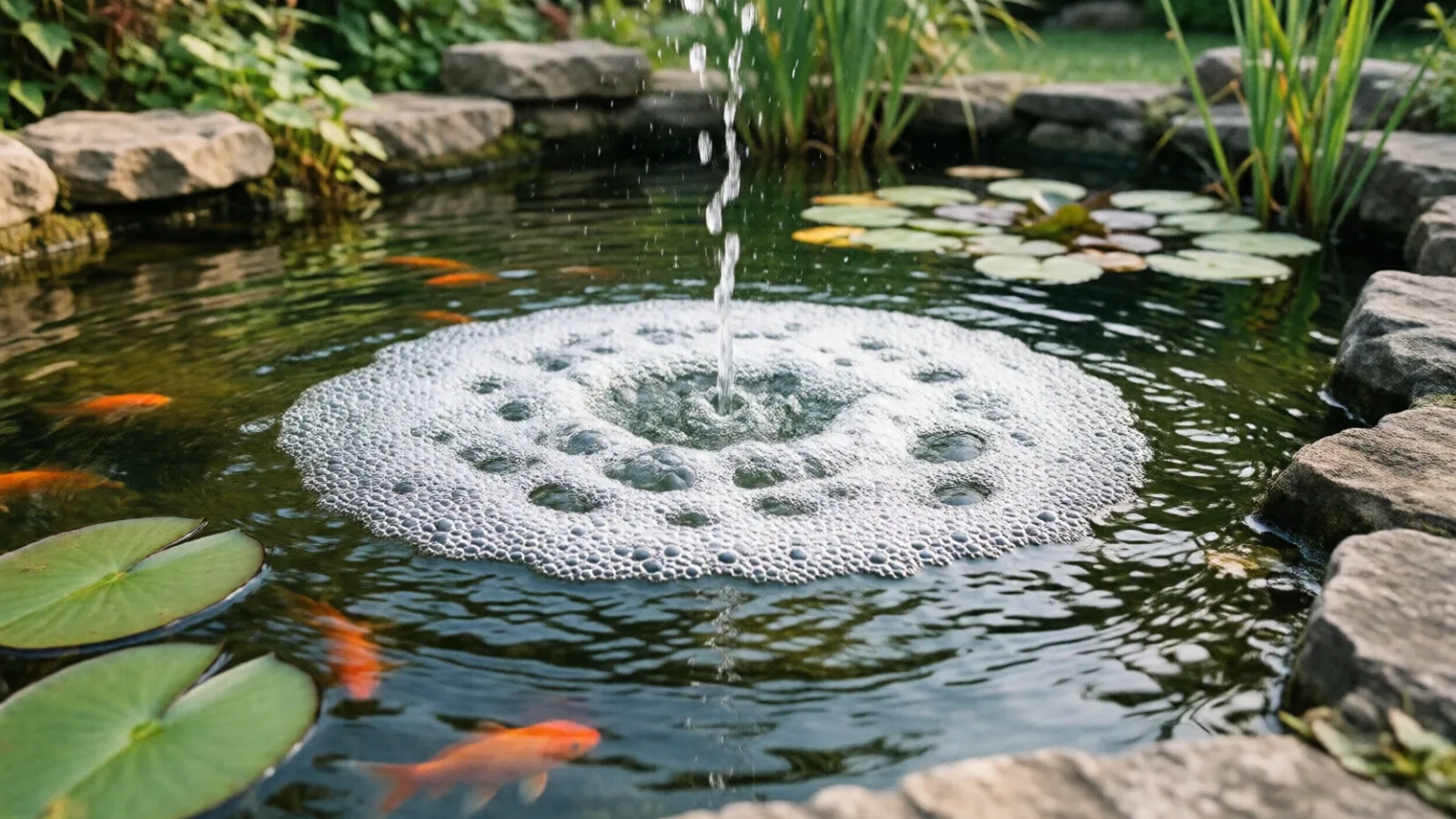
Quick answer
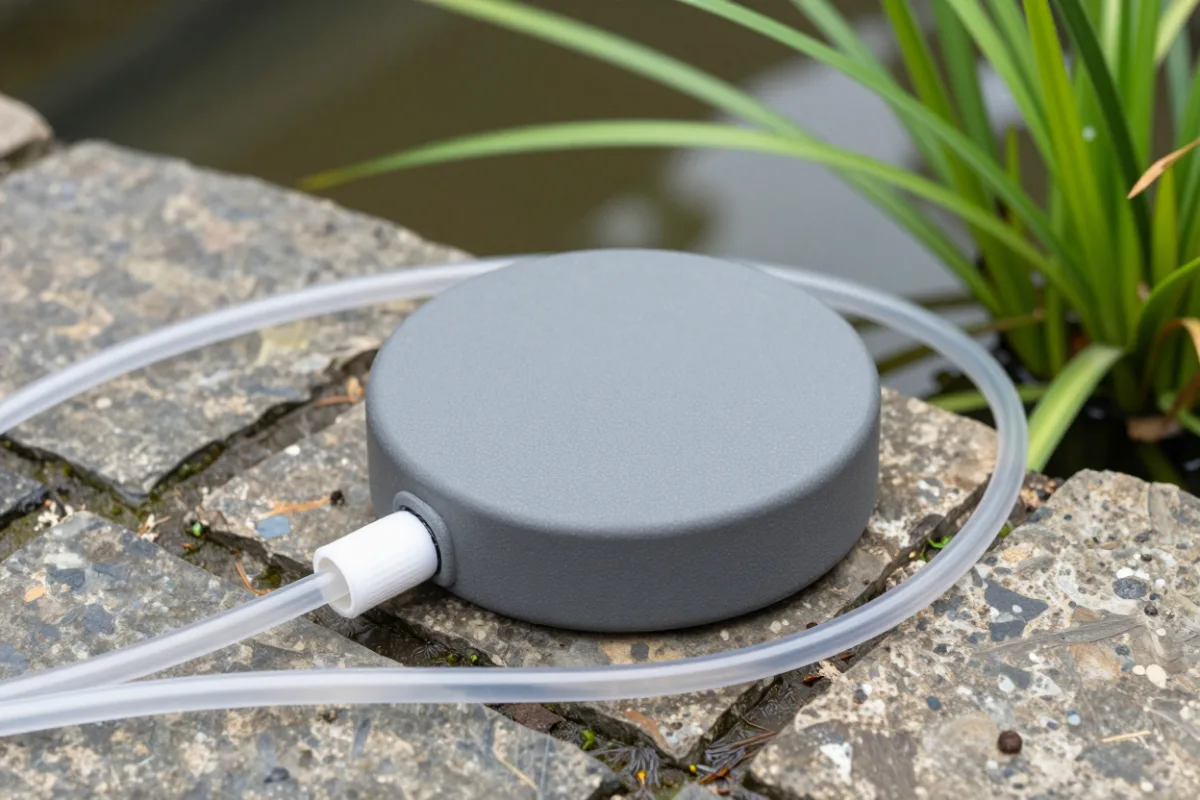
- An air pump sits outside the pond and pushes air through tubing to an air stone or diffuser in the water.
- Rising bubbles move the water and help oxygen enter it, which fish and beneficial bacteria need.
- Aeration helps most in hot weather, in ponds with lots of fish, and in ponds without a waterfall or fountain.
- In winter, an air stone set a few inches below the surface helps keep a hole open in the ice.
- Small pond air pumps use little electricity, often less than a light bulb.
Oxygen is one of the things fish need most, and one of the easiest to overlook. A pond can look perfect and still run low on oxygen on a hot night or under a sheet of ice. A small air pump is a cheap way to guard against that.
How a pond aerator works
An air pump sits outside the pond. It pushes air through airline tubing to an air stone or diffuser in the water. The rising bubbles stir the water and bring it to the surface, where oxygen enters and gases escape.
This is different from your main water pump, which moves water through the filter, waterfall or fountain. See pond pumps.
Does your pond need one?
An air pump is a good idea if:
- You have many fish or koi
- Your pond has no waterfall or fountain
- Summers are hot; warm water holds less oxygen
- You see fish gasping at the surface, especially early in the morning
- Your pond freezes over in winter
You may not need one if your pond has a strong waterfall or fountain, few fish and mild weather. Even so, many owners keep one as a backup in case the main pump fails.
Sizing
Pond air pumps are usually rated by how much air they move and the pond size they suit. As a rough guide:
| Pond size | Typical setup |
|---|---|
| Up to about 1,000 gallons | Small pump with 1 or 2 air stones |
| 1,000 to 3,000 gallons | Medium pump with 2 to 4 stones |
| Larger or koi ponds | Larger pump or diffuser system |
Deeper ponds need a pump that can push air to that depth. Check the maker's rating, and size up for heavily stocked ponds.
Where to put the air stone
- Spring to fall: place the stone near the bottom, in a deeper area, so it moves the whole pond.
- Winter: raise it to a few inches below the surface. This keeps a hole open in the ice without chilling the deeper water where fish rest. See pond fish in winter.
Installing and running it
- Place the pump somewhere dry and sheltered, ideally above the water level.
- Use a check valve in the tubing if the pump sits below the water level, to stop back-siphoning.
- Plug into a GFCI-protected outdoor outlet.
- Clean or replace air stones when bubbles get weaker.
Small air pumps often use under 10 to 40 watts, so they're inexpensive to run all year.
Common questions
Yes. Most pond owners run their air pump all year. In winter, raise the air stone to a few inches below the surface so it doesn't mix the warmer bottom water with the cold surface water where fish rest.
A waterfall or fountain adds a lot of oxygen, so many ponds with one don't need an extra aerator. An air pump still helps on hot nights, in heavily stocked ponds, and in winter when you've turned the waterfall off.
Keep the pump itself out of the water, somewhere dry and sheltered, and above the water level if you can, so water can't siphon back into it. Many people mount it in a small box or shed near the pond.
Step 14 of 15 in the complete pond guide Next: Pond Algae: How to Get Rid of It and Keep It Away