Pond Algae: How to Get Rid of It and Keep It Away
Every pond has some algae, and a little is healthy. Here's how to tell the harmful kinds from the harmless ones, why algae takes over, and how to clear green water and string algae for good.
By Pond.com editors Updated 5 min read

Quick answer
- Algae feeds on sunlight and nutrients, mostly from fish waste, uneaten food and rotting leaves. Cut those and algae fades.
- Green water is free-floating algae. A UV clarifier is the most reliable fix.
- String algae grows on rocks and waterfalls. Pull it out by hand and reduce nutrients to stop it coming back.
- Plants covering around half the surface, a good filter and light feeding keep most ponds clear.
- A thin green or brown film on rocks and the liner is harmless and good for the pond, so leave it.
Every pond has algae, and some of it is a good thing. Problems start when it takes over, turning the water to pea soup or wrapping the waterfall in green strands. The good news is that algae always grows for the same reasons. Once you understand those, it's much easier to control.
This guide explains the main types of pond algae, what causes them, and the fixes that work.
Types of pond algae
| Type | What it looks like | Harmful? | Best fix |
|---|---|---|---|
| Green water | Water like pea soup, so you can't see more than a few inches down | In heavy blooms | UV clarifier, plus fewer nutrients |
| String algae (blanket weed) | Long green strands on rocks, waterfalls and plants | Clogs pumps and filters | Remove by hand, plus fewer nutrients |
| Surface scum or mats | Floating green or brown mats | Blocks light and oxygen | Net it off, then find the cause |
| Film on rocks and liner | A thin green or brown fuzz | No, it's beneficial | Leave it |
That thin film on your rocks and liner is part of a healthy pond. It uses up nutrients, gives fish something to graze on and shelters helpful bacteria. Don't scrub it off.
What causes algae?
Algae needs two things: light and nutrients. Nitrogen and phosphorus from these sources feed it:
- Fish waste. The more fish, the more nutrients.
- Uneaten food. Overfeeding is one of the most common causes of algae.
- Rotting leaves and plant debris that sink to the bottom.
- Runoff from lawns and flower beds, carrying fertilizer into the pond.
- Tap water, which can contain phosphates.
Algae thrives in warm, sunny, still water, so blooms are worst in spring and summer, in ponds with lots of sun and in ponds with poor circulation. It also tends to bloom in new ponds, before plants and filter bacteria are established.
How to clear green water
Green water is caused by billions of tiny free-floating algae. They're so small they pass straight through most filters.
- Add a UV clarifier. It's the most reliable fix. As water flows past the UV bulb, the algae are damaged and clump together, so the filter can catch them. Most ponds clear within a week or two. See our pond UV filter guide.
- Check your filter. Make sure it's sized for your pond and that the pump is turning the water over every 1 to 2 hours. Our pond filter guide explains how.
- Cut the nutrients using the steps below, so the algae doesn't come straight back.
How to get rid of string algae
String algae grows attached to surfaces, so it never passes through a UV clarifier.
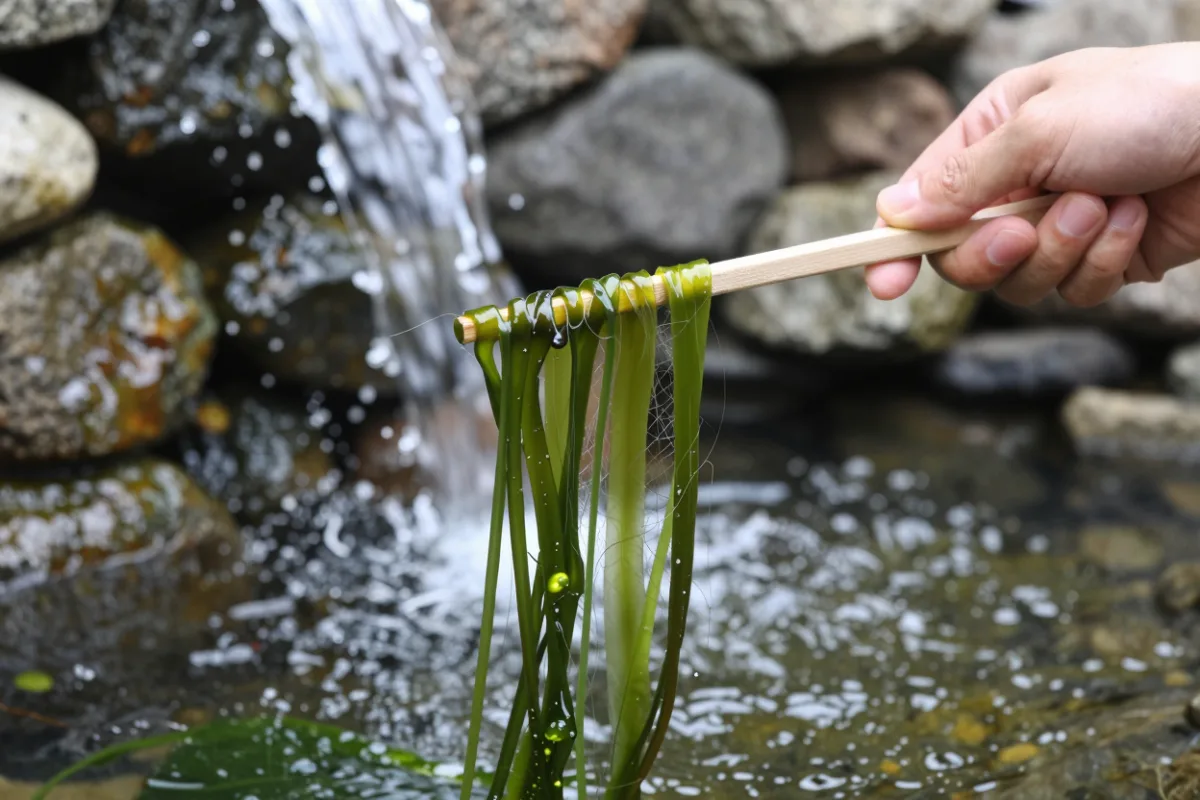
- Remove it by hand. Twist it around a stick or a stiff brush and lift it out. Do this regularly, before it spreads.
- Clear it from the pump intake and filter, where it causes blockages and cuts the flow.
- Cut the nutrients. String algae is a sign of too many nutrients in the water.
- Try a pond treatment. Beneficial-bacteria and enzyme products made for string algae can help. Always follow the label.
Keep algae away for good
Treating algae clears it. Starving it keeps it away.
Add more plants
Plants compete with algae for both light and nutrients.
- Shade the surface. Aim for plants to cover around half the water's surface. Water lilies are ideal.
- Add submerged plants. Hornwort is a hardy option native to North America. It grows underwater and soaks up nutrients.
- Plant the margins. Marginal plants on the shelves filter nutrients from the water around them.
Our pond plants guide has more ideas for plants that help keep water clear.
Feed fish less
Give fish only what they eat in 2 to 3 minutes, once or twice a day in warm weather, and scoop out any leftovers. When the water drops below about 50°F, cut back sharply. Fish digest very slowly in cold water.
Keep the pond clean
- Net out leaves before they sink, especially in fall. A pond net over the water makes this easy.
- Remove sludge from the bottom with a pond vacuum once or twice a year.
- Don't overstock. Too many fish produce more waste than the pond can handle.
Keep the water moving
Algae loves still water. Run your pump around the clock, and turn the pond's volume over every 1 to 2 hours, or every hour for koi. A waterfall or fountain adds oxygen too.
What size pump do you need? The pump calculator works out the flow rate in seconds. Open calculatorDo partial water changes
Replacing about 10% of the water every week or two dilutes nutrients. Use a dechlorinator with the new water, and avoid changing large amounts at once.
What about algaecides?
Algaecides kill algae quickly, but they treat the symptom, not the cause, and the algae will return unless you deal with the nutrients. Used carelessly, they're also risky:
- A sudden die-off uses up oxygen as the dead algae rots, which can suffocate fish. Treat in stages and add aeration.
- Remove dead algae with a net so it doesn't rot in the pond.
- Only use products made for fish ponds, and follow the dose for your pond's exact volume.
Some owners use barley straw or barley extract instead. It works slowly and results vary, but it's gentle and may help prevent algae if you add it early in the season.
Common questions
A little is fine, and fish graze on it. The danger comes from a heavy bloom. At night algae uses up oxygen, and a big die-off rots and uses even more, which can suffocate fish. Water with lots of algae can also swing widely in pH.
Almost every new pond turns green in its first few weeks. The filter's bacteria and the plants haven't yet built up enough to compete with algae for nutrients. It usually clears on its own within a month or two.
No. Draining removes the helpful bacteria and resets the pond, so algae comes back quickly, often worse. Partial water changes, removing sludge and the steps in this guide work much better.
Some pond owners find it helps prevent algae, especially string algae, but results vary and it works slowly. It's best used early in the season as a prevention, not as a quick fix for a pond that's already green.
Products made for fish ponds are safe when used exactly as directed. The bigger risk is killing too much algae at once. As it rots, it can use up the oxygen fish need. Treat in stages, add aeration and remove dead algae.
More on algae & green water
Step 15 of 15 in the complete pond guide Back to the full guide