Do You Need a Pond De-Icer?
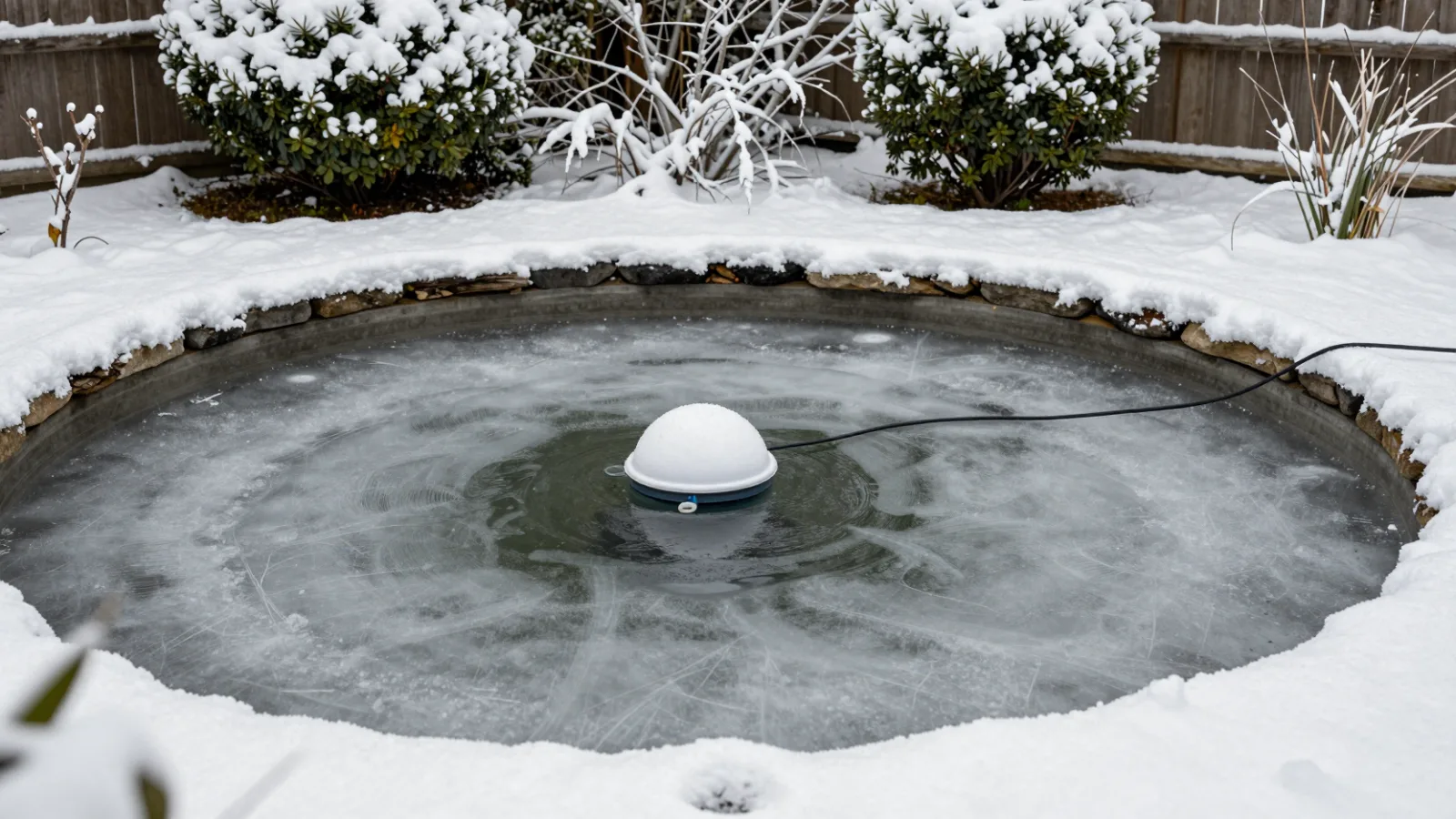
If your pond freezes over and has fish, keeping a small hole in the ice is important. Here's when you need a pond de-icer, how they work, the alternatives, what size to buy and what it costs to run.
By Pond.com editors Updated 3 min read
Quick answer
- You need a de-icer or an air pump if your pond freezes over for days at a time and has fish.
- A de-icer doesn't heat the whole pond; it keeps a small hole open so gases can escape.
- Floating de-icers with a built-in thermostat switch on only when the water nears freezing, which keeps running costs down.
- Most small and medium garden ponds need only a 100- to 300-watt de-icer, unless winters are very cold.
- An air pump with the air stone near the surface is a lower-cost alternative in moderate climates.
When a pond freezes over, it isn't the cold that harms fish. It's the gases from rotting leaves and fish waste that get trapped under the ice. A pond de-icer solves this by keeping a small hole open all winter. But not every pond needs one.
When you need a de-icer
You probably need a de-icer, an air pump or both if:
- Your pond has fish, and
- Its surface freezes over for more than a day or two at a time.
You probably don't need one if your pond rarely freezes, or freezes only overnight. Plant-only ponds and wildlife ponds without fish are much less sensitive, though an open hole still helps frogs and other wildlife.
How a de-icer works
A pond de-icer is a small, low-wattage heater designed to float on the surface or sit just below it. It doesn't warm the whole pond. It keeps a small area around it free of ice, so gases can escape and oxygen can get in.
| Type | How it works | Good to know |
|---|---|---|
| Floating de-icer | Floats on the surface and melts a hole around it | The most common type; easy to see if it's working |
| Sinking or submersible de-icer | Sits a little below the surface and warms the water above it | Less visible; check the depth instructions |
| Thermostatically controlled | Switches on only when the water nears freezing | Saves a lot of electricity; choose this kind |
Fish spend winter resting near the bottom, where water stays around 39°F. A de-icer shouldn't change that.
Alternatives and partners
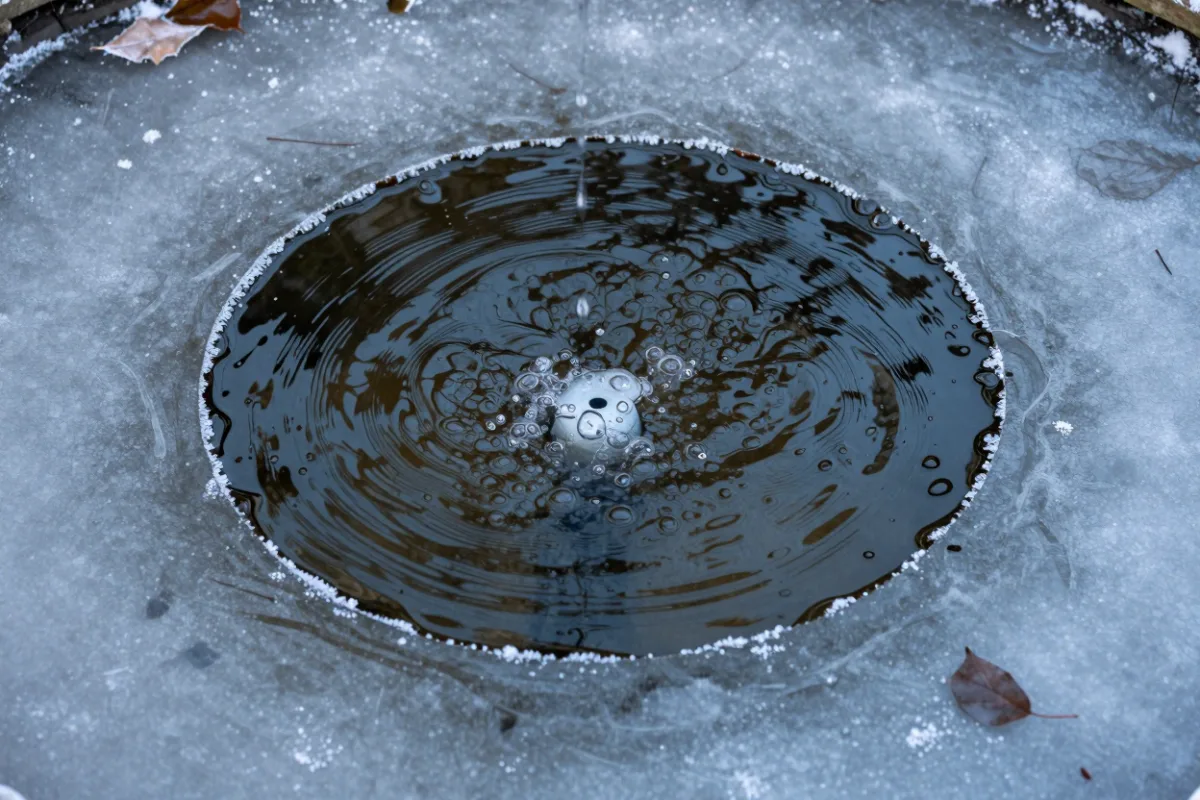
- An air pump with the air stone placed a few inches below the surface keeps water moving and helps hold a hole open. It uses little electricity. In very cold areas, ice can still close over, so many owners pair an air pump with a de-icer.
- A small pump near the surface can work, but avoid running a pump from the bottom of the pond in winter, which mixes cold surface water down to where the fish rest.
- Turning off waterfalls and streams is wise in freezing weather. Ice can build up and divert water over the edge, draining the pond.
What size to buy
De-icers are rated in watts. Bigger isn't always better: you only need enough to keep a hole open.
| Your winters | Typical size for a small to medium garden pond |
|---|---|
| Moderate (occasional hard freezes) | About 100 to 300 watts |
| Cold (long stretches below freezing) | About 300 to 750 watts |
| Very cold (deep freezes, large ponds) | 750 watts or more, or more than one unit |
Follow the manufacturer's sizing guide for your pond's size and your climate.
Running costs
To estimate the worst case, multiply the wattage by 24 hours, divide by 1,000 to get kilowatt-hours, and multiply by your electricity price.
Example: a 300-watt de-icer running all day uses 7.2 kWh. At 17 cents per kWh, that's about $1.20 a day. A thermostat-controlled model runs only when needed, so it usually costs much less over a winter.
Safety
- Use a de-icer made for ponds, with a thermostat and automatic shut-off.
- Plug it into a GFCI-protected outdoor outlet, and use only outdoor-rated cords.
- Check the cord and unit for damage before each winter.
- Keep it away from the liner if the manufacturer recommends it, especially in shallow ponds.
Common questions
No, and they don't need to. Fish rest near the bottom, where the water stays around 39°F. A de-icer only keeps a small hole open at the surface so gases from decaying material can escape and oxygen can get in.
It depends on the wattage, how often it runs and your electricity price. A 300-watt de-icer running around the clock uses about 7.2 kWh a day, roughly $1.20 a day at 17 cents per kWh. Models with a thermostat run only when needed, so real costs are usually much lower.
In moderate climates, often yes. Bubbles rising near the surface keep water moving and can hold a hole open. In very cold regions, ice can still close over, so many owners use an air pump and a de-icer together.
You can keep a small pump running near the surface, but don't run it from the bottom of the pond, which mixes the warmer bottom water with the cold surface and chills the fish. Waterfalls and streams can also form ice dams and drain the pond.
Choose one made for ponds, with a thermostat and automatic shut-off, and plug it into a GFCI-protected outdoor outlet. Check the cord for damage each fall, and never use an indoor heater or extension cord not rated for outdoor use.
Step 14 of 15 in the complete pond guide Next: Pond Algae: How to Get Rid of It and Keep It Away