Lawn Care Through the Year: Mowing, Watering and Feeding
A healthy lawn comes from mowing high, watering deeply and feeding at the right time for your type of grass. Here's how to tell which grass you have and what to do in each season.
By Pond.com editors Updated 5 min read

Quick answer
- First, find out whether your grass is cool-season (common in the North) or warm-season (common in the South). It decides when you feed and seed.
- Never cut off more than a third of the grass blade at once, and mow on the high side for your grass type.
- Water deeply and less often, about 1 inch a week including rain, early in the morning.
- Feed cool-season grass mainly in fall, and warm-season grass in late spring and summer.
- Leave grass clippings on the lawn. They return nutrients to the soil.
A great lawn isn't about expensive products. It comes down to three habits: mowing high, watering deeply and feeding at the right time for your grass. Get those right and the grass grows thick enough to crowd out most weeds on its own.
This guide explains how to identify your type of grass and what to do in each season.
Step 1: Know your grass type
US lawn grasses fall into two groups, and they need care at different times of year.
| Cool-season grasses | Warm-season grasses | |
|---|---|---|
| Where | The North, Midwest, mountains and Pacific Northwest | The South and Southwest |
| Grows best | Spring and fall, at 60 to 75°F | Summer, at 80 to 95°F |
| In winter | Stays mostly green | Goes brown and dormant |
| Common types | Kentucky bluegrass, tall fescue, perennial ryegrass, fine fescues | Bermuda, zoysia, St. Augustine, centipede, Bahia |
| Main feeding time | Early fall | Late spring and summer |
In the "transition zone" across the middle of the country, both types are grown. Tall fescue and zoysia are common there. If you're not sure what you have, take a sample to a garden center or your county's cooperative extension office.
Step 2: Mow high, and little and often
Mowing is the job you do most, and it has the biggest effect.
- Follow the one-third rule. Never cut off more than a third of the grass blade at once. Cutting more stresses the grass and lets weeds in.
- Mow on the high side. Taller grass grows deeper roots, shades out weed seeds and copes better with drought.
- Keep the blade sharp. A dull blade tears grass, leaving brown, ragged tips. Sharpen it at least once a year.
- Leave the clippings. They break down fast and feed the lawn.
- Vary your pattern now and then to avoid ruts and grass leaning one way.
| Grass | Typical mowing height |
|---|---|
| Tall fescue | 3 to 4 in |
| Kentucky bluegrass | 2.5 to 3.5 in |
| Perennial ryegrass | 2 to 3 in |
| St. Augustine | 2.5 to 4 in |
| Zoysia | 1 to 2.5 in |
| Bermuda | 1 to 2 in |
Raise the mower deck by about half an inch in summer heat to help the grass cope.
Step 3: Water deeply, not daily
- Aim for about 1 inch a week, including rain, in one or two deep waterings. Deep watering grows deep roots; light daily watering grows shallow ones.
- Water early in the morning. Less water evaporates, and the grass dries off before evening, which reduces disease.
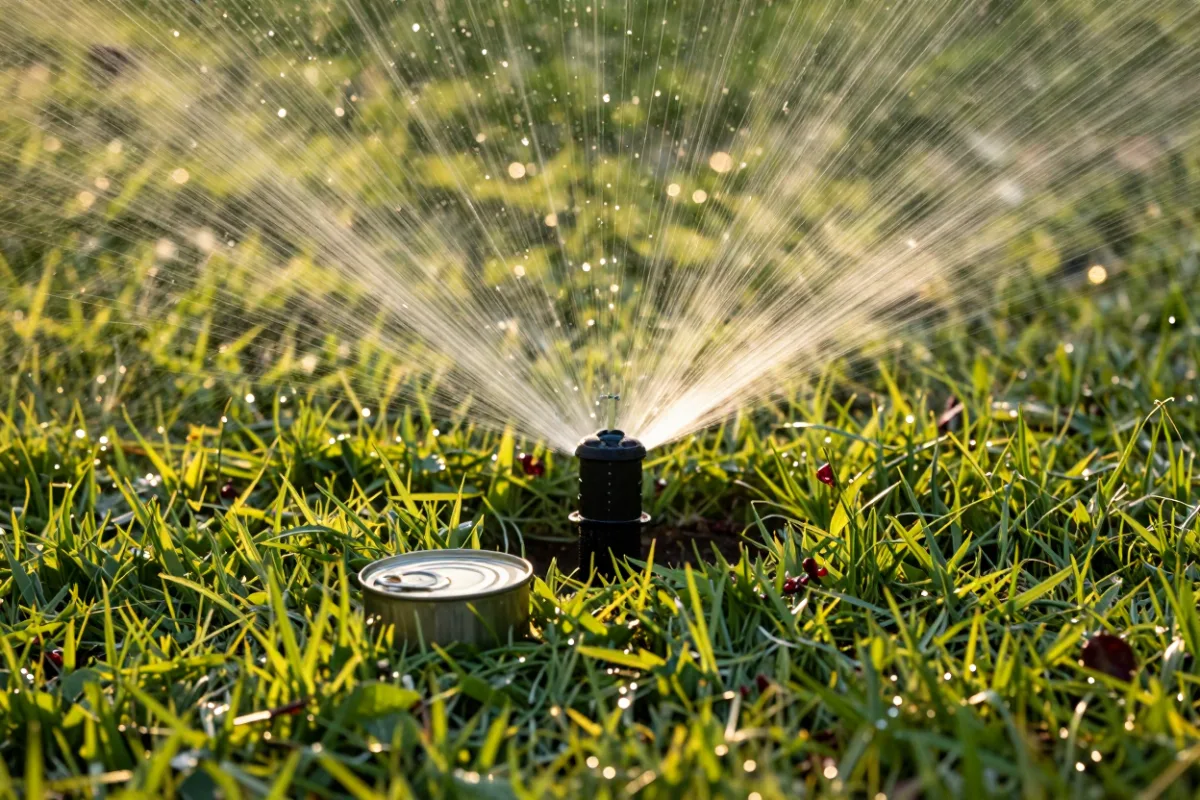
- Measure it. Put an empty tuna can on the lawn while the sprinkler runs. When it holds an inch of water, you're done.
- Let it go dormant in drought if water is restricted. Healthy cool-season grass usually recovers when rain returns, but water about half an inch every two or three weeks to keep the roots alive.
Step 4: Feed at the right time
Grass needs nitrogen most, but timing matters more than quantity.
- Get a soil test first. Your county extension office can test your soil for a small fee and tell you exactly what it needs, including whether you need lime.
- Follow the label rate. More fertilizer doesn't mean a better lawn. Excess washes into storm drains, streams and ponds.
- Choose slow-release fertilizer, which feeds the grass gradually and is less likely to wash away.
- Check local rules. Some states and towns limit phosphorus in lawn fertilizer, or ban fertilizing before heavy rain or near water.
Your lawn care year
Cool-season lawns
- Early spring: rake up debris, and apply pre-emergent weed control before crabgrass sprouts, usually when forsythia blooms.
- Late spring: light feed; start mowing regularly.
- Summer: mow high, water deeply, and don't fertilize during heat waves.
- Early fall: the most important season. Aerate compacted soil, overseed thin areas and feed.
- Late fall: final feed for strong spring growth, keep mowing until growth stops, and rake leaves so they don't smother the grass.
Warm-season lawns
- Spring: apply pre-emergent weed control as the soil warms, and start mowing once the grass greens up.
- Late spring to summer: feed while the grass is actively growing, and seed or patch bare spots.
- Summer: water deeply and mow regularly.
- Fall: stop feeding about six weeks before your first frost, and let the grass slow down.
- Winter: the grass is dormant. Keep off frosted grass, and keep fallen leaves off it.
Fixing common problems
- Bare or thin patches: loosen the soil, add a little compost and seed at the right time for your grass type. Keep the seed moist until it sprouts.
- Compacted soil: if a screwdriver won't push into moist soil easily, rent a core aerator in your grass's growing season.
- Lots of weeds: a thick lawn is the best weed control. Mow higher, feed at the right time and overseed thin areas.
- Moss: usually a sign of shade, poor drainage or acidic soil. Fix the cause, or replace grass with a shade-loving ground cover.
Common questions
As often as needed to avoid cutting more than a third of the blade at once. In the main growing season that's usually once a week, sometimes more. Mow less in summer heat and drought.
About 1 inch a week, including rain, in one or two deep waterings. Place an empty tuna can on the lawn while the sprinkler runs to see how long it takes to collect an inch.
For cool-season grasses, early fall is most important, with a lighter feed in late spring. For warm-season grasses, feed from late spring through summer while the grass is actively growing.
Leave them. Short clippings break down quickly and can supply up to about a quarter of the lawn's nitrogen. They don't cause thatch.
Early fall is best for cool-season grasses, when the soil is warm but the air is cooler. Warm-season grasses are best seeded or patched in late spring and early summer.