Cool-Season vs Warm-Season Grass
Knowing whether your lawn is a cool-season or warm-season grass tells you when to mow, feed, seed and water. Here's how the two types differ, which grows best where you live, and how to identify your lawn.
By Pond.com editors Updated 2 min read

Quick answer
- Cool-season grasses grow best in spring and fall and are common in the northern half of the US.
- Warm-season grasses grow best in summer heat, go dormant and brown in winter, and are common in the South.
- Common cool-season types include Kentucky bluegrass, tall fescue, fine fescues and perennial ryegrass.
- Common warm-season types include Bermuda, zoysia, St. Augustine, centipede and buffalograss.
- The type decides your timing. Cool-season lawns are seeded and fed mainly in fall, and warm-season lawns in late spring and summer.
Every lawn care calendar starts with one question: is your grass a cool-season or warm-season type? The two groups grow at different times of year, so they need mowing, feeding, seeding and watering on different schedules.
The two types at a glance
| Cool-season grasses | Warm-season grasses | |
|---|---|---|
| Best growth | Spring and fall, around 60–75°F | Summer, around 80–95°F |
| Where | Northern US and higher elevations | Southern US |
| Winter | Stay green longer; slow down in cold | Go dormant and turn tan or brown |
| Summer | Can struggle in heat and drought | Thrive in heat |
| Common types | Kentucky bluegrass, tall fescue, fine fescues, perennial ryegrass | Bermuda, zoysia, St. Augustine, centipede, buffalograss |
| Best time to seed | Early fall | Late spring to early summer |
Where each grows best
- North: cool-season grasses, which handle cold winters.
- South: warm-season grasses, which handle heat and humidity.
- Transition zone: roughly the middle of the country, where both struggle at times. Tall fescue and zoysia are popular there.
- Dry West: buffalograss and other drought-tolerant types, or less lawn altogether.
Your local cooperative extension service can recommend the best varieties for your area.
How to tell what you have
- When it's green: green in cool months and stressed in summer suggests cool-season grass; brown in winter and lush in summer suggests warm-season grass.
- How it spreads: many warm-season grasses spread with runners (stolons) above ground, while most cool-season grasses grow in clumps or spread underground.
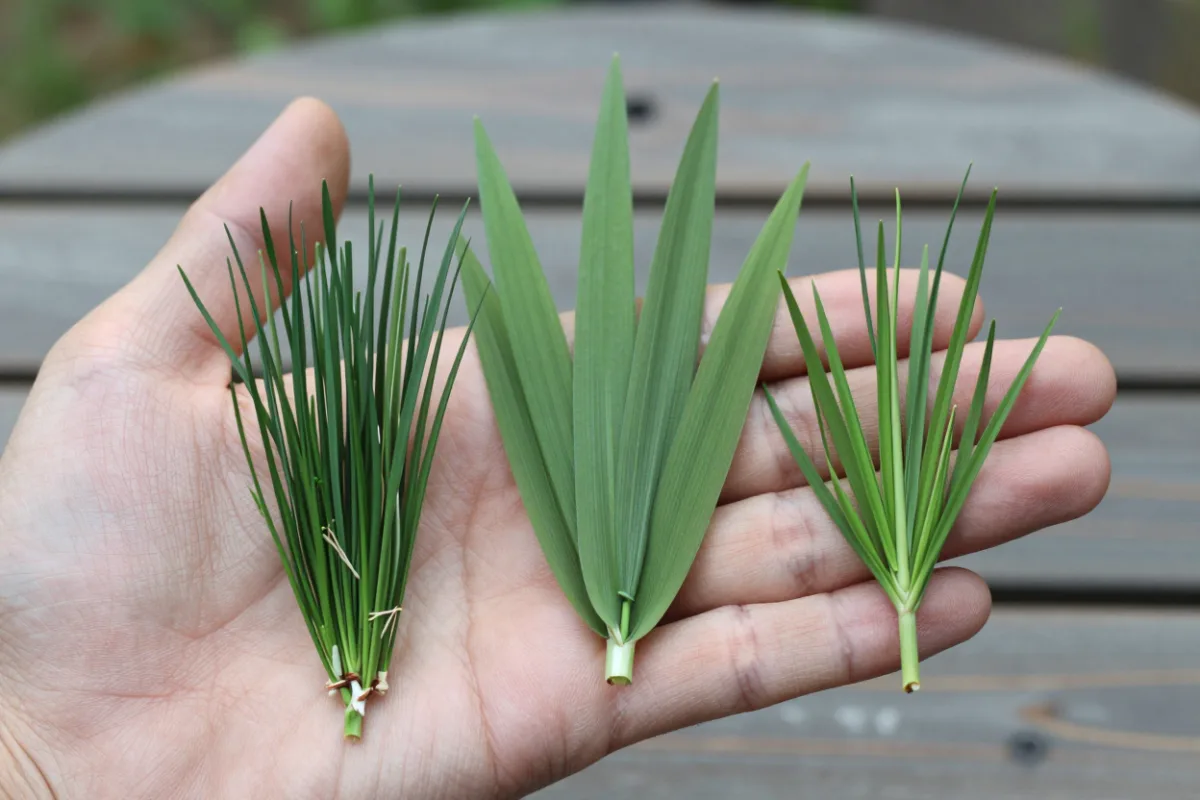
- Blade shape: St. Augustine has wide, flat blades; Bermuda has fine blades and wiry runners; fine fescues have very narrow, needle-like blades.
A garden center or extension office can identify a sample for you.
How care timing differs
| Task | Cool-season | Warm-season |
|---|---|---|
| Main feeding | Fall, plus lighter spring feeding | Late spring through summer |
| Aerating and seeding | Early fall | Late spring to early summer |
| Mowing height | Usually higher, around 2.5 to 4 inches | Varies; Bermuda and zoysia lower, St. Augustine higher |
See how to aerate and overseed a lawn and how to fix bare patches for step-by-step instructions.
Common questions
The transition zone, roughly across the middle of the country, is challenging for both types. Tall fescue is the most common cool-season choice there, and zoysia and some Bermuda varieties are common warm-season choices.
If you have a warm-season grass, it goes dormant and turns tan or brown after the first frosts, then greens up again in spring. That's normal. Some people overseed with ryegrass for winter color, though it competes with the lawn in spring.
It's usually not recommended, because they look different and need care at different times of year, so the lawn ends up patchy. Many seed mixes do combine several cool-season grasses, which works well.