How to Plan a Patio or Deck
A patio or deck turns a yard into an outdoor room. Here's how to choose between them, where to put it, how big to make it, which materials last, and when you need a permit or a professional.
By Pond.com editors Updated 5 min read
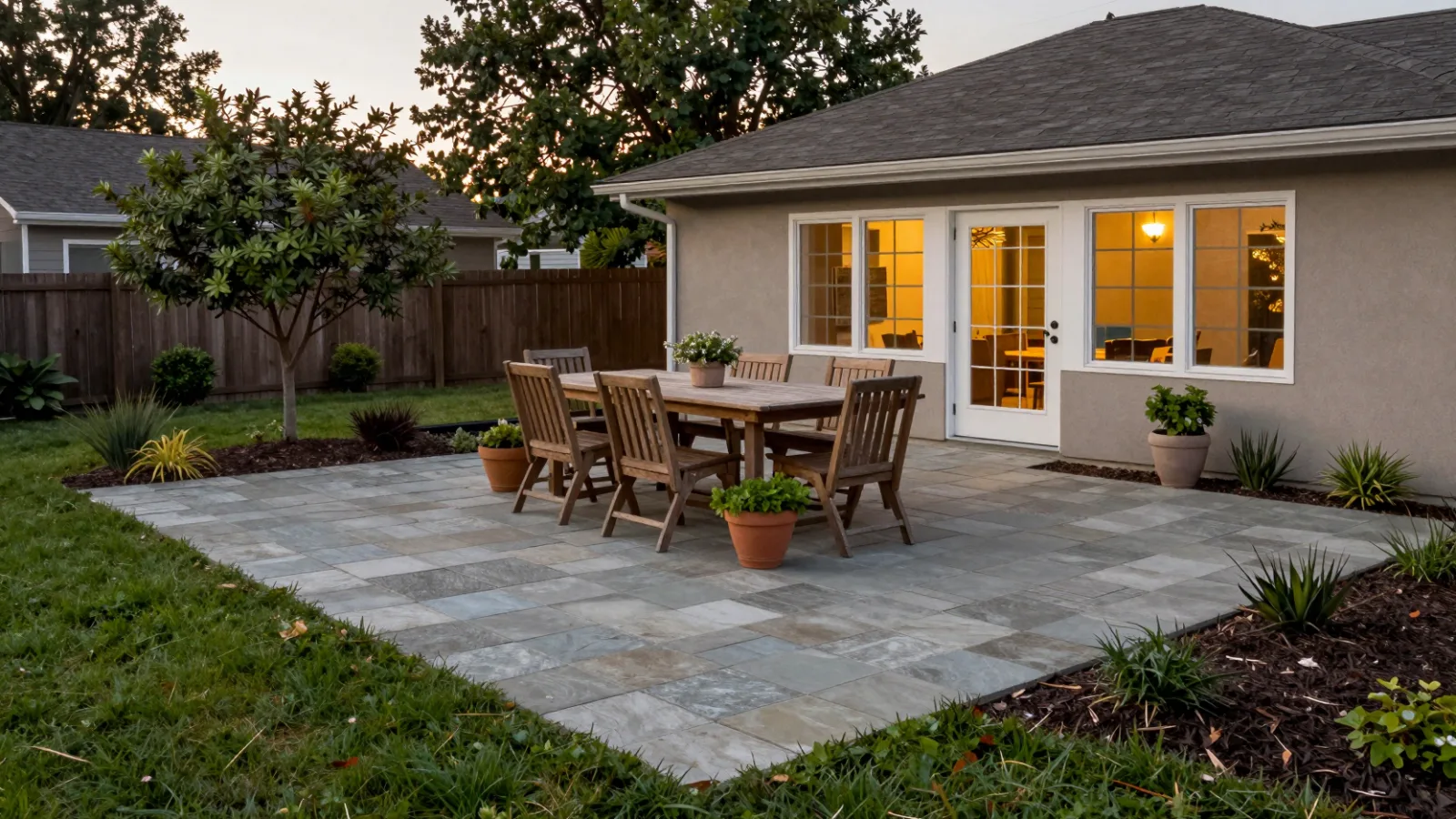
Quick answer
- A patio sits on the ground and suits flat yards. A deck is a raised wooden or composite platform and suits slopes and raised doorways.
- Put it close to the kitchen door, in the spot where you'd actually want to sit, with some shade for hot afternoons.
- Allow at least about 12 × 12 ft for a table and four chairs, and more for a grill or lounge chairs.
- Patios should slope slightly away from the house so rain drains off.
- Raised or attached decks usually need a building permit, and decks more than 30 in off the ground need railings.
A patio or deck is often the most-used part of a garden. It's where you eat, relax and entertain, so it's worth planning carefully. Get the location and size right, and it becomes an outdoor room you use from spring to fall. Get them wrong, and it sits empty because it's too small, too hot or too far from the kitchen.
This guide helps you choose between a patio and a deck, then plan its location, size and materials.
Patio or deck?
| Patio | Deck | |
|---|---|---|
| What it is | A hard surface laid on the ground | A raised platform of wood or composite |
| Best for | Flat yards and ground-level doors | Sloping yards and raised doorways |
| Common materials | Concrete, pavers, natural stone, gravel | Pressure-treated wood, cedar, composite |
| Upkeep | Low; occasional weeding and cleaning | Sealing or staining wood every few years; composite needs little |
| Typical lifespan | Decades for pavers and stone | About 10 to 20+ years for wood; longer for composite |
| Permit | Often not needed at ground level | Usually needed, especially if attached or raised |
If your back door is close to the ground and the yard is fairly flat, a patio is usually simpler and lasts longer. If the door is several steps up or the yard slopes away, a deck creates level space without a lot of earthmoving.
Choose the spot
- Close to the kitchen. You'll carry food, drinks and dishes back and forth. A patio by the kitchen door gets used far more than one at the end of the garden.
- Sun and shade. Watch the spot at the times you'd use it. A west-facing patio can be unbearably hot on summer evenings without a tree, pergola or umbrella.
- Privacy. Notice what neighbors can see, and plan screening such as shrubs, a fence panel or a pergola with climbers.
- The view. Face the seating toward the best part of the garden.
- Drainage. Avoid low spots where water collects.
Get the size right
Most patios and decks end up too small once furniture goes on them. Plan for the furniture and the space to walk around it.
| Use | Minimum size |
|---|---|
| Two chairs and a small table | About 8 × 8 ft |
| Table and four chairs | About 12 × 12 ft |
| Table for six, plus a grill | About 16 × 16 ft |
| Dining plus a lounge area | About 16 × 20 ft or more |
Allow about 3 ft behind each chair so people can get in and out. Then mark the outline on the ground with a hose, rope or stakes, and set your furniture inside it before you build.
Patio materials
- Gravel: the cheapest and easiest DIY option, and it drains well. It can scatter, and it's harder for furniture legs.
- Poured concrete: durable and affordable, and it can be stamped or stained. It can crack where the ground freezes hard.
- Concrete pavers: a huge range of styles. Individual pavers can be lifted and replaced, and they flex with freezing ground.
- Natural stone: flagstone, bluestone and similar stones look beautiful and last decades, but they cost the most.
Whatever you choose, the base matters most. Pavers and stone need a well-compacted gravel base, and the finished surface should slope gently away from the house so rain drains off. A common guideline is about ⅛ to ¼ in of fall per foot.
Deck materials
- Pressure-treated wood: the most affordable. Treated against rot and insects, but it needs a sealer or stain every few years.
- Cedar and redwood: naturally rot-resistant and good-looking, at a higher price. Also need regular sealing to keep their color.
- Composite: made from wood fibers and plastic. It costs more but doesn't need staining, won't splinter and lasts longer.
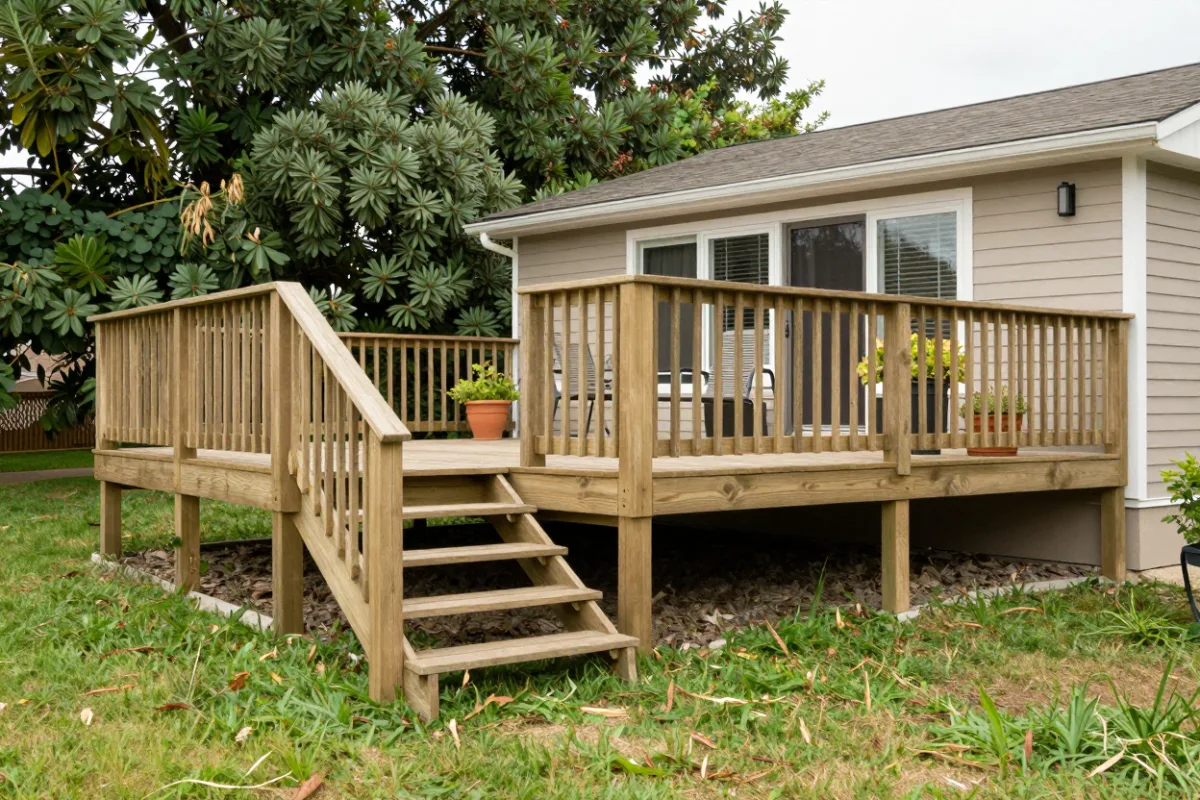
Permits, safety and when to hire a pro
- Check with your building department before you start. Decks usually need a permit, especially if they're attached to the house or raised off the ground. Some towns also limit how much of a lot can be covered by hard surfaces.
- Railings: under the building codes most US towns follow, decks more than 30 in above the ground need guardrails, typically at least 36 in high.
- Attached decks must be fixed to the house correctly, with flashing to keep water out of the wall. Poorly attached decks are a common cause of collapses.
- Call 811 before digging footings or excavating for a patio base.
Finishing touches
- Shade: a tree, pergola, retractable awning or large umbrella.
- Lighting: low-voltage path and step lights for safety, and soft string lights for atmosphere.
- Planting: containers and beds around the edges soften hard surfaces.
- Water: a small fountain or pond nearby adds sound and wildlife. See our guide to pond fountains.
Common questions
A simple gravel or concrete patio is usually the cheapest option. Paver and natural stone patios and composite decks cost more. Prices vary widely by region and materials, so get a few local quotes.
Most towns require a permit for decks, especially ones attached to the house or raised off the ground. Ground-level patios often don't need one, but rules vary, so check with your local building department first.
Wood costs less up front and looks natural, but it needs sealing or staining every few years. Composite costs more but doesn't need staining, won't splinter and lasts longer. Both need occasional cleaning.
At least about 12 × 12 ft for a table and four chairs, about 16 × 16 ft if you add a grill or a seating area, and more for an outdoor kitchen. Mark it out with a hose or stakes before you build.
Gravel and paver patios are achievable DIY projects with careful preparation. Large concrete pours, raised decks and anything attached to the house are best left to professionals.