Fire Pit Safety and Planning
A fire pit makes a yard usable on cool evenings, but it needs the right spot and a few safety rules. Here's how to choose between wood and gas, where to place a fire pit, what local rules to check, and how to use it safely.
By Pond.com editors Updated 3 min read
Quick answer
- Check local rules first. Many towns and HOAs limit open burning, and burn bans are common in dry weather.
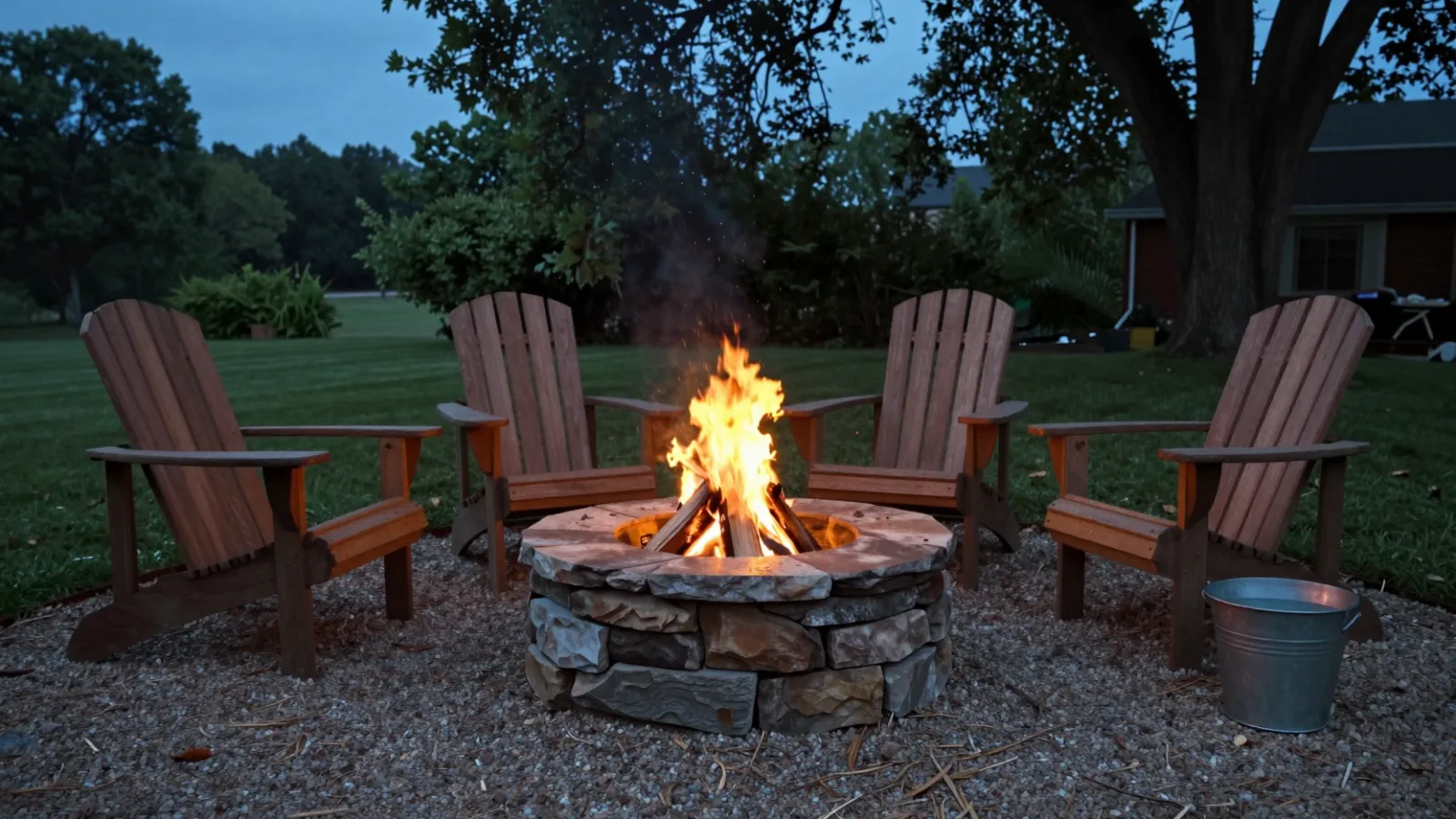
- Place a wood-burning fire pit well away from the house, fences, sheds and overhanging branches. A common guideline is at least 10 to 25 feet, but follow local codes and the manufacturer.
- Set it on a noncombustible surface such as gravel, pavers or stone, never directly on a wood deck unless it's rated for it.
- Keep water, a hose or an extinguisher nearby, and never leave a fire unattended.
- Put fires out completely with water, stirring the ashes until they're cool to the touch.
A fire pit turns a backyard into a gathering place on cool evenings and extends the outdoor season well into fall. Planning it properly, and using it safely, keeps it a pleasure rather than a hazard.
Check the rules first
- Local codes: many towns set minimum distances from buildings and property lines, and some ban wood-burning fire pits altogether.
- Burn bans: in dry, windy weather, open burning is often temporarily banned. Check with your local fire department.
- HOA rules may restrict fire pits or require gas only.
- Your homeowners insurance: some insurers ask about fire pits.
Wood or gas?
| Wood-burning | Gas (propane or natural gas) | |
|---|---|---|
| Atmosphere | Real crackle, smoke and aroma | Clean flames, no smoke |
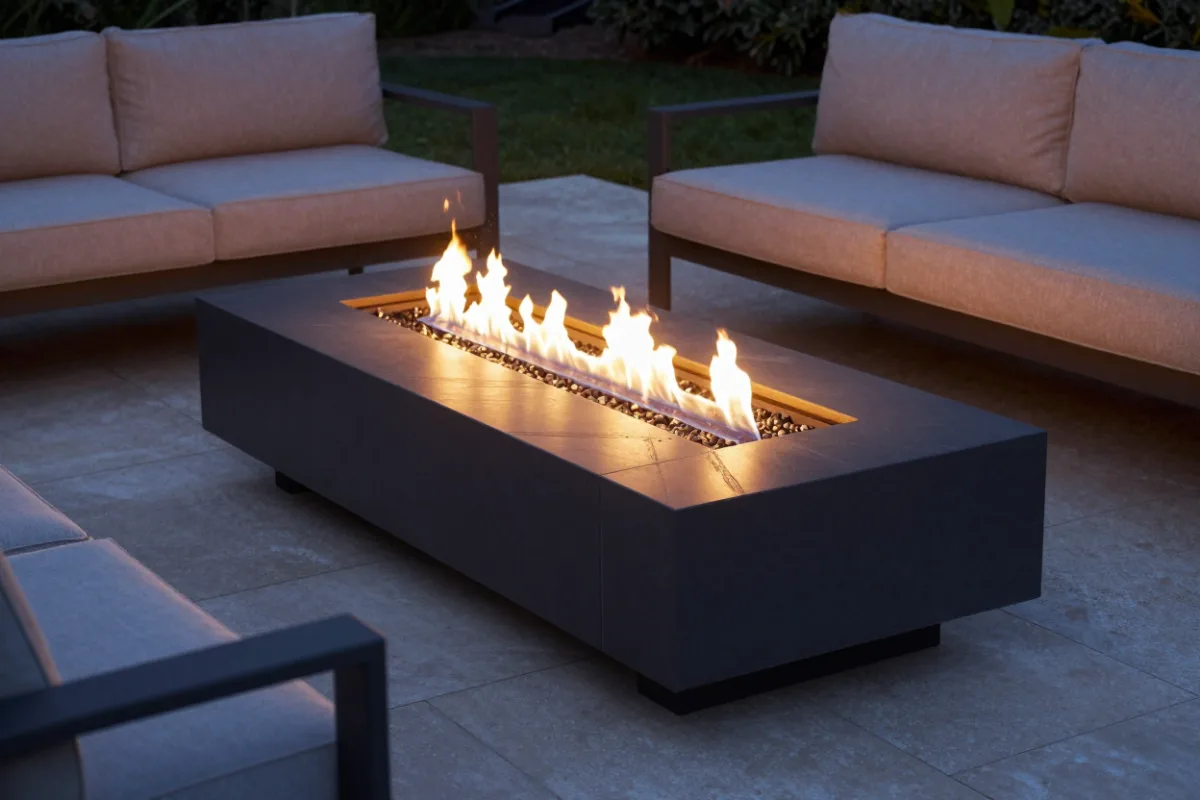
| Convenience | Needs firewood and cleanup | Lights instantly, turns off with a valve |
| Sparks and smoke | Yes; may bother neighbors | None |
| Cooking | Great for s'mores and grilling | Usually not recommended for cooking |
| Restrictions | More often limited | Often allowed where wood isn't |
Where to put it
- Distance: a common guideline for wood fire pits is at least 10 to 25 feet from the house, fences, sheds and other structures. Follow your local code and the manufacturer's instructions.
- Overhead: no branches, pergolas, umbrellas or wires above.
- Surface: a noncombustible base such as gravel, pavers, brick or stone, with a clear area of at least a few feet around the pit.
- Wind: choose a sheltered spot, and consider which way smoke will blow toward the house and neighbors.
- Seating: leave enough space for chairs set back comfortably from the heat.
See how to plan a patio or deck to fit a fire pit area into your yard.
Using a fire pit safely
- Keep water nearby: a garden hose, buckets of water or a fire extinguisher.
- Burn only dry, seasoned firewood. Never burn trash, treated wood or leaves, and never use gasoline or lighter fluid to start or revive a fire.
- Keep the fire small and use a spark screen.
- Supervise children and pets at all times.
- Never leave a fire unattended.
- Watch the weather: skip it on windy or very dry days.
Putting it out
- Let the fire burn down to ashes.
- Pour water over it, stirring the ashes with a shovel.
- Pour again until no hissing or steam remains and the ashes are cool to the touch.
- Store cold ashes in a metal container with a lid, away from the house.
Common questions
Wood fire pits give real crackle, smoke and heat, and suit cooking, but they need firewood, produce smoke and sparks, and face more burning restrictions. Gas (propane or natural gas) fire pits light instantly, make no smoke or sparks and are easier to use on patios, but give a less traditional fire.
Only if it's a gas fire pit or fire table rated for use on decks, with the clearances the manufacturer specifies. Don't put a wood-burning fire pit on a wooden or composite deck, since embers can easily start a fire.
Fire damage is often covered by homeowners insurance, but coverage depends on your policy and whether local rules were followed. Some insurers ask about fire pits, so check your policy and keep the pit compliant with local codes.