Caring for Houseplants in Winter
Shorter days, dry heated air and cold drafts make winter the hardest season for houseplants. Here's how to adjust light, watering, humidity, temperature and feeding so your plants come through the winter healthy.
By Pond.com editors Updated 3 min read
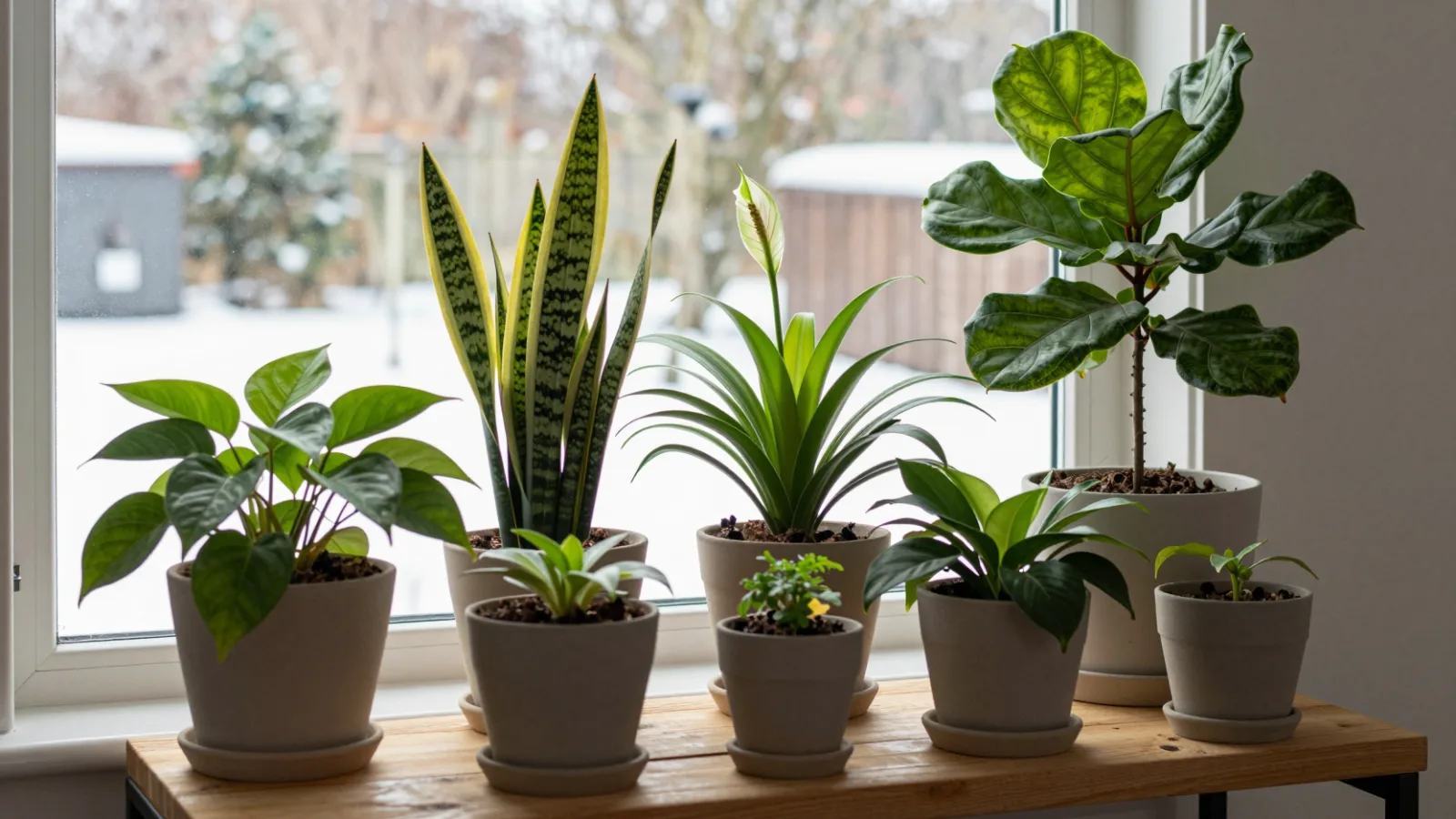
Quick answer
- Move plants closer to bright windows, and clean dusty leaves so they get more light.
- Water less. Most houseplants need water only when the top inch or two of soil is dry.
- Raise humidity by grouping plants together, using a humidifier or setting pots on trays of damp pebbles.
- Keep plants away from cold drafts, heating vents and radiators.
- Stop or cut back fertilizing until spring, when plants start growing again.
Winter is hard on houseplants. Days are short, the sun is low, and heating dries the air, while windows can be cold and drafty. Most houseplants slow down or stop growing until spring, so their care needs to change too. A few adjustments keep them healthy until the light comes back.
Light: give them as much as you can
- Move plants closer to windows, especially south- and west-facing ones, but not so close that leaves touch cold glass.
- Clean dusty leaves with a damp cloth so they can use all the light they get.
- Turn pots every week or two so plants don't lean toward the light.
- Add a grow light for dark rooms or light-loving plants. An LED grow light on a timer for 10 to 12 hours a day works well.
Water: less, but don't forget
Overwatering is the most common way houseplants die in winter. Plants use less water when they're growing slowly, and soil stays wet longer.
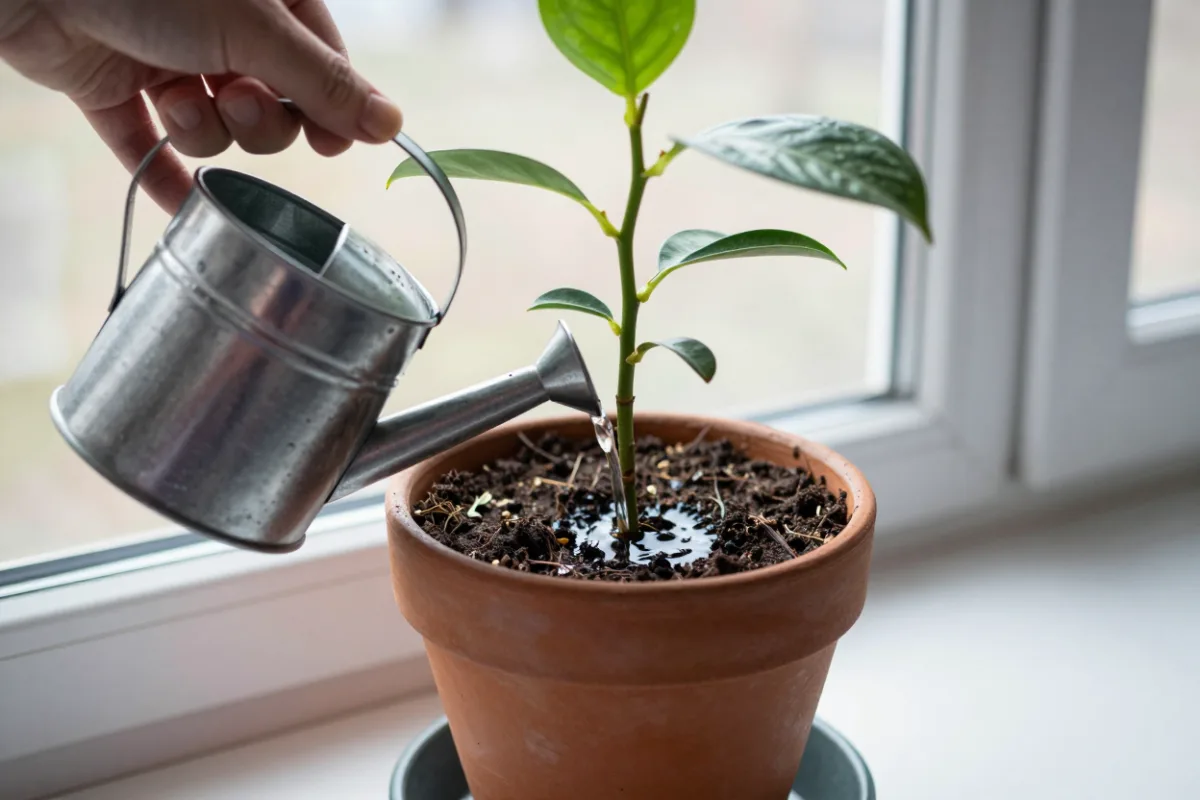
- Check before watering: push a finger into the soil. Water most plants only when the top inch or two feels dry.
- Water thoroughly when you do, until it drains from the bottom, then empty the saucer.
- Use room-temperature water. Cold water can shock roots.
- Go easy on succulents and cacti, which may need water only every few weeks in winter.
Humidity: fight the dry air
Indoor heating can drop humidity very low, which causes brown leaf tips and crispy edges, and makes spider mites more likely.
- Group plants together; they raise the humidity around each other.
- Use a humidifier near plants that like moisture, such as ferns, calatheas and many tropical plants.
- Use pebble trays: set pots on a tray of pebbles with water just below the tops of the stones.
- Try the bathroom or kitchen for humidity-loving plants, if there's enough light.
Temperature: avoid extremes
- Keep plants away from cold drafts, exterior doors and drafty windows.
- Keep them away from heat sources such as radiators, heating vents, fireplaces and space heaters.
- Don't trap plants between curtains and cold windows at night.
- Most common houseplants are happiest between about 60°F and 75°F.
Feeding and repotting
- Stop or cut back fertilizer from late fall until early spring.
- Hold off on repotting until spring, unless a plant is badly root-bound or the pot has broken.
Plants brought in from outdoors
If you've brought in patio plants such as geraniums, hibiscus or herbs for the winter:
- Check for pests before bringing them inside, and rinse leaves with a spray of water.
- Give them your brightest window, since they're used to full sun.
- Expect some leaf drop as they adjust to lower light.
Common questions
Less often than in summer, because plants grow more slowly and soil dries more slowly. Check by feeling the soil, and water when the top inch or two is dry for most plants. Succulents and cacti need very little water in winter.
Most don't. They grow slowly in low winter light, and extra fertilizer can build up in the soil and burn roots. Stop or cut back from late fall and start again in spring.
Group plants together, run a humidifier nearby, or set pots on trays of pebbles with water below the tops of the pebbles. Misting helps only briefly. Bathrooms and kitchens are often more humid spots for plants that like moisture.
Not always, but it helps a lot in dark rooms, north-facing homes or for plants that need bright light. An LED grow light on a timer for 10 to 12 hours a day can keep plants growing well through winter.
Usually dry air from heating, and sometimes underwatering or a build-up of fertilizer salts. Raise humidity, check the soil moisture and flush the pot with water occasionally.