Why Are My Plant's Leaves Turning Yellow?
Yellow leaves are a plant's way of telling you something is wrong, but the cause isn't always obvious. Here's how to read the pattern of yellowing, the most common causes from overwatering to nutrient shortages, and how to fix each one.
By Pond.com editors Updated 3 min read

Quick answer
- Check the soil first. Overwatering and poor drainage are the most common causes of yellow leaves.
- Look at which leaves are yellowing. Older, lower leaves often point to a nitrogen shortage; new leaves with green veins often point to iron or high pH.
- A few yellow leaves at the bottom of a healthy plant are often just natural aging.
- Check the undersides of leaves for pests such as spider mites and aphids.
- A soil test from your county's cooperative extension office tells you exactly what nutrients are missing.
Yellow leaves are one of the most common plant problems, indoors and out. The yellowing itself isn't a disease; it's a sign that something is stopping the leaf from making chlorophyll, the green pigment plants use to make food. The trick is working out what.
Step 1: Look at the pattern
Where and how the leaves yellow gives you strong clues.
| What you see | Likely causes |
|---|---|
| Lower, older leaves yellow first; rest of the plant fine | Natural aging, nitrogen shortage |
| Whole plant yellowing and limp, soil wet | Overwatering or poor drainage |
| Whole plant yellowing, soil dry, leaves crispy at edges | Underwatering or drought stress |
| New leaves yellow with green veins | Iron or manganese shortage, often from alkaline soil |
| Yellow patches or spots, sometimes with brown centers | Fungal or bacterial disease |
| Speckled, pale yellow leaves with fine webbing | Spider mites |
| Yellow, curled leaves with sticky residue | Aphids or other sap-sucking insects |
| Sudden yellowing after moving or repotting | Transplant shock or a change in light |
Step 2: Check the soil
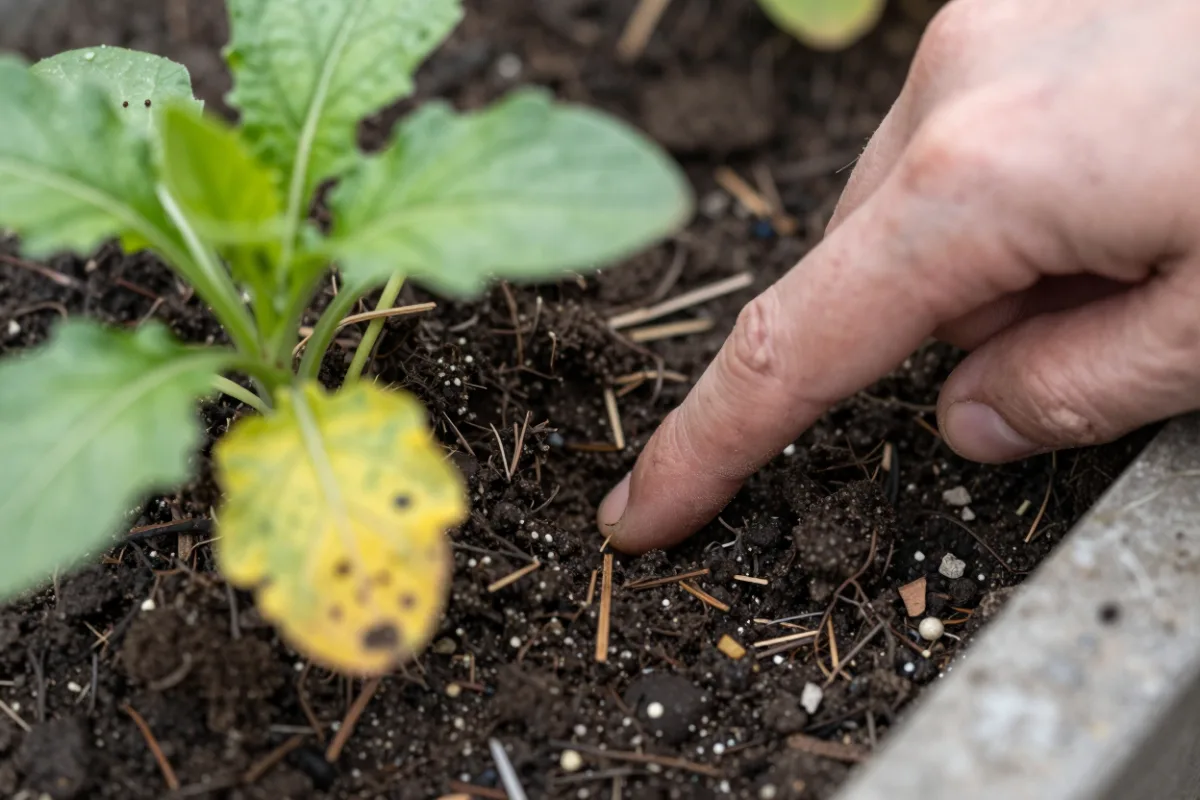
Push a finger 1 to 2 inches into the soil.
- Soggy or sour-smelling: too much water or poor drainage. This is the most common cause of all.
- Bone dry: not enough water, especially in hot weather or for plants in pots.
- Hard and compacted: roots struggle to breathe and take up nutrients.
Common causes and fixes
Overwatering and poor drainage
Roots need air as well as water. In waterlogged soil, they can't take up nutrients, so leaves turn yellow even though there's plenty of water.
- Let the top inch or two of soil dry before watering again.
- Make sure pots have drainage holes, and empty saucers after watering.
- Improve heavy clay soil with compost, or grow in raised beds.
Underwatering
Water deeply and less often, so roots grow down rather than staying near the surface. Mulch to hold moisture in the soil.
Nutrient shortages
- Nitrogen: older, lower leaves turn yellow first. Feed with compost or a balanced fertilizer.
- Iron: new leaves turn yellow with green veins. Often caused by soil pH that's too high rather than a true lack of iron. A soil test will tell you; adding sulfur or using an iron supplement made for plants can help.
- Magnesium: yellowing between the veins on older leaves.
Pests
Check the undersides of leaves for aphids, spider mites, whiteflies and scale. A strong spray of water or insecticidal soap deals with most of them. See our guide to garden pests.
Disease
Fungal and bacterial diseases often cause yellow spots or patches, sometimes with brown or black centers. Remove affected leaves, water the soil rather than the leaves, and improve airflow between plants.
Natural aging
Many plants shed a few of their oldest, lowest leaves as they grow. If the rest of the plant looks healthy and new growth is green, there's nothing to fix.
Should you remove yellow leaves?
Usually, yes. Yellow leaves seldom turn green again. Removing them tidies the plant and reduces disease. Put diseased leaves in the trash rather than the compost.
Common questions
Yes, it's one of the most common causes. Waterlogged soil starves roots of oxygen, so they can't take up water and nutrients. Leaves turn yellow and limp even though the soil is wet. Let the soil dry out a bit and improve drainage.
Yes, in most cases. Yellow leaves rarely turn green again, and removing them tidies the plant and reduces disease. Remove diseased leaves promptly and bin them rather than composting them.
On tomatoes, yellow lower leaves are often caused by early blight (with brown spots and rings), uneven watering or a nitrogen shortage, and sometimes just old leaves. Remove affected leaves, water at the base and mulch.
Usually overwatering, poor drainage, too little light, or a pot that's too large or too small. Check that the pot drains, let the top inch or two of soil dry before watering, and move the plant to brighter light if needed.
Yellowing between green veins on new leaves, called interveinal chlorosis, often points to an iron or manganese shortage, frequently caused by soil that's too alkaline. A soil test confirms it.