Winter Driving Safety Checklist
Snow, ice and early darkness make winter the most demanding time to drive. Here's what to check before you go, how to drive on snow and ice, what to do if you skid, and how to stay safe if you get stuck.
By Pond.com editors Updated 3 min read

Quick answer
- Check the forecast and road conditions before you leave, and delay the trip if conditions are bad.
- Clear all snow and ice from windows, lights, mirrors and the roof before driving.
- Slow down, accelerate and brake gently, and leave much more space, about 8 to 10 seconds, behind the car ahead.
- If you skid, ease off the gas and steer gently in the direction you want the car to go.
- If you get stuck, stay with your car, clear the exhaust pipe and run the engine only in short bursts.
Winter driving takes more time, more space and more attention. Most winter crashes happen because drivers go too fast for the conditions, follow too closely or brake too hard. Here's how to prepare, how to drive and what to do when things go wrong.
Before you go
- Check the forecast and road conditions. Most states have a 511 phone line or website with road reports. If conditions are bad, delay your trip if you can.
- Clear all snow and ice from the windows, mirrors, lights and roof. Snow sliding off your roof can blind you or the driver behind.
- Keep the gas tank at least half full.
- Carry a winter emergency kit and a charged phone.
- Tell someone your route and when you expect to arrive on longer trips.
Make sure your car is ready, too. See how to winterize your car.
How to drive on snow and ice
- Slow down. Speed limits are for dry roads.
- Accelerate and brake gently to keep traction. Take time to slow down for lights and turns.
- Leave much more space: about 8 to 10 seconds behind the car ahead on icy or snowy roads, instead of the usual 3 to 4.
- Don't use cruise control on snowy, icy or wet roads.
- Watch for black ice on bridges, overpasses and shaded areas, which freeze first.
- Don't stop going up a hill if you can avoid it. Build a little speed on the flat and let it carry you up.
- Keep your headlights on in snow, so others can see you.
- Give snowplows plenty of room, and don't pass them.
If you start to skid
- Stay calm and ease off the gas.
- Don't slam on the brakes.
- Steer gently in the direction you want the front of the car to go.
- If you must brake and have anti-lock brakes (ABS), press firmly and steadily. The pedal may pulse; that's normal.
Practicing in an empty, snowy parking lot can help you learn how your car feels on slippery surfaces.
If you get stuck or stranded
- Stay with your car unless help is very close. It's shelter, and it's easier for rescuers to find.
- Make yourself visible: tie a bright cloth to the antenna or a window, and turn on the dome light at night.
- Clear the exhaust pipe of snow before running the engine.
- Run the engine and heater about 10 minutes each hour, with a window slightly open, to save fuel and avoid carbon monoxide build-up.
- Stay warm: use blankets and extra clothes, and move your arms and legs to keep blood flowing.
- Call for help: 911 in an emergency, or your roadside assistance service.
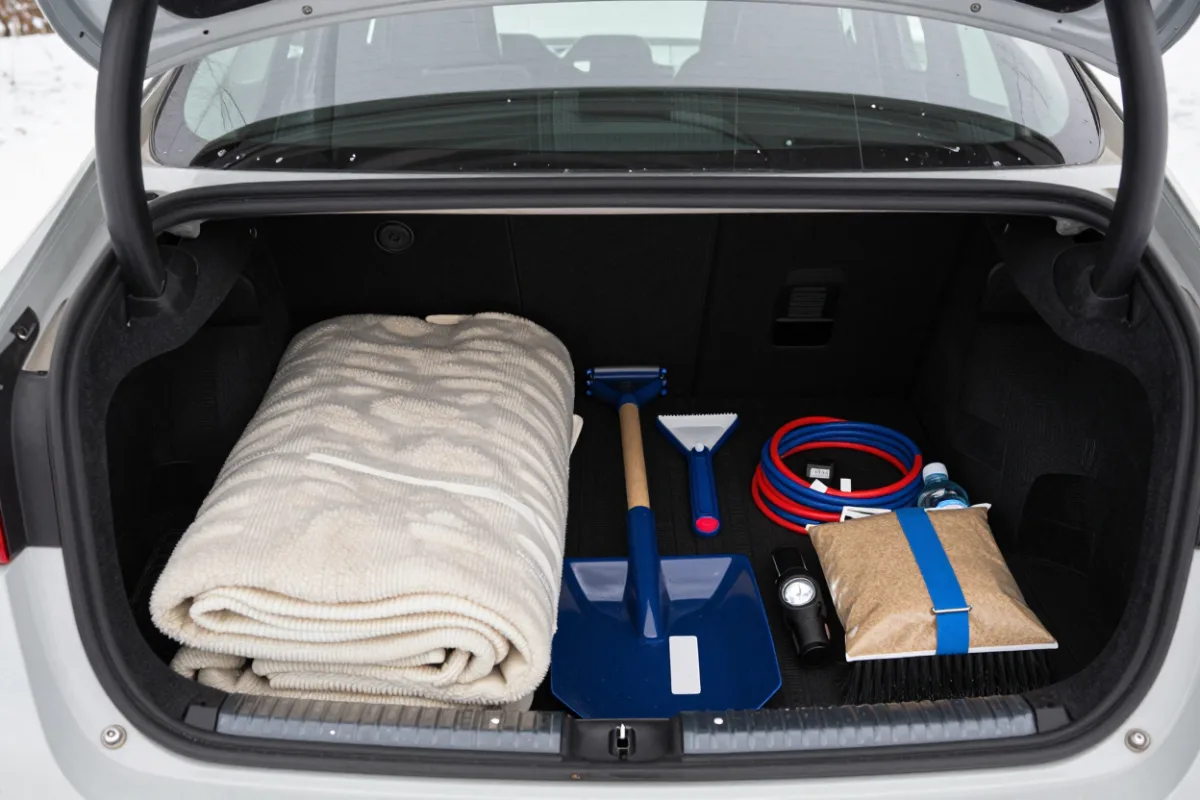
After a winter fender-bender
If you slide into another car or a ditch, get to safety, call the police if anyone is hurt or cars are blocking traffic, take photos and exchange insurance information. Contact your insurer promptly; collision coverage generally pays for damage to your own car when you slide into something, and liability coverage pays for damage you cause to others.
Common questions
Slow down, avoid sudden moves, and accelerate, brake and steer gently. Leave about 8 to 10 seconds of following distance, and be especially careful on bridges, overpasses and shaded spots, which freeze first.
A thin, clear layer of ice that's hard to see, so the road just looks wet. It forms most often at night and early morning, and on bridges, overpasses and shaded roads. If the road looks wet but there's no spray from other cars' tires, be careful.
Ease off the gas, don't slam on the brakes, and steer gently in the direction you want the front of the car to go. If you need to brake and have anti-lock brakes, press firmly and steadily and let the system work.
Not on snowy, icy or wet roads. Cruise control can make it harder to react to a loss of traction.
Stay with your car unless help is very close. Tie a bright cloth to the antenna or window, clear snow from the exhaust pipe, and run the engine and heater about 10 minutes an hour with a window slightly open. Call for help if you can.