How to Pack for a Winter Trip
Winter clothes are bulky, but you don't need a giant suitcase to stay warm. Here's how to layer, what to bring for cold cities, snowy mountains and winter flights, and how to fit it all in a carry-on.
By Pond.com editors Updated 3 min read

Quick answer
- Pack layers instead of bulky pieces. A base layer, a warm middle layer and a windproof, waterproof outer layer cover most conditions.
- Wear your heaviest items, such as your coat and boots, on the plane or in the car.
- Choose wool or synthetic fabrics over cotton, which stays cold when wet.
- Bring a hat, gloves, a scarf and warm socks; they make a huge difference and take little space.
- Check the forecast and plan for travel delays, with essentials in your carry-on.
Winter clothes take up a lot of room, which is why winter trips so often end in overstuffed suitcases. The answer is layering: a few thin, warm pieces you can combine are lighter, more flexible and warmer than one heavy sweater.
The three-layer system
- Base layer: thin thermal tops and leggings in merino wool or synthetic fabric. They keep you warm and move sweat away from your skin.
- Middle layer: fleece, a wool sweater or a light down or synthetic "puffer" jacket that packs small.
- Outer layer: a coat or shell that blocks wind and rain or snow. For city trips, a warm, water-resistant coat is usually enough. For snow sports or hiking, choose a waterproof shell.
You can add or remove layers as you move between cold streets, warm museums and heated trains.
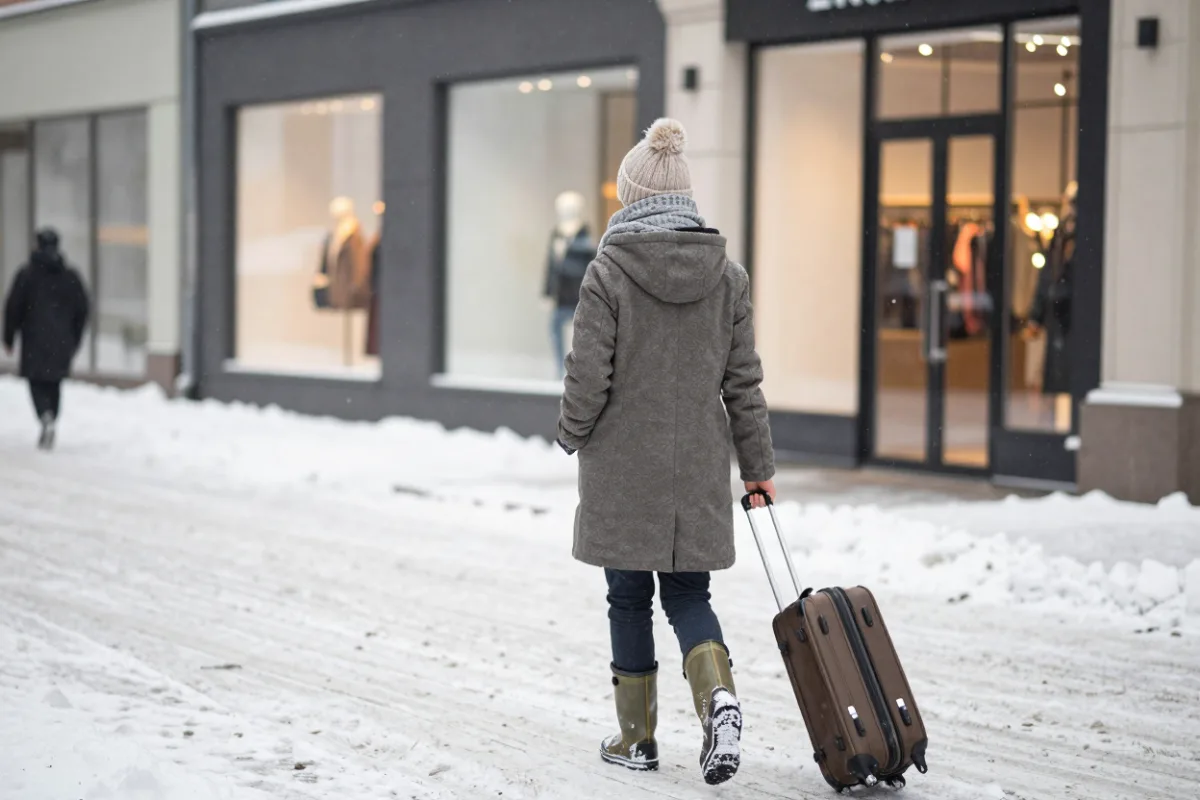
Winter packing list
Clothing
- 2 to 3 base layer tops and 1 to 2 bottoms
- 1 to 2 warm middle layers
- A warm, water-resistant coat
- 2 to 3 pairs of pants (one pair waterproof for snow trips)
- Wool or synthetic socks, one pair per day or wash as you go
- Sleepwear and underwear
Accessories
- Warm hat that covers your ears
- Gloves or mittens, plus thin liner gloves if you'll use your phone a lot outside
- Scarf or neck gaiter
- Sunglasses (snow glare is strong)
Footwear
- Waterproof, insulated boots with good grip
- Light shoes or slippers for indoors, if you have room
Toiletries and extras
- Lip balm, moisturizer and sunscreen; winter air is dry and snow reflects UV
- Hand warmers
- Phone charger and power bank, since cold drains batteries faster
- Any medicines, in your carry-on
How to save space
- Wear your bulkiest items while traveling: coat, boots and thickest sweater.
- Roll clothes or use packing cubes, and use compression bags for puffy items.
- Choose a simple color scheme so everything mixes and matches.
- Plan to rewear outer layers, sweaters and pants. Only base layers and socks need changing daily.
- Stuff socks and gloves inside your boots.
For more ideas, see how to pack light.
Plan for winter travel delays
Snow and ice can delay flights and close roads. Keep your medicines, a phone charger, a warm layer, snacks and a change of underwear in your carry-on, in case your bag is delayed or you're stuck overnight. If you're driving, see our road trip guide and pack a winter car kit.
Common questions
Plan on three. A base layer next to your skin, an insulating middle layer such as fleece or a light down jacket, and an outer layer that blocks wind and rain or snow. You can add or remove layers as conditions change.
Usually, yes. Wear your coat and boots while traveling, pack thin, warm layers rather than bulky sweaters, roll clothes or use packing cubes, and plan to rewear outer layers and pants.
One pair of warm, waterproof boots with good grip, and a lighter pair for indoors if you have room. Break new boots in before you go.
Cotton holds moisture, so it stays damp and cold if you sweat or get wet. That's fine for a city sweater, but for outdoor activities choose wool or synthetic base layers and socks.
Add waterproof snow pants, a waterproof shell jacket, insulated gloves or mittens, goggles, a neck gaiter, warm wool socks, sunscreen and lip balm. Snow reflects sunlight, so sunburn is common.