Signs of Termites and What to Do if You Find Them
Termites can damage a home quietly for years. Here are the signs to look for, how to tell termites from flying ants, the main treatment options, and what to do first if you find them, without rushing into an expensive contract.
By Pond.com editors Updated 2 min read
Quick answer
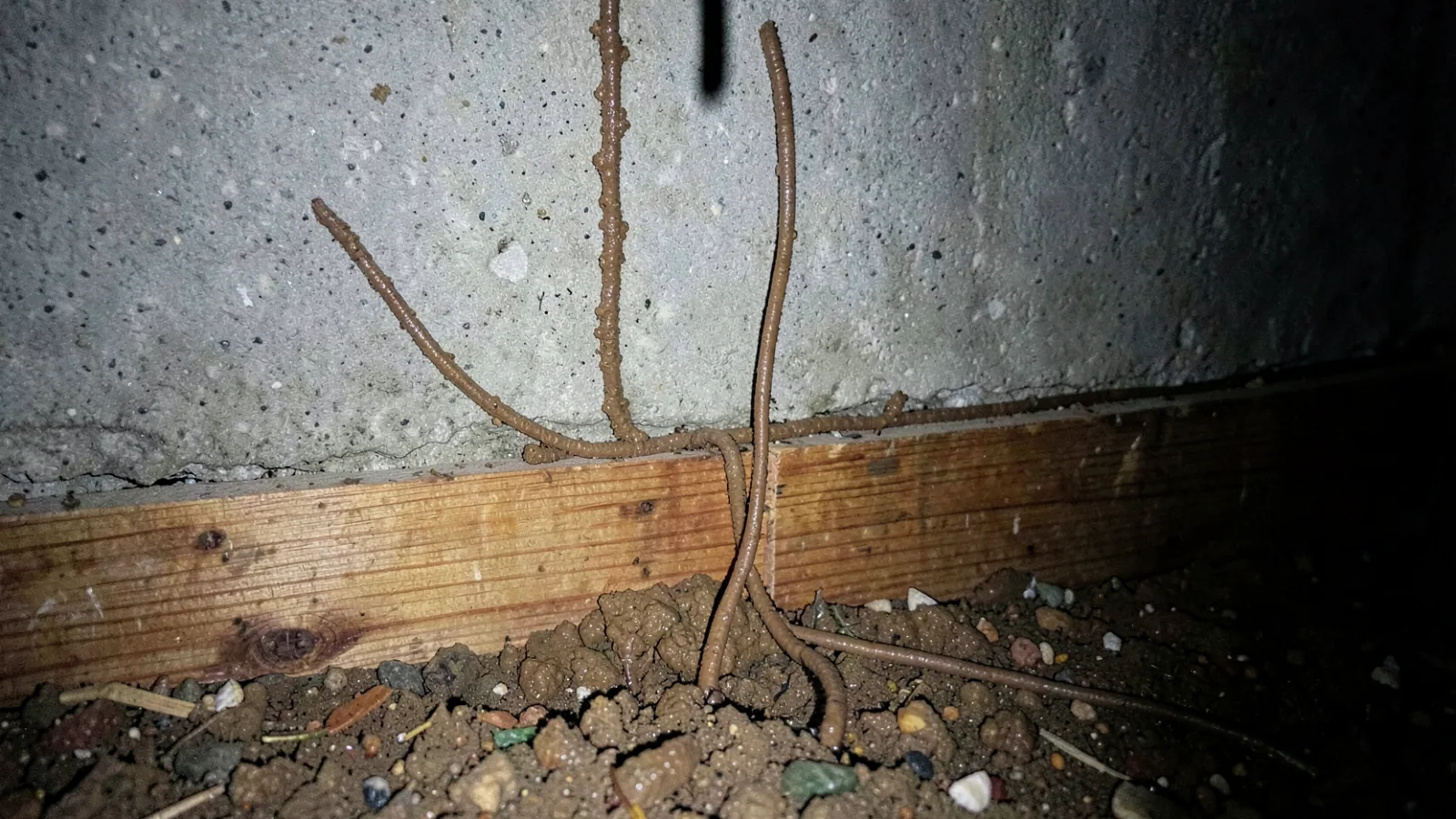
- Look for mud tubes on foundation walls, piles of discarded wings, and wood that sounds hollow.
- Swarms of winged insects indoors in spring are a common first sign.
- Termites have straight antennae and equal-length wings; flying ants have bent antennae and pinched waists.
- Termites work slowly, so you have time to get two or three inspections and quotes.
- Termite damage usually isn't covered by homeowners insurance.
Termites are found in almost every state, and they cause billions of dollars of damage to US homes each year. The good news is that they're slow, so spotting them early makes a big difference.
This article is general information. A licensed pest control professional can confirm whether you have termites.
Signs of termites
- Mud tubes: pencil-thin tunnels of soil on foundation walls, piers or in crawl spaces. Subterranean termites, the most common type in the US, build them to travel.
- Swarmers: winged termites flying indoors, often on warm days in spring after rain.
- Discarded wings: small piles of identical wings near windows, doors or light fixtures.
- Hollow-sounding wood: wood that sounds papery or gives way when you press it.
- Droppings: tiny pellets like sawdust or coffee grounds, a sign of drywood termites.
- Other clues: bubbling paint, sagging floors, or doors and windows that suddenly stick.

Termites or flying ants?
| Termite | Flying ant | |
|---|---|---|
| Antennae | Straight | Bent, like an elbow |
| Waist | Thick, no pinch | Narrow, pinched |
| Wings | Two pairs of equal length | Front pair longer than back |
What to do if you find them
- Don't panic. Serious damage usually takes years.
- Take photos and, if you can, collect a few insects in a sealed bag.
- Don't disturb mud tubes or spray them, which can make the colony harder to find.
- Get two or three inspections. Many companies inspect for free.
- Compare quotes and warranties before signing anything.
Main treatment options
| Treatment | How it works | Good to know |
|---|---|---|
| Liquid soil treatment | A barrier of termiticide around and under the foundation | Common for subterranean termites; often lasts years |
| Bait stations | Bait placed around the house is carried back to the colony | Slower, but less disruptive; needs ongoing monitoring |
| Fumigation | The home is tented and filled with gas | Used for widespread drywood termites; you must leave for a few days |
| Spot treatment | Treating the affected wood directly | For small, contained drywood problems |
Ask whether the price includes a renewable warranty, and whether it covers repairs or only re-treatment. For how to pick a company, see how to choose a pest control company.
Common questions
Usually slowly. It often takes years for a colony to cause serious structural damage. That's why there's no need to sign a contract on the spot, but you shouldn't put off treatment for months either.
Usually not. Most policies treat termite damage as preventable through maintenance. That's one reason regular inspections are worth it in areas where termites are common.
Store-bought products may kill termites you can see, but they rarely reach the whole colony. Most experts recommend a professional for an active infestation, since treatments need special equipment and, for some, a license.