How to Prevent Ice Dams on Your Roof
Ice dams form along roof edges in winter and can force water under shingles and into your home. Here's what causes them, how to prevent them with insulation and ventilation, what to do if one forms, and what to avoid.
By Pond.com editors Updated 2 min read
Quick answer
- Ice dams form when heat escaping into the attic melts snow on the roof, and the water refreezes at the colder roof edge.
- The best long-term fix is sealing air leaks into the attic and adding insulation, so the roof stays cold.
- Good attic ventilation helps keep the roof deck at outdoor temperature.
- After heavy snow, use a roof rake from the ground to pull snow off the lower few feet of the roof.
- Don't chip ice dams with hammers or axes; you can damage the roof.
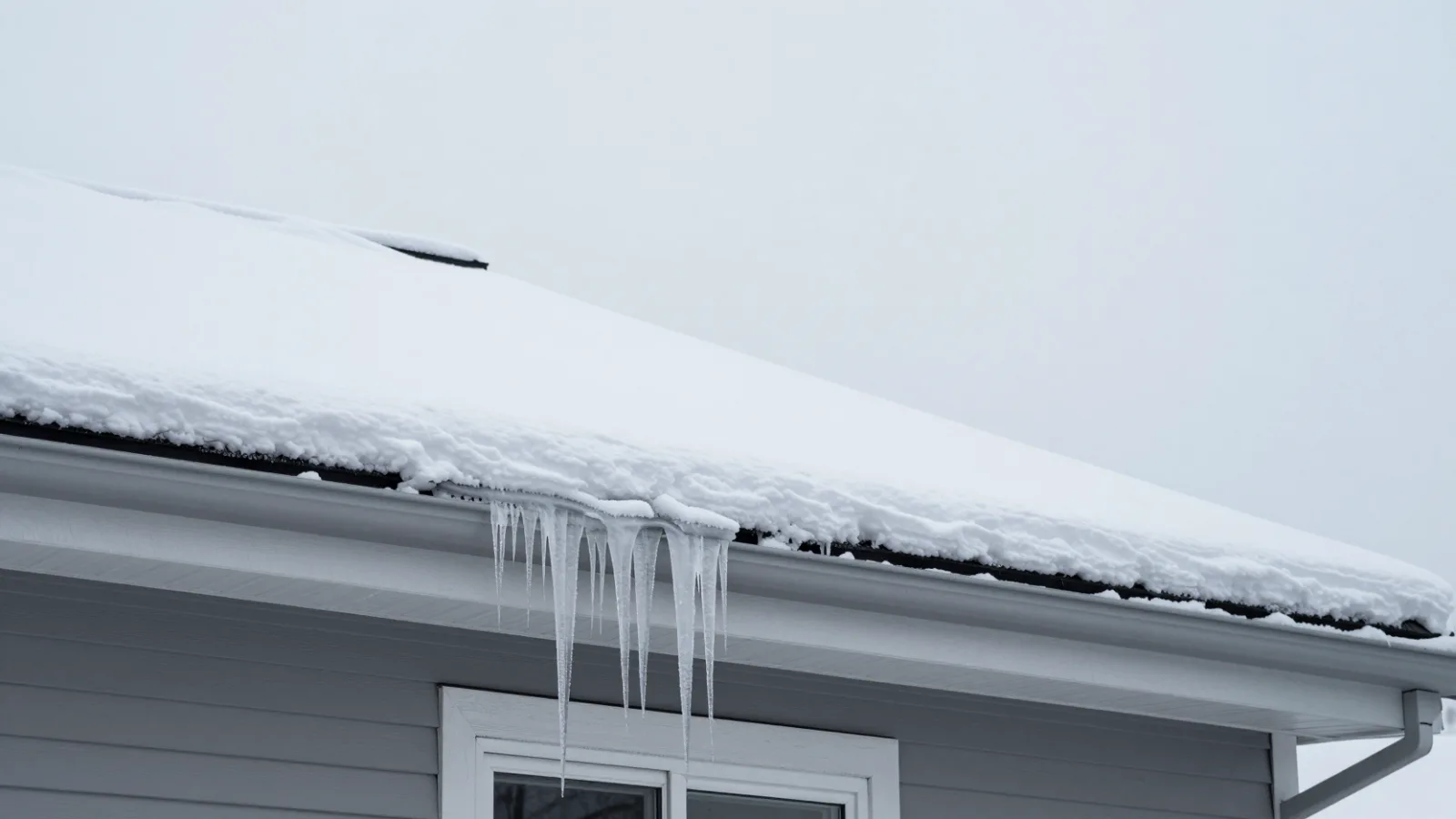
After a heavy snowfall, you may notice a thick ridge of ice along the edge of your roof and big icicles hanging from the gutters. That's an ice dam, and it's more than an eyesore. Water trapped behind it can back up under shingles and leak into ceilings and walls.
What causes ice dams
- Heat escapes from the house into the attic.
- The warm roof melts the snow above it.
- Meltwater runs down to the roof edge, which hangs past the walls and stays cold.
- It refreezes into a ridge of ice.
- More meltwater pools behind the ridge and can seep under shingles.
The fix is to keep the whole roof cold, so snow doesn't melt unevenly.
Long-term prevention
Seal attic air leaks. Warm air leaking through gaps around light fixtures, vent pipes, chimneys, the attic hatch and wiring is often the main cause. See how to seal air leaks.
Add insulation. A well-insulated attic floor keeps heat in your living space. Many homes in cold climates need much more than they have.
Improve ventilation. Soffit and ridge vents let cold outside air flow under the roof, keeping it close to outdoor temperature.
Check ducts and bathroom fans. Make sure exhaust fans vent outside, not into the attic, and that heating ducts in the attic are sealed and insulated.
An energy audit can find the biggest leaks, and many utilities offer them free or at low cost.
During the winter
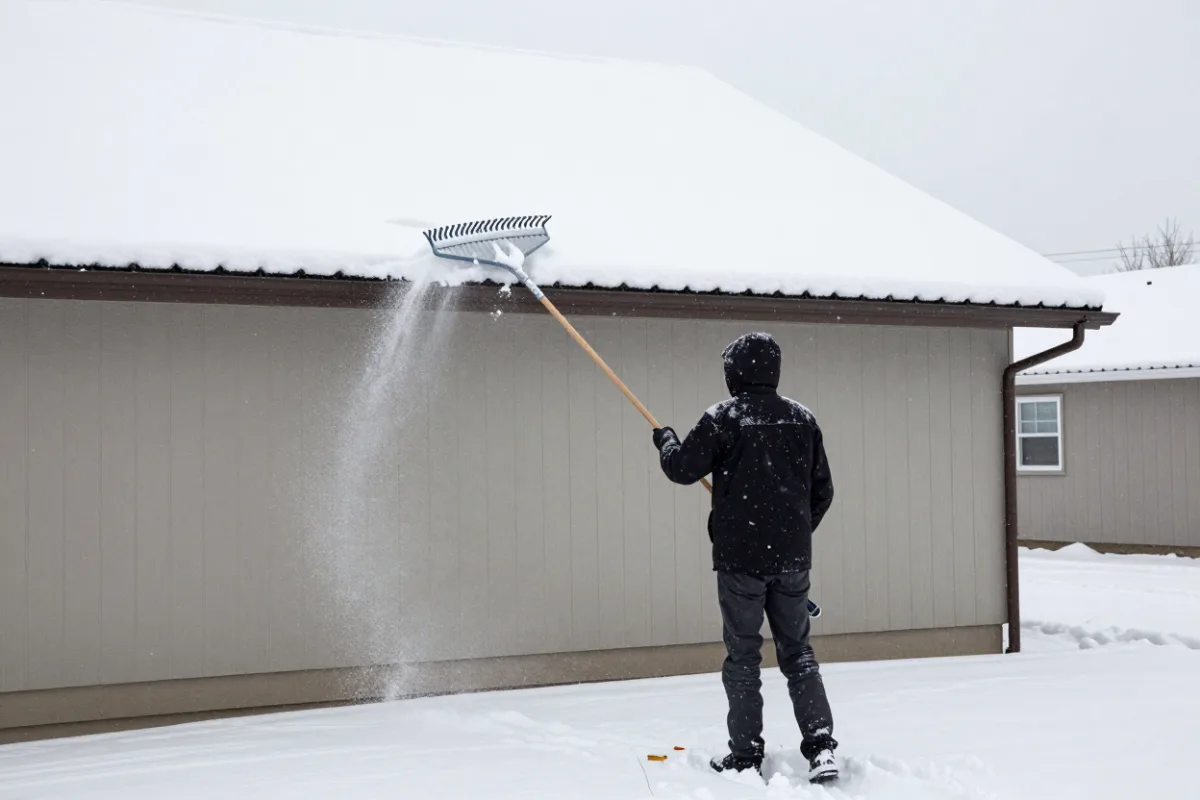
- Use a roof rake from the ground after heavy snow to clear the lower 3 to 4 feet of the roof.
- Keep gutters clean in fall; see how to clean gutters safely.
- Consider heat cables for problem spots, installed according to the instructions.
If an ice dam forms
- Make channels for water to drain by laying calcium chloride ice melt in a nylon stocking across the dam. Don't use rock salt, which can damage roofing and plants.
- Call a professional for steam removal if water is leaking inside.
- Catch and document leaks inside, and check with your insurer about coverage.
Common questions
Many policies cover sudden interior water damage from ice dams, but not the cost of removing the ice or damage caused by poor maintenance. Policies vary, so check yours and document any damage with photos.
Heat cables can keep channels open so meltwater drains, but they don't fix the cause and they use electricity. They're useful for problem spots, while insulation and air sealing are the long-term solution.
Large icicles along the roof edge often go hand in hand with ice dams, because they form from the same melting and refreezing. Thick ridges of ice at the edge of the roof are the bigger warning sign.