Space Heater Safety: How to Use One Without Risk
Space heaters are a cheap way to warm one room, but they cause a large share of home heating fires. Here's how to choose a safe heater, where to put it, what never to do, and how to use one without driving up your electric bill.
By Pond.com editors Updated 2 min read
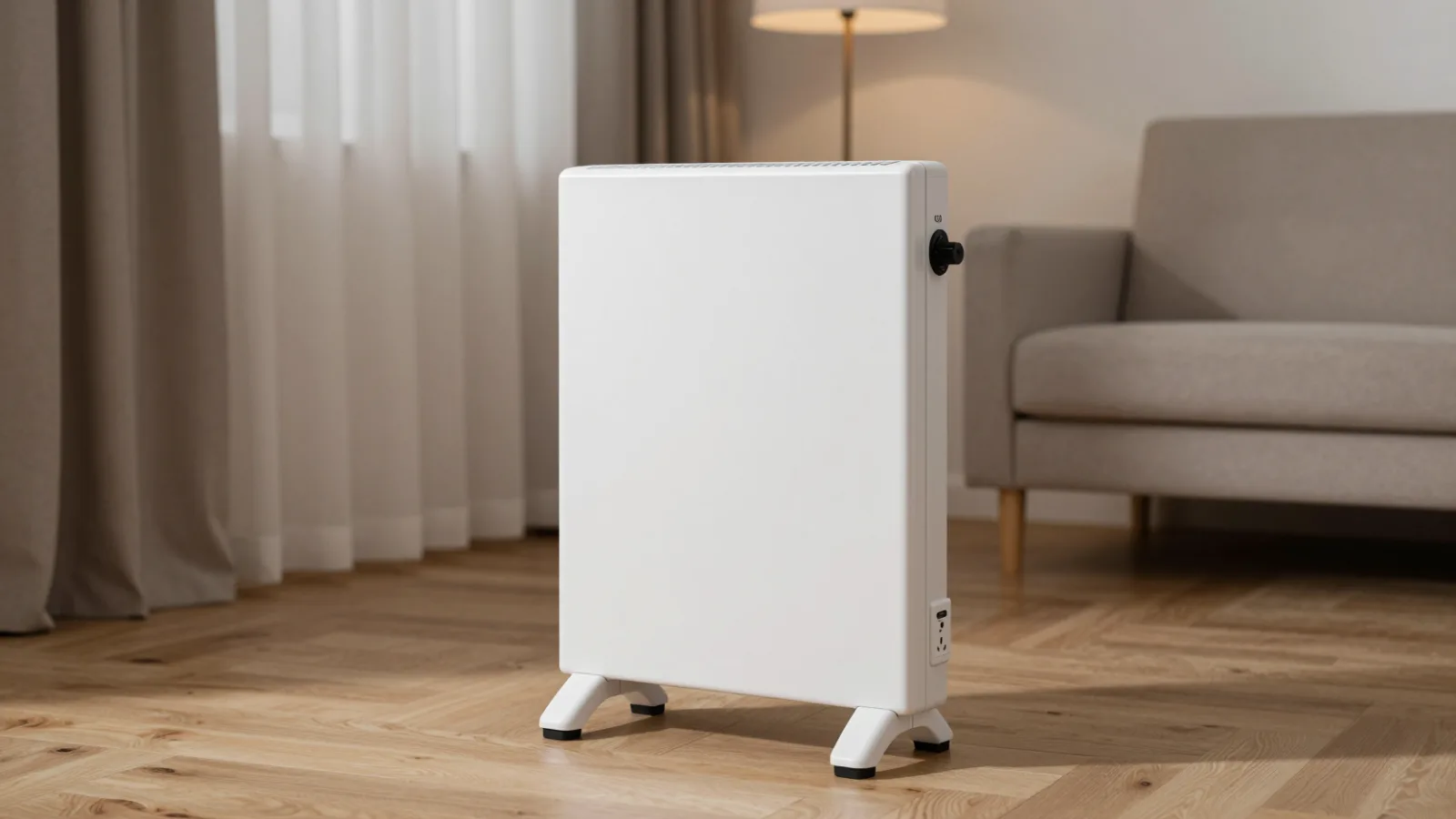
Quick answer
- Choose a heater with automatic tip-over and overheat shutoff and a safety certification label from a recognized testing lab.
- Keep anything that can burn at least 3 feet away from the heater.
- Plug it straight into a wall outlet, never into an extension cord or power strip.
- Turn it off when you leave the room or go to sleep.
- Make sure you have working smoke alarms, and carbon monoxide alarms if you use a fuel-burning heater.
A space heater can take the chill off a home office or a cold bedroom without heating the whole house. But they need respect. According to the National Fire Protection Association, space heaters are involved in about a third of home heating fires and most home heating fire deaths. Nearly all of those fires are preventable.
Choose a safer heater
- Safety certification: look for a label from a recognized testing lab, such as UL, ETL or CSA.
- Tip-over shutoff: turns the heater off if it's knocked over.
- Overheat protection: shuts it off if internal parts get too hot.
- Thermostat and timer: keep the room at a steady temperature and limit run time.
- Cool-touch exterior: important with children and pets.
Electric heaters are the safest choice indoors. Oil-filled radiator styles heat gently and stay cooler on the surface. Fuel-burning heaters (kerosene or propane) produce carbon monoxide and need ventilation; many are not meant for indoor use at all.
Placement: the 3-foot rule
Keep anything that can burn at least 3 feet away: curtains, bedding, sofas, clothes, paper and Christmas trees.
- Set the heater on a hard, level floor, not on a rug, table or furniture.
- Keep it out of walkways so no one trips over it or the cord.
- Keep children and pets away.
- Never use one in a bathroom or near water unless it's made for that.
Power safety
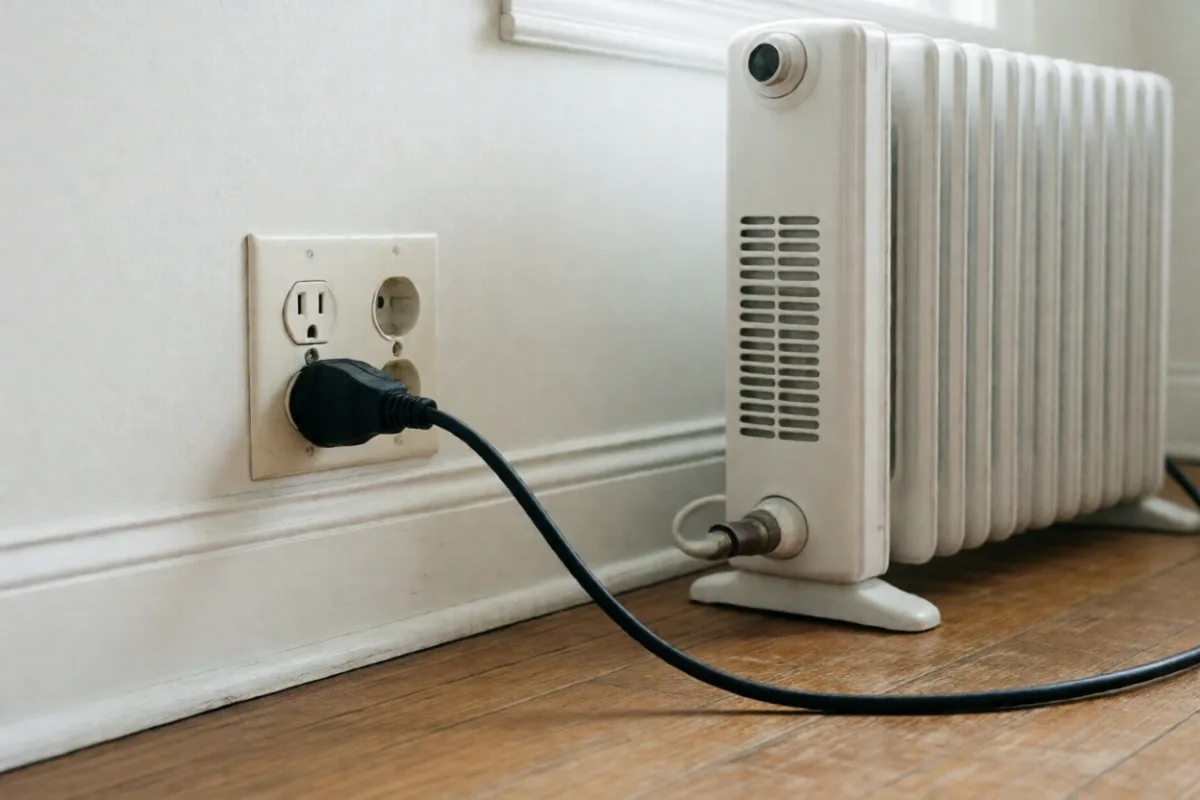
- Plug it directly into a wall outlet. Never use an extension cord or power strip.
- Don't share the circuit with other big appliances.
- Check the cord and plug before each season. Stop using a heater with a damaged cord, a warm plug or a scorched outlet.
Everyday habits
- Turn it off when you leave the room or go to sleep.
- Don't dry clothes or shoes on it.
- Keep it clean; dust can burn.
- Test smoke alarms monthly, and install carbon monoxide alarms near sleeping areas.
Keeping costs down
A 1,500-watt heater running for 8 hours uses 12 kWh. At 17 cents per kWh, that's about $2 a day, or $60 a month. Space heaters save money only when you heat one small room and turn the central thermostat down. Sealing drafts helps too; see how to seal air leaks.
Common questions
Safety experts advise against it. Turn space heaters off before you go to sleep or leave the room. If you need warmth at night, use extra blankets or a heated mattress pad designed for overnight use, and follow its instructions.
Space heaters draw a lot of power for long periods. Extension cords and power strips can overheat under that load and start a fire. Plug the heater directly into a wall outlet, and don't run other high-power appliances on the same circuit.
Multiply the heater's wattage by the hours you use it, divide by 1,000 to get kWh, and multiply by your electricity rate. A 1,500-watt heater running 8 hours at 17 cents per kWh costs about $2 a day. It saves money only if you heat one small room and turn the main thermostat down.