How to Patch a Hole in Drywall
Nail holes, dents and even fist-sized holes in drywall are easy to fix with a few inexpensive supplies. Here's how to patch small, medium and large holes so the repair disappears once it's painted.
By Pond.com editors Updated 3 min read
Quick answer
- Fill nail holes and small dents with lightweight spackle, let it dry, sand and paint.
- For holes up to a few inches across, use a self-adhesive mesh patch and joint compound.
- For larger holes, cut a neat square, add wood backing strips and screw in a new piece of drywall.
- Apply thin coats of compound, feathering the edges wider each time, and sand between coats.
- Prime the patch before painting so it doesn't show through.
Holes in drywall happen: a doorknob hits the wall, an anchor pulls out, or you move a picture. The good news is that drywall is one of the easiest things in a house to repair. With a few inexpensive supplies and some patience between coats, the repair disappears once it's painted.
What you'll need
- Lightweight spackle (small holes) or joint compound (larger repairs)
- Putty knives: a narrow one and a wider 6- to 10-inch knife
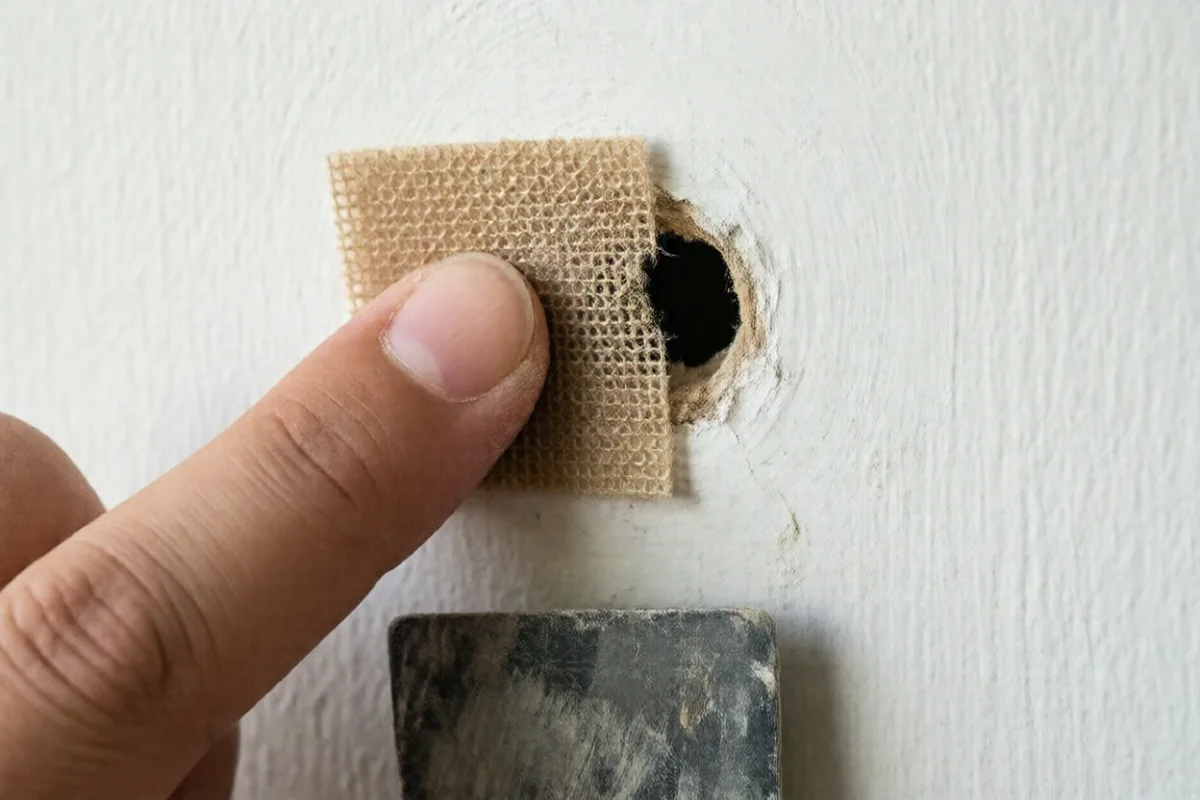
- Self-adhesive mesh patches for medium holes
- A scrap of drywall, a utility knife and drywall screws for large holes
- Fine sanding sponge or 120- to 220-grit sandpaper
- Primer and matching paint
- A drop cloth
Nail holes and small dents
- Clean the hole, cutting away any loose paper or bits.
- Press spackle in with a putty knife and scrape it flush.
- Let it dry, then sand lightly. Add a second thin coat if it shrank.
- Prime and paint.
Medium holes (up to about 4 to 6 inches)
- Trim loose edges and sand around the hole lightly.
- Stick a mesh patch over the hole, overlapping onto solid wall.
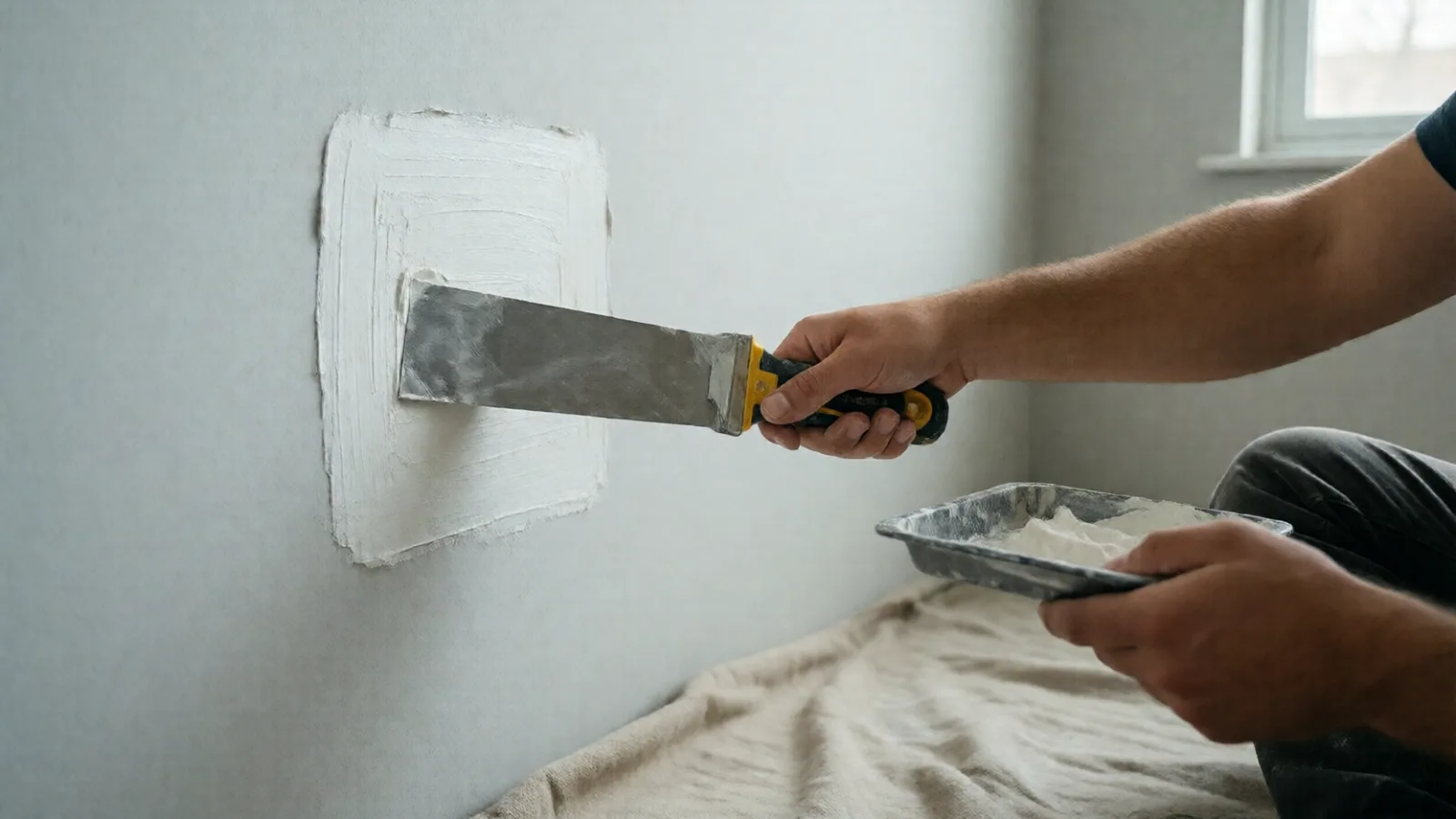
- Spread joint compound over the patch with a wide knife, pressing it into the mesh.
- Feather the edges several inches beyond the patch.
- Let it dry, sand lightly, and apply a second and third thin coat, each a little wider.
Large holes
- Check behind the wall for wires and pipes before cutting.
- Cut a neat square or rectangle around the damage with a drywall saw.
- Screw wood strips (such as 1-by-3s) inside the opening, behind the edges, as backing.
- Cut a drywall patch to fit and screw it to the strips.
- Tape the seams with paper or mesh tape and joint compound.
- Apply two or three coats, feathering each wider, and sand between coats.
Finishing so it disappears
- Sand smooth with a sanding sponge, and wipe away dust.
- Check with a light held at an angle to spot ridges.
- Prime the patch so paint looks the same as the rest of the wall.
- Paint, ideally from corner to corner on that wall section, so the repair blends in. See how to paint a room.
Common questions
Spackle is thicker and dries quickly with little shrinking, which makes it ideal for small holes and dents. Joint compound spreads more easily over larger areas and is used for taping seams and bigger patches, but it shrinks more and usually needs several coats.
Lightweight spackle in a small hole can dry in under an hour. Joint compound usually needs several hours to overnight between coats, depending on thickness and humidity. Setting-type compounds harden in a set time, such as 20 or 45 minutes.
The patch usually needs priming first, because compound absorbs paint differently from the rest of the wall. Uneven edges also show, so feather the compound wider and sand smooth. Repainting the whole wall section hides the repair best.