DIY Home Improvement for Beginners: Tools, Skills and First Projects
You don't need a workshop or years of experience to improve your home yourself. Here's the basic toolkit, the handful of skills that cover most jobs, good first projects, and the jobs you should always leave to a licensed pro.
By Pond.com editors Updated 5 min read
Quick answer
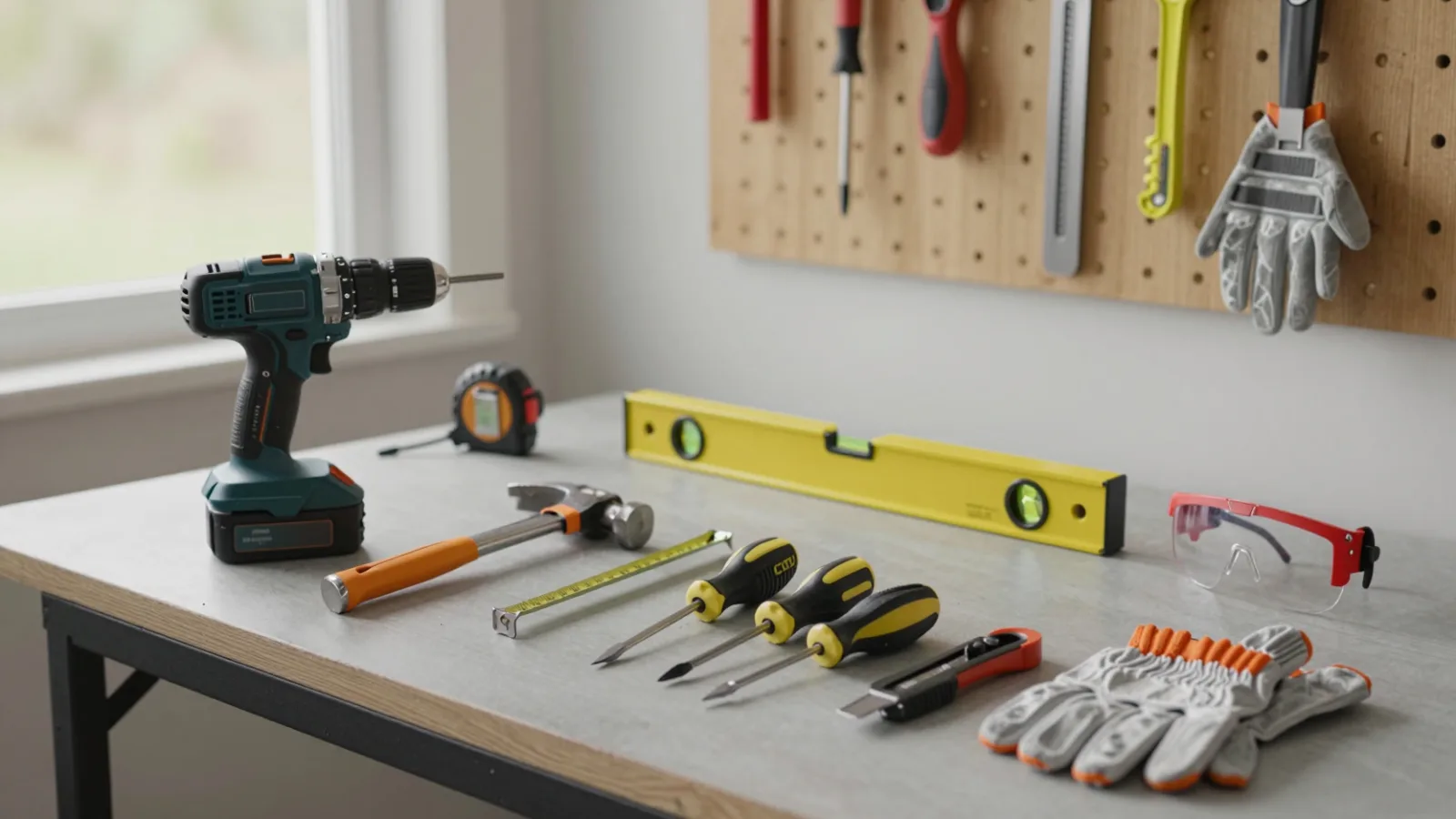
- Start with a small toolkit (a cordless drill, tape measure, level, hammer, screwdrivers, utility knife and a stud finder) and add tools as projects need them.
- Learn a few core skills first, such as finding studs, drilling and anchoring, patching drywall, caulking and painting.
- Good first projects include painting a room, hanging shelves, re-caulking a tub and swapping a cabinet's hardware.
- Leave electrical wiring, gas lines, structural changes and most roofing to licensed pros, and check whether your town needs a permit.
- If your home was built before 1978, test for lead paint before sanding, scraping or demolition.
Doing your own home improvements saves money, and there's real satisfaction in fixing something yourself. Most everyday jobs need only a few tools and some patience. The trick is to start with simple projects, learn a handful of core skills, and know when to call a professional.
This guide covers the tools to buy first, the skills that unlock most projects, good starter jobs and the safety rules that matter.
The beginner's toolkit
You don't need a garage full of equipment. These tools handle most small jobs around the house.
| Tool | What it's for | Tip |
|---|---|---|
| Cordless drill/driver | Drilling holes and driving screws | An 18V or 20V model with two batteries suits most homes |
| Drill and driver bit set | Wood, masonry and metal holes; screw heads | Get a set with common screwdriver bits included |
| Tape measure | Measuring everything | A 25 ft tape with a wide, stiff blade |
| Level | Hanging shelves, pictures and cabinets straight | A 24 in level, plus a small torpedo level |
| Claw hammer | Nails, light demolition | A 16 oz hammer suits most people |
| Screwdrivers | Small screws, electrical covers | Flat and Phillips in a few sizes |
| Utility knife | Cutting drywall, carpet, caulk and boxes | Keep spare blades; a dull blade slips |
| Stud finder | Finding wall framing behind drywall | An electronic one that also detects live wires |
| Pliers | Gripping, bending, cutting wire | Slip-joint and needle-nose |
| Safety gear | Protecting eyes, hands, ears and lungs | Safety glasses, gloves, ear protection and dust masks |
Add tools as projects need them. For big or one-off jobs, such as sanding a floor or cutting tile, rent the tool from a home center or a local tool rental shop.
Core skills that cover most jobs
Learn these, and you can handle a surprising number of projects.
- Finding studs. Wall studs are usually 16 in apart, center to center. Use a stud finder, then confirm with a small nail in a spot that will be covered.
- Drilling and anchoring. Screw heavy items into studs. Where there's no stud, use a wall anchor rated for more than the item's weight. Toggle bolts hold the most.
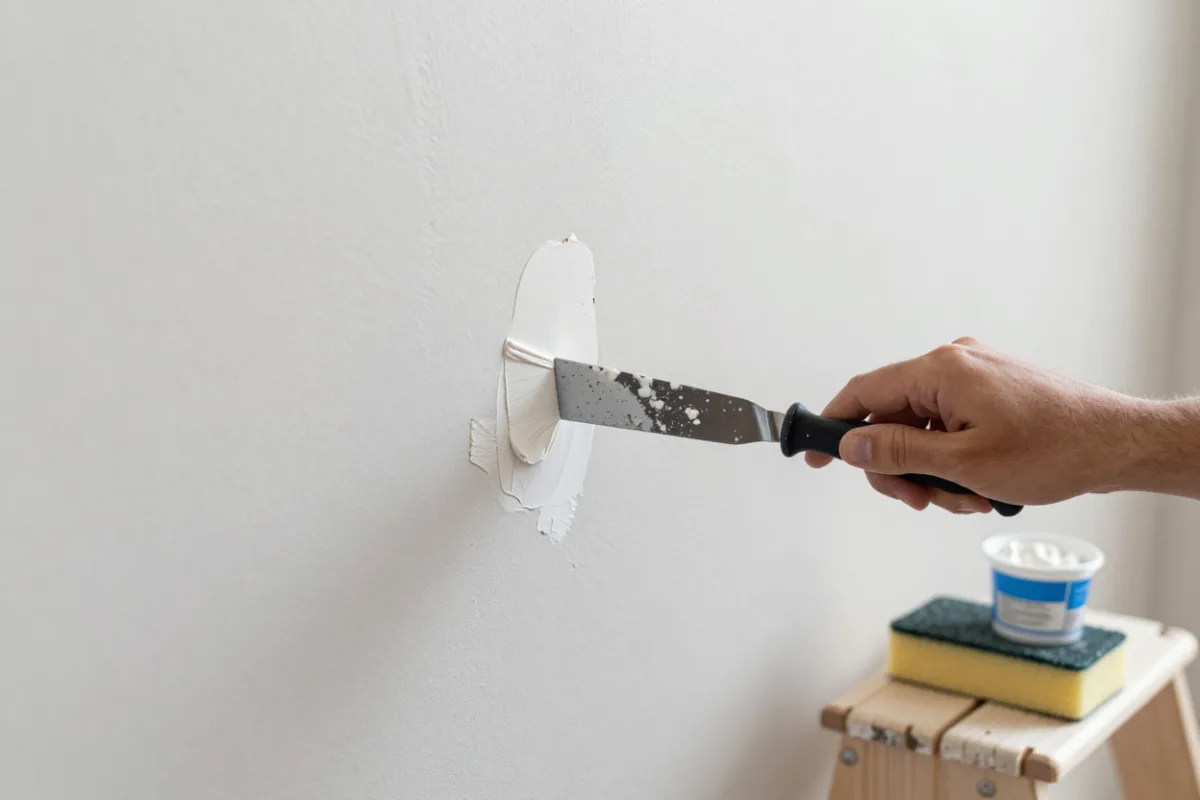
- Patching drywall. Fill small holes with spackle, let it dry, sand smooth and paint. Larger holes need a self-adhesive mesh patch or a piece of new drywall.
- Caulking. Cut the tip small, push a steady bead into the gap and smooth it with a wet finger or a caulk tool. Use silicone in wet areas and paintable acrylic caulk on trim.
- Painting. Clean and patch the walls, cut in the edges with a brush, then roll the middle in overlapping "W" strokes. Two thin coats beat one thick one.
- Shutting things off. Know where your main water shut-off valve and electrical panel are, and how to turn off power to a single circuit.
Good first projects
Pick a project you can finish in a weekend, and where a mistake is easy to redo.
| Project | Difficulty | Typical time |
|---|---|---|
| Swap cabinet knobs and pulls | Easy | 1–2 hours |
| Hang shelves or a heavy mirror | Easy | 1–2 hours |
| Patch holes and repaint a room | Easy | A weekend |
| Re-caulk a tub or shower | Easy | Half a day, plus drying time |
| Replace a showerhead or faucet aerator | Easy | Under an hour |
| Install weatherstripping on doors | Easy | 1–2 hours |
| Replace a toilet fill valve or flapper | Moderate | 1–2 hours |
| Lay peel-and-stick or click-together flooring | Moderate | A weekend for a small room |
| Tile a small backsplash | Moderate | A weekend |
Watch a couple of how-to videos before you start, read the product instructions, and lay out every tool and material before you begin.
Plan the project
- Measure twice. Write measurements down, and sketch the space.
- Budget for surprises. Price your materials, then add about 10 to 20% for extras and mistakes.
- Buy a little extra. Get about 10% more flooring, tile or paint than you measure, so you have matching spares for repairs.
- Protect the room. Cover floors and furniture, and tape off edges.
- Allow more time than you expect. First-time projects nearly always take longer.
Safety and when to hire a pro
Some work is dangerous, or must legally be done or inspected by licensed trades.
- Leave these to licensed professionals: gas lines, new electrical circuits or panel work, load-bearing walls, major plumbing changes and most roofing. Our guide to hiring a contractor explains how to find and check a good one.
- Check for permits. Many towns require permits for electrical, plumbing and structural work, decks and additions. Unpermitted work can cause problems with inspections, resale and insurance claims. Ask your local building department.
- Call 811 before you dig for fence posts, deck footings or anything else in the yard.
- Turn off the power at the panel before touching any electrical fixture, and confirm it's off with a non-contact voltage tester.
- Use ladders safely. Set them on firm, level ground, keep three points of contact and never stand on the top rung or top cap.
- Wear protection. Safety glasses for drilling, cutting and hammering; a dust mask for sanding; hearing protection for loud tools.
Common questions
A cordless drill with a set of bits, a tape measure, a level, a claw hammer, a set of screwdrivers, a utility knife, a stud finder, pliers, safety glasses and work gloves. Buy other tools only when a project calls for them, or rent expensive ones.
It depends on the job and your town. Painting, flooring and swapping fixtures usually don't need one. New electrical circuits, plumbing changes, structural work, decks and additions usually do. Call or check the website of your local building department before you start.
Work on gas lines, new electrical circuits or panels, anything that changes load-bearing walls, and most roof work. Mistakes can cause fires, leaks, injuries or failed inspections when you sell.
Screw into a wall stud whenever you can, using a stud finder to locate it. Where there's no stud, use an anchor rated for more than the item's weight, such as a toggle bolt for heavy shelves or mirrors.
Price out materials, then add about 10 to 20% for mistakes, extra materials and surprises. Buy around 10% more flooring, tile or paint than you measure, so you have spares that match.