How to Paint a Room
Painting a room is one of the cheapest ways to transform a home, and most of a good result comes from preparation. Here's how much paint to buy, which finish to choose, and how to prep, cut in and roll for clean, even walls.
By Pond.com editors Updated 3 min read

Quick answer
- One gallon of paint typically covers about 350 to 400 square feet with one coat; most rooms need two coats.
- Use flat or matte on ceilings, eggshell or satin on most walls, and semi-gloss on trim and in bathrooms.
- Prep is most of the job. Clean walls, fill holes, sand, tape and protect floors.
- Cut in edges with a brush first, then roll walls in sections while the edges are still wet.
- Paint ceiling first, then walls, then trim.
A fresh coat of paint is one of the cheapest, fastest ways to change how a room looks and feels. Professional-looking results come mostly from preparation and a few simple techniques, not expensive tools.
How much paint do you need?
A gallon of paint usually covers about 350 to 400 square feet with one coat, and most rooms need two coats. To estimate:
- Measure the room's perimeter and multiply by the wall height.
- Subtract about 20 square feet per door and 15 per window.
- Divide by 350, then double for two coats.
A typical 12-by-12-foot bedroom with 8-foot walls needs about 2 gallons for two coats.
How much paint do you need? Enter your room size to see how many gallons to buy. Open calculatorChoose the right finish
| Sheen | Best for |
|---|---|
| Flat or matte | Ceilings, low-traffic rooms; hides imperfections |
| Eggshell | Most living areas and bedrooms |
| Satin | Kitchens, hallways, kids' rooms; easier to wipe |
| Semi-gloss | Trim, doors, bathrooms |
What you'll need
Paint and primer, an angled 2- to 2½-inch brush, a roller frame and covers, an extension pole, a paint tray, painter's tape, drop cloths, spackle, a sanding sponge and a damp cloth.
Prep the room
- Move furniture to the center and cover it, and cover floors with drop cloths.
- Remove outlet covers and switch plates.
- Clean walls, especially in kitchens, so paint sticks.
- Fill holes and cracks and sand smooth. See how to patch a hole in drywall.
- Prime patches, stains and new drywall.
- Tape along trim and ceiling edges if you need a guide.
Paint in the right order
- Ceiling first, so drips don't land on fresh walls.
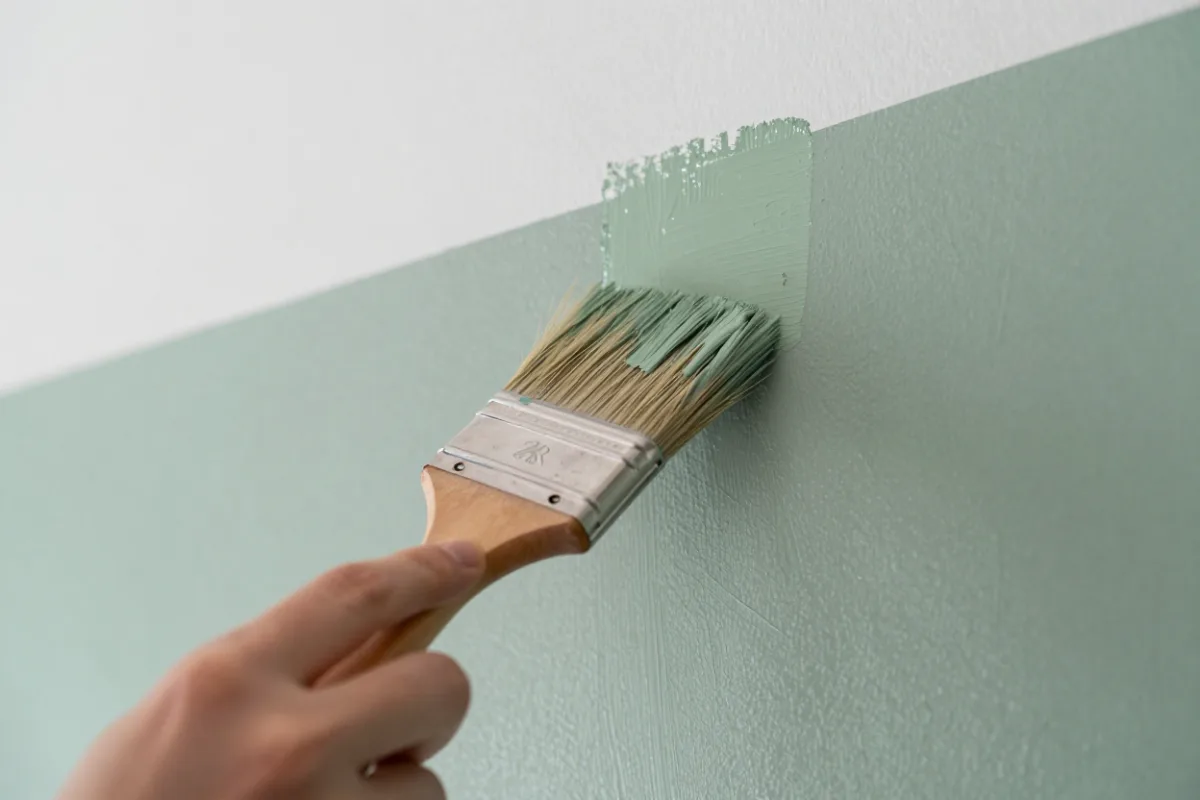
- Cut in: brush a 2- to 3-inch band along ceiling lines, corners and trim.
- Roll the walls in sections about 3 to 4 feet wide, while the cut-in edges are still wet. Roll a W, fill it in, then finish with light top-to-bottom strokes.
- Second coat once the first is dry to recoat.
- Trim and doors last.
Finishing and cleanup
- Remove tape while the final coat is still slightly tacky, pulling at an angle.
- Clean brushes and rollers with warm soapy water for latex paint.
- Store leftover paint for touch-ups, sealed tightly and labeled with the room.
- Dispose of paint according to local rules; never pour it down drains.
Common questions
Use primer on new drywall, patched areas, stains, glossy surfaces and when making a big color change. Over a clean, sound wall in a similar color, many paint-and-primer products can go straight on.
Most latex paints can be recoated in about 2 to 4 hours, but check the can, since humidity and temperature affect drying. Paint takes much longer, often weeks, to fully cure, so be gentle with fresh walls.
Keep a wet edge by rolling into paint that's still wet, load the roller evenly, use a W pattern then fill it in, and finish each section with light, straight passes from top to bottom. A good-quality roller cover helps a lot.