How to Pack for a Move
Good packing protects your belongings and makes unpacking far easier. Here's what supplies to get, the order to pack in, how to pack dishes, electronics and furniture, and how to label boxes so you can find everything.
By Pond.com editors Updated 3 min read
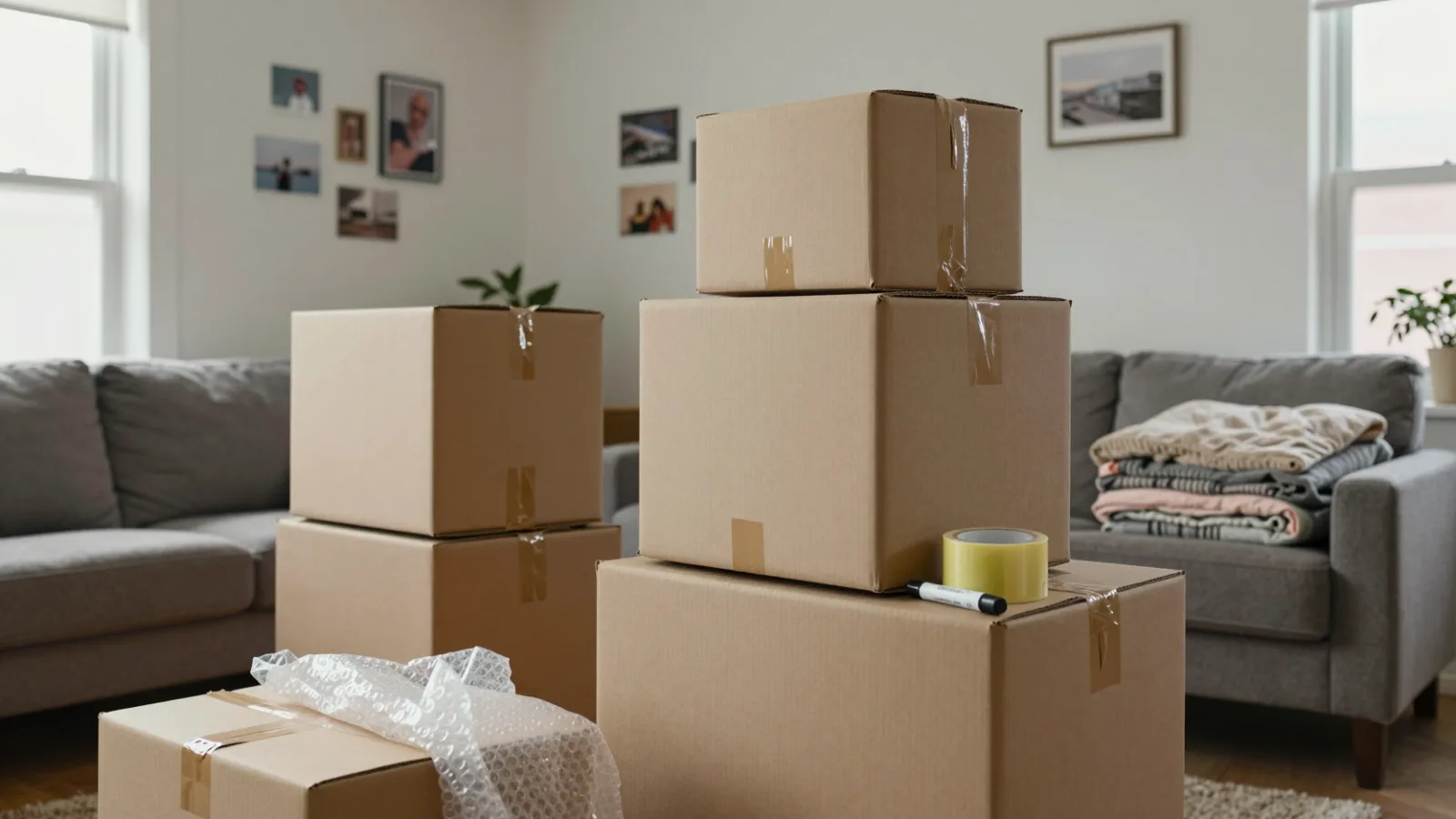
Quick answer
- Declutter before you pack so you're not moving things you don't want.
- Start with rooms and items you use least, and pack the kitchen and bathroom last.
- Put heavy items in small boxes and light items in large boxes.
- Label every box with the room and contents on the top and side.
- Pack an essentials box with what you'll need the first night and day.
Packing is the most time-consuming part of moving, but a plan makes it manageable and keeps your things safe. The goal is boxes that arrive intact and a first night where you can find your toothbrush.
Before you pack
- Declutter everything you don't want to move: sell, donate or recycle it. See how to declutter your home, room by room.
- Get supplies: boxes in several sizes, packing tape, packing paper, bubble wrap, markers, labels, and blankets or furniture pads.
- Start early, packing a few boxes a day.
Packing order
- Things you rarely use: seasonal items, books, decorations, guest room items.
- Rooms you use less: spare rooms, garage, storage areas.
- Most of each room, leaving what you'll need until moving day.
- Kitchen and bathroom last, keeping just the essentials out.
Packing tips
- Heavy items in small boxes (books, tools, canned food); light items in large boxes (linens, pillows).
- Keep boxes under about 50 pounds so they're safe to lift.
- Fill gaps with paper or towels so things don't shift.
- Tape the bottom well with several strips across the seams.
- Keep one room per box where you can.
Packing tricky items
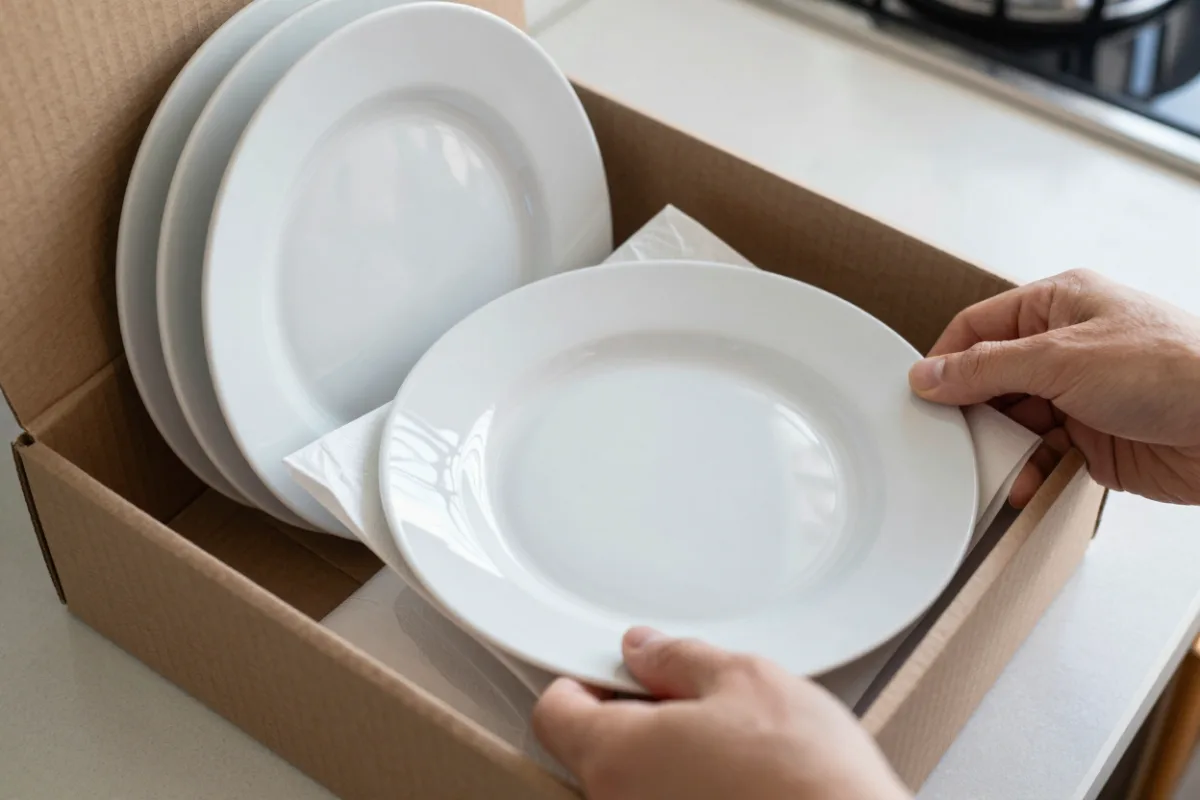
Dishes and glasses: wrap each one in paper, stand plates on edge like records, and use dish-pack boxes or cell dividers for glasses. Mark the box "fragile" and "this side up."
Electronics: use original boxes if you have them. Photograph cable connections before unplugging, and keep cords and remotes in a labeled bag with each device.
Clothes: use wardrobe boxes for hanging clothes, or leave clothes in dresser drawers if movers allow.
Furniture: remove legs and hardware, keep screws in a labeled bag taped to the piece, and wrap furniture in blankets.
Liquids: seal caps with plastic wrap and pack upright in a plastic bin.
Label everything
Write the room and a short contents list on the top and at least one side of every box. Color-coded labels by room speed up unloading. Number boxes and keep a list so you'll notice if one goes missing.
Pack an essentials box
Keep it with you, not on the truck:
- Medicines, glasses and important documents
- Phone chargers and a laptop
- Toiletries, toilet paper and a towel
- A change of clothes and bedding for the first night
- Basic tools, a box cutter and light bulbs
- Snacks, water, paper plates and cups
Common questions
Plan on several days for a small apartment and two to four weeks for a family home, packing a little each day. Starting early with items you rarely use makes the last week much easier.
It depends on how much you own, but a rough guide is 10 to 15 boxes per room in a typical home, in a mix of small, medium and large sizes, plus a few special boxes for dishes and wardrobes.
Ask local grocery and liquor stores, check community groups and online marketplaces where people give away used boxes after moves, and ask friends who recently moved. Make sure boxes are clean, dry and sturdy.