How to Sharpen and Care for Pruners
Sharp, clean pruners make cleaner cuts that heal faster, and they're easier on your hands. Here's how to clean, sharpen, oil and adjust bypass pruners, and how to store them so they last for years.
By Pond.com editors Updated 3 min read

Quick answer
- Clean sap and dirt off after use, and disinfect blades when cutting diseased plants.
- Sharpen only the beveled cutting blade, following its original angle, with a diamond file or whetstone.
- Remove any burr on the flat back of the blade with a light pass, keeping it flat.
- Oil the pivot and blades, and adjust the pivot nut so the blades close smoothly without gaps.
- Store pruners dry, and sharpen them at least once or twice a season.
Pruners are probably the garden tool you use most, and they're easy to look after. Sharp blades make clean cuts that heal quickly and resist disease, while dull blades crush stems and make every job harder on your hands. A few minutes of care keeps a good pair working for decades.
Clean after every use
- Wipe off sap and dirt with a rag. Sticky sap can be removed with a little rubbing alcohol or warm soapy water.
- Disinfect with rubbing alcohol (70% isopropyl) or a household disinfectant when you've been cutting diseased plants, before moving on to healthy ones.
- Dry thoroughly to prevent rust.
How to sharpen bypass pruners
Bypass pruners have one sharp, beveled cutting blade and one thicker hook (the anvil or jaw) that the blade slides past. Only the cutting blade is sharpened.
- Clean the blades so you can see the edge clearly.
- Open the pruners and hold them steady on a bench, or clamp them gently in a vise.
- Find the bevel, the angled edge on the outside of the cutting blade.
- Draw a diamond file or small whetstone along the bevel, from the base toward the tip, following the existing angle. Use smooth, even strokes in one direction.
- Check your progress: a fresh, shiny edge should appear along the whole bevel.
- Remove the burr: lay the file flat against the back (inside) of the blade and make one or two light passes. Keep it flat; never bevel the back side.
- Test by cutting a piece of paper or a thin twig. It should slice cleanly.
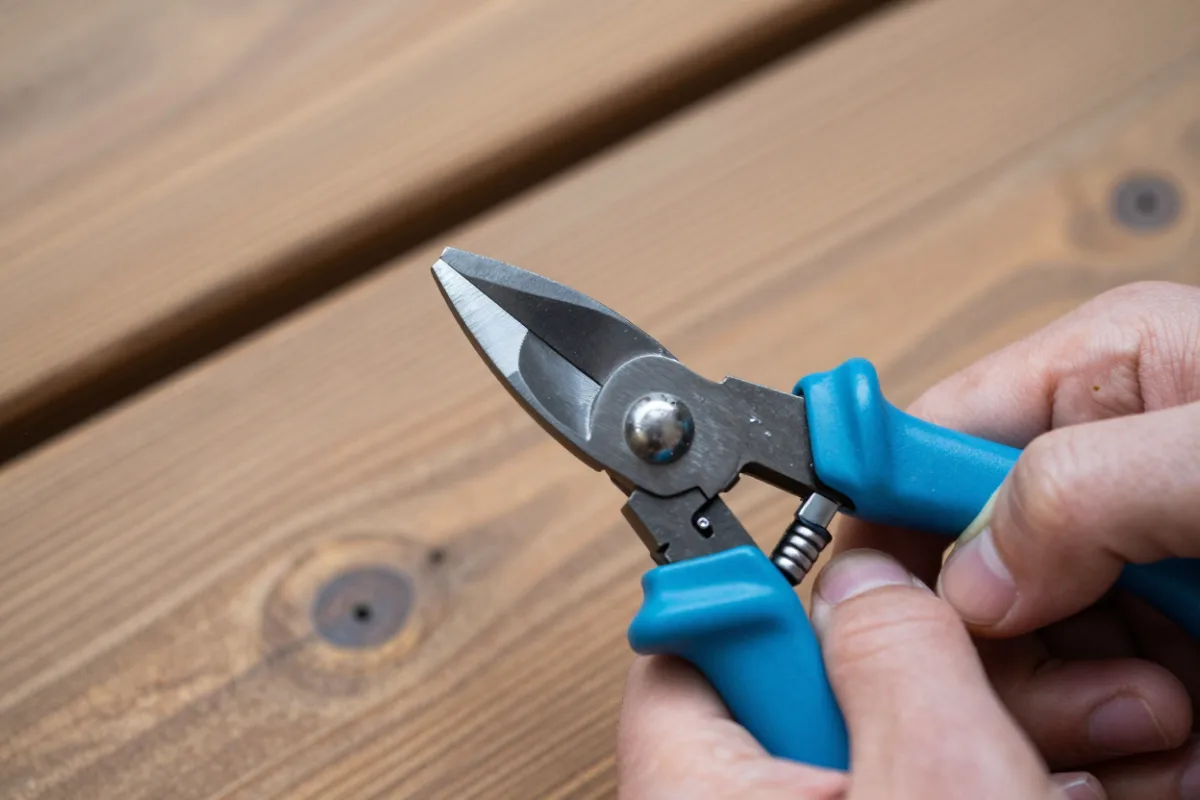
Oil and adjust
- Oil the pivot with a few drops of light machine oil and work the pruners open and closed.
- Wipe a thin film of oil on the blades to protect against rust.
- Check the tension: if the blades separate or leave a gap when closed, tighten the pivot nut slightly. If they're stiff, loosen it a little.
- Replace worn springs or blades; many quality pruners have replaceable parts.
Store them properly
- Keep pruners dry, in a shed, garage or tool bag, not outside.
- Close and lock the blades.
- Give them a full clean, sharpen and oil at the end of the season before winter storage.
Common questions
No. You can sharpen most bypass pruners fully assembled by opening them wide and working on the beveled blade. Taking them apart makes it easier to clean heavy sap and rust or replace a worn spring or blade.
Follow the existing bevel on the cutting blade, which is often around 20 to 25 degrees. Matching the angle that's already there is more important than hitting an exact number.
Scrub light rust off with steel wool or a fine abrasive pad and a little oil. For heavier rust, soak the blades in white vinegar for a few hours, scrub, rinse, dry thoroughly and oil.