Essential Garden Tools for Beginners (and How to Look After Them)
You don't need a shed full of gadgets to garden well. Here are the ten hand tools worth buying first, what to look for in each, when power tools make sense, and how to keep your tools working for years.
By Pond.com editors Updated 5 min read
Quick answer
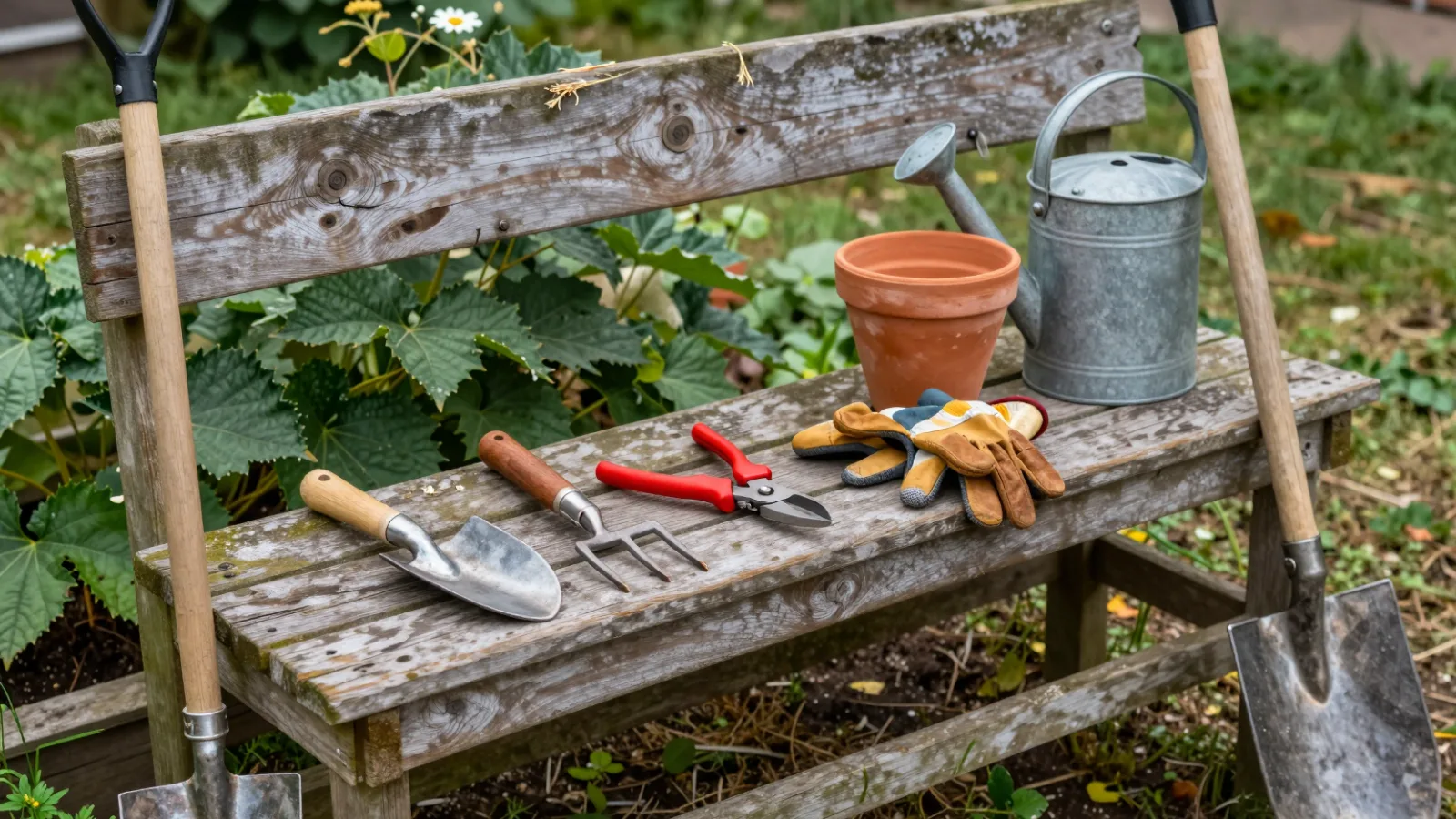
- Start with gloves, a hand trowel, bypass pruners, a spade, a garden fork, a rake, a hoe, a hose with a nozzle and a wheelbarrow.
- Spend more on the tools you use most, especially pruners and a spade. Cheap ones bend, break or blunt quickly.
- Choose bypass pruners for live stems; anvil pruners are for dead wood.
- Battery-powered mowers, trimmers and blowers now suit most yards, and they're quieter and need less upkeep than gas.
- Clean tools after use, keep blades sharp and store everything somewhere dry.
Garden centers are full of tools, but most gardening gets done with a handful of good ones. Buying a few well-made basics, and looking after them, beats a wall of cheap gadgets every time.
This guide covers the tools to buy first, what to look for in each, when power tools make sense, and how to keep your tools in good shape.
The ten tools to buy first
| Tool | What it's for | What to look for |
|---|---|---|
| Gloves | Protecting hands from thorns, blisters and soil | Snug fit; thicker gauntlet styles for roses |
| Hand trowel | Planting small plants and bulbs, potting up | Forged steel blade fixed firmly to the handle |
| Bypass pruners | Cutting stems and small branches up to about ¾ in | Replaceable blade, comfortable grip, easy-to-use lock |
| Spade | Digging, edging beds, dividing plants | Flat, sharpened blade; strong shaft; a tread on top of the blade |
| Garden fork | Loosening soil, turning compost, lifting plants | Square, forged tines that don't bend |
| Rake | A leaf rake for leaves and lawns; a bow rake for leveling soil | A bow rake with a solid metal head |
| Hoe | Cutting weeds just below the surface | A sharp blade; a stirrup or "scuffle" hoe is easiest to use |
| Hose and nozzle | Watering | A kink-resistant hose long enough to reach every bed; a nozzle with a gentle shower setting |
| Watering can | Seedlings, containers, liquid feeds | A removable rose (sprinkler head) for a gentle flow |
| Wheelbarrow or garden cart | Moving soil, mulch, compost and plants | A sturdy tire; a two-wheeled cart is more stable for beginners |
Add loppers (long-handled pruners for branches up to about 1½ in) and a hand weeder once you have shrubs and established beds.
Spade or shovel?
People often mix these up, but they do different jobs.
- A spade has a flat, straight-edged blade. It's for digging planting holes, cutting neat bed edges and slicing through roots.
- A shovel has a curved, often pointed blade. It's for scooping and moving loose material such as soil, gravel or mulch.
If you can only buy one, start with a spade for planting, and add a shovel when you start moving bulk materials.
Choosing pruners
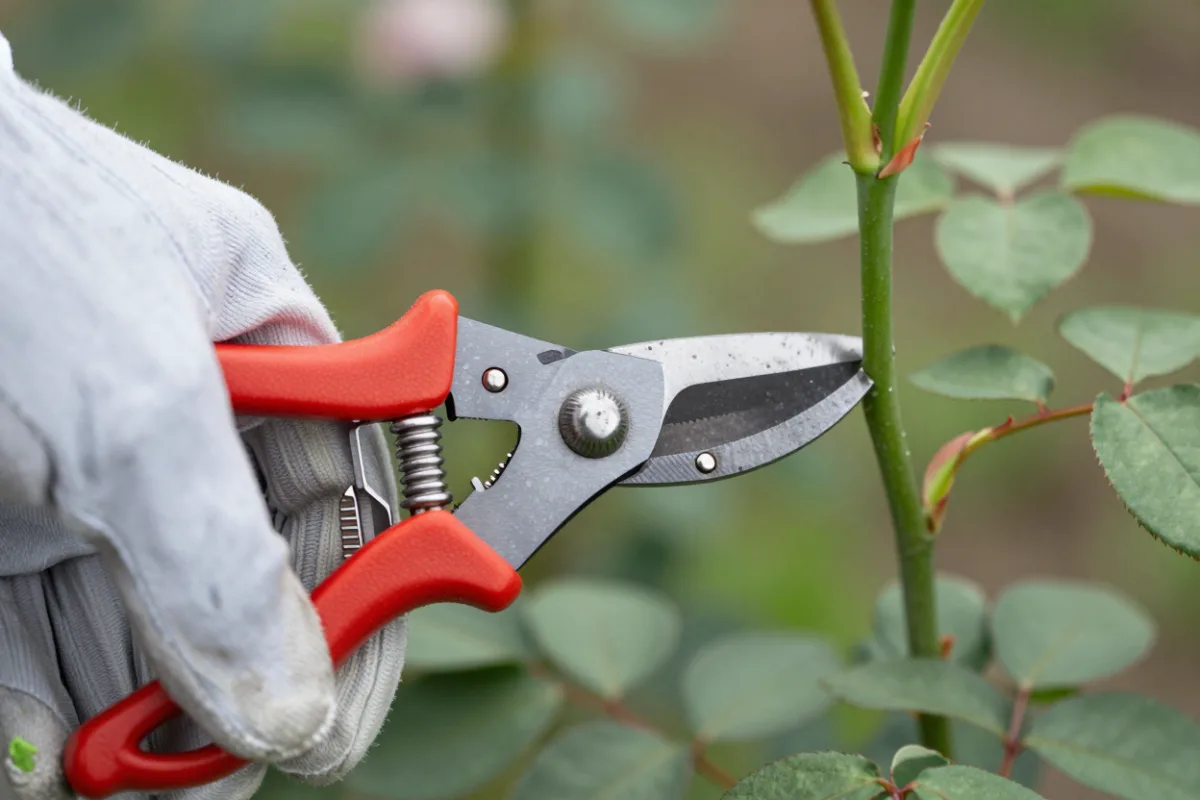
- Bypass pruners cut like scissors, with one blade sliding past the other. They make clean cuts on live stems, which heal faster. Buy these first.
- Anvil pruners have one blade that closes onto a flat surface. They crush as they cut, so they're best for dead, dry wood.
- Size matters. Try them in your hand. Smaller hands work better with smaller pruners, and left-handed models are available.
Power tools: what's worth it
Most gardens benefit from one or two power tools, mainly for the lawn.
| Tool | When you need it |
|---|---|
| Lawn mower | Any lawn bigger than a small patch |
| String trimmer | Edges, fence lines and areas the mower can't reach |
| Leaf blower | Larger yards with many trees; a rake works for small ones |
| Hedge trimmer | Long or tall hedges |
Battery or gas? For most suburban yards, battery-powered tools are now the easier choice. They start instantly, run quietly, produce no fumes and need almost no maintenance. Choose one brand so batteries work across tools. Gas still has the edge for very large properties and heavy brush. Some places restrict gas-powered equipment: California, for example, has phased out sales of most new small gas engines, and many towns limit gas leaf blowers.
Look after your tools
A few minutes of care keeps tools working for years.
- Clean after use. Knock off soil, rinse and dry. Dried soil holds moisture and rusts metal.
- Oil the metal. Wipe blades and tines with a little vegetable or mineral oil before storing.
- Sharpen blades. Touch up pruners, spades and hoes with a file or sharpening stone a few times a season. Sharp tools are safer and easier to use.
- Disinfect pruners with rubbing alcohol after cutting diseased plants, so you don't spread the disease.
- Care for wooden handles. Sand rough spots and rub in a little linseed oil once a year.
- Store them dry. Hang tools on a wall in a shed or garage. Never leave them out in the rain.
- Winterize power tools. Charge batteries to partial charge and store them indoors; follow the manual for gas engines.
Common questions
A spade has a flatter, straighter blade for digging, edging and slicing through roots. A shovel has a curved, often pointed blade for scooping and moving loose material such as soil, gravel or mulch.
Bypass pruners cut like scissors and make clean cuts on live stems, so they're the one to buy first. Anvil pruners crush as they cut, which is fine for dead, dry wood.
Knock off soil after each use, rinse and dry the tools, and wipe metal parts with a little oil. Clean pruner blades with rubbing alcohol after cutting diseased plants so you don't spread disease.
For most suburban yards, yes. Modern battery mowers, string trimmers and blowers have enough power and run time, start instantly and need almost no maintenance. Very large properties or heavy brush may still call for gas.
Touch them up a few times a season with a small sharpening stone or file, or whenever they start to crush stems instead of cutting cleanly.