How to Build a Raised Garden Bed
A raised bed gives you better soil, fewer weeds and an easier way to grow vegetables and herbs. Here's how to choose the size, materials and spot, build a simple wooden bed, and fill it with the right soil.
By Pond.com editors Updated 3 min read
Quick answer
- Keep beds no wider than about 4 feet so you can reach the middle from both sides.
- Aim for 10 to 12 inches deep for most vegetables, or deeper if your ground is poor.
- Use rot-resistant untreated wood such as cedar, or metal, stone or composite.
- Put the bed in a level spot with at least 6 to 8 hours of sun for most vegetables.
- Fill with a mix of quality topsoil and compost, not plain garden soil or straight potting mix.
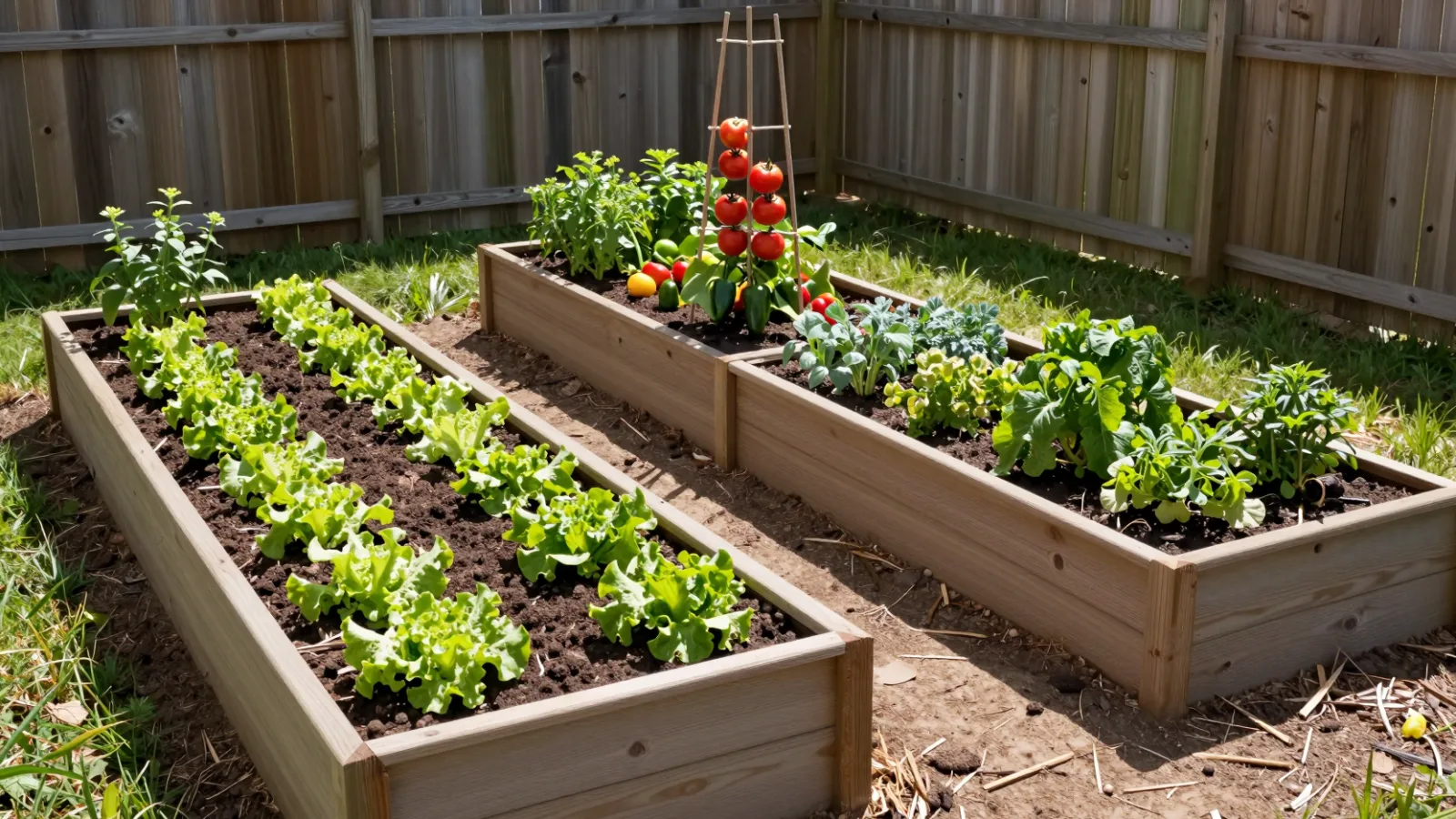
Raised beds are one of the easiest ways to start growing food. You control the soil, they warm up faster in spring, drain well, are easier on your back and keep paths and beds clearly separate. A simple wooden bed takes an afternoon to build.
Choose the spot
- Sun: most vegetables need at least 6 to 8 hours of direct sun a day.
- Level ground so water soaks in evenly.
- Near a water source, since raised beds dry out faster than in-ground beds.
- Away from tree roots, which will grow up into rich bed soil.
Choose the size
- Width: no more than about 4 feet if you can reach from both sides, or 2 to 3 feet against a fence.
- Length: 6 to 8 feet is common and fits standard lumber lengths.
- Height: 10 to 12 inches suits most vegetables. Go deeper (18 to 30 inches) for poor ground or easier access if bending is hard.
- Paths: leave at least 18 to 24 inches between beds, more for a wheelbarrow.
Choose materials
- Cedar or redwood: naturally rot-resistant, attractive and long-lasting.
- Pressure-treated wood: modern residential treatments are considered safe by many extension services, but some gardeners line the inside or avoid it for food beds. Never use railroad ties or creosote-treated wood.
- Metal kits: long-lasting and quick to assemble.
- Stone, brick or concrete blocks: permanent and sturdy.
How to build a simple wooden bed
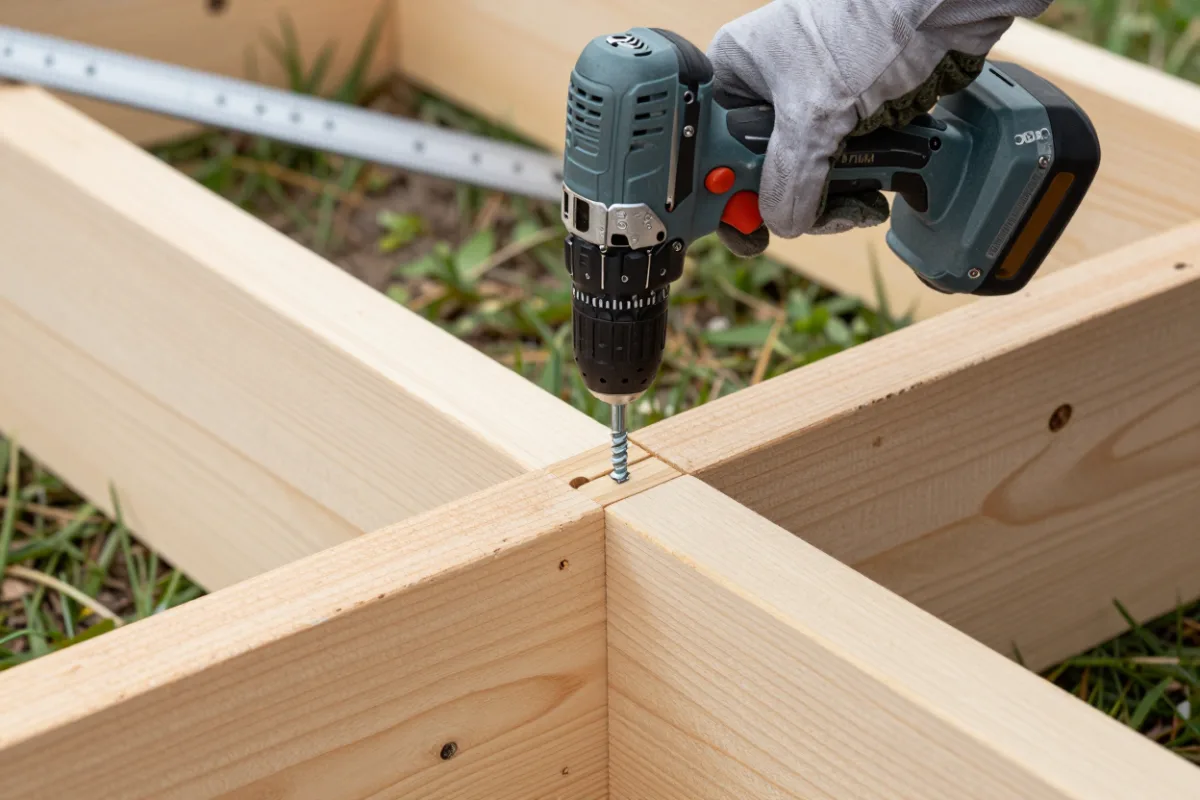
You'll need boards (for example 2-by-6 or 2-by-8 cedar), four corner posts, exterior screws and a drill.
- Cut boards to length: two long sides and two short ends.
- Attach the boards to corner posts with exterior-grade screws to form a rectangle. Stack boards for taller beds.
- Check it's square by measuring the diagonals; they should be equal.
- Set the bed in place, level it by digging out high spots, and check with a level.
- Add a center brace to long or tall beds so the sides don't bow when filled.
- Line the bottom with cardboard to smother grass, or hardware cloth if gophers or moles are a problem.
Fill it with good soil
A raised bed needs a lot of soil. A 4-by-8-foot bed 12 inches deep holds about 32 cubic feet. Use:
- About 60% quality topsoil and 40% compost, or
- A ready-made raised-bed mix from a garden center or landscape supplier
Bulk soil delivered by the cubic yard is usually much cheaper than bags for several beds. Top up with compost each year as the soil settles.
How much soil will your beds need? See cubic feet, yards and bags, with the topsoil and compost mix. Open calculatorPlanting
Plant closer together than in rows, since you won't walk on the soil. Put tall crops like tomatoes and pole beans on the north side so they don't shade shorter plants. See how to start a vegetable garden for what to grow first.
Common questions
Naturally rot-resistant woods like cedar and redwood last longest without treatment. Modern pressure-treated lumber made for residential use is generally considered safe by many extension services, but some gardeners prefer to avoid it or line the inside. Never use old railroad ties or wood treated with creosote.
A common mix is about 60% quality topsoil and 40% compost, or a ready-made raised-bed mix. Avoid filling beds with plain potting mix, which is expensive and drains too fast in large volumes, or heavy clay garden soil.
On lawn, you can lay cardboard to smother grass before filling. If burrowing animals like gophers are a problem, staple hardware cloth across the bottom. Avoid plastic sheeting, which stops drainage.