How to Start Seeds Indoors
Starting seeds indoors gives you a head start on the season, more variety and cheaper plants. Here's when to sow, what equipment you need, how to give seedlings enough light, and how to harden them off before planting outside.
By Pond.com editors Updated 3 min read
Quick answer
- Start most seeds 6 to 8 weeks before your last spring frost date; check each seed packet.
- Use clean containers with drainage and a fine, sterile seed-starting mix.
- Keep the mix moist but not soggy, and many seeds sprout faster with gentle bottom heat.
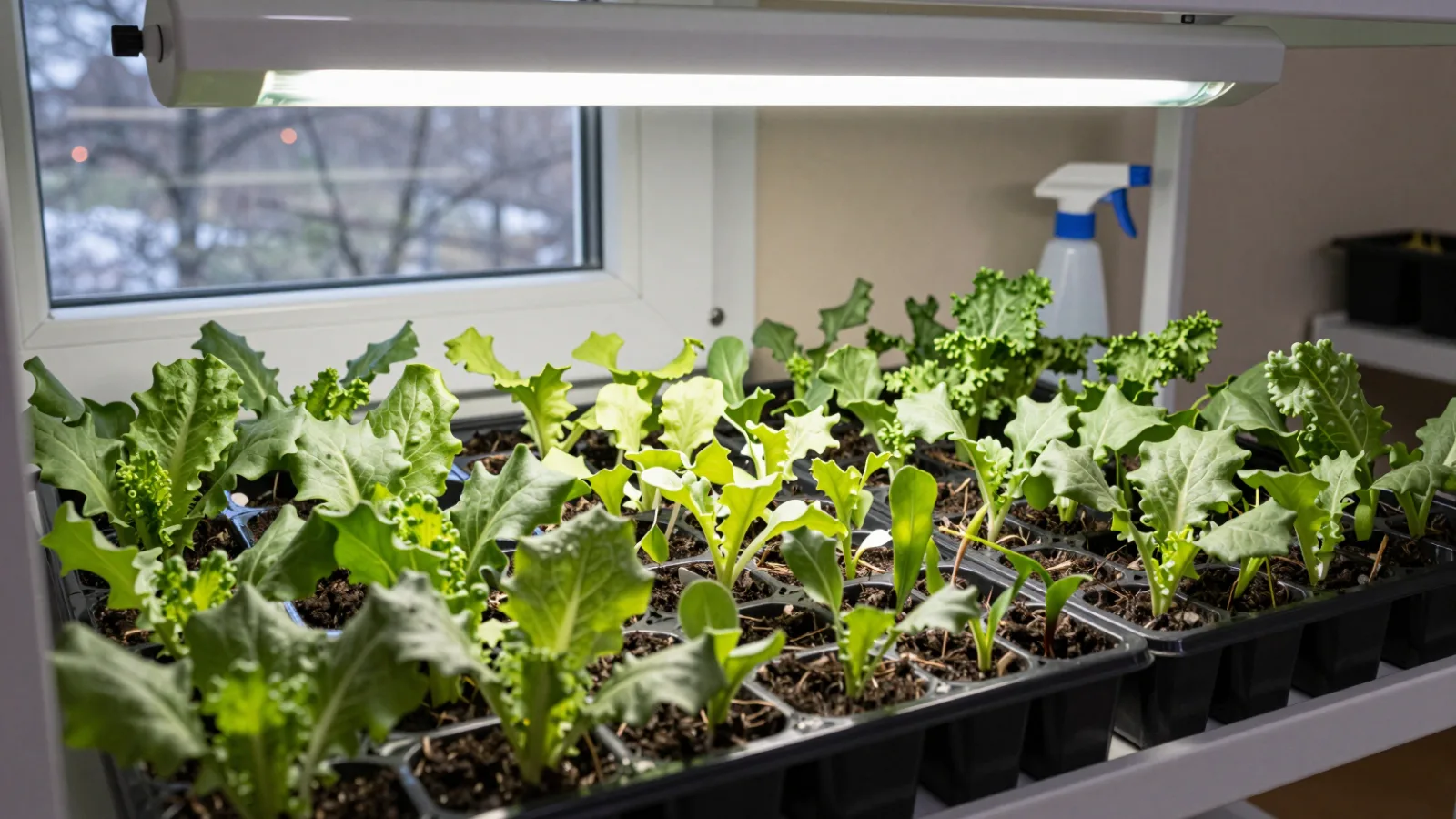
- Give seedlings strong light, ideally a grow light a few inches above them for about 14 to 16 hours a day.
- Harden seedlings off outdoors over 7 to 10 days before planting them out.
Starting seeds indoors lets you grow varieties you can't find as plants, gets crops like tomatoes and peppers off to an early start, and saves money. It's not difficult, but seedlings have a few needs that are easy to miss, especially light.
When to start
Find your last spring frost date for your area (your cooperative extension service or an online frost-date tool can help), then count back:
| Crop | Start indoors |
|---|---|
| Peppers, eggplant | 8 to 10 weeks before last frost |
| Tomatoes | 6 to 8 weeks before |
| Broccoli, cabbage, lettuce | 4 to 6 weeks before, to plant out in cool weather |
| Basil and many herbs | 6 to 8 weeks before |
Always check the seed packet, which lists timing for each variety.
What you need
- Containers: cell trays, small pots or recycled containers with drainage holes.
- Seed-starting mix: fine, light and sterile. Garden soil is too heavy and can carry disease.
- A tray to catch water, and a clear dome or plastic cover to hold humidity until seeds sprout.
- Light: an LED grow light or shop light on a timer.
- Optional: a seedling heat mat to speed germination of warm-season crops.
How to sow
- Moisten the mix before filling containers, so it's damp but not dripping.
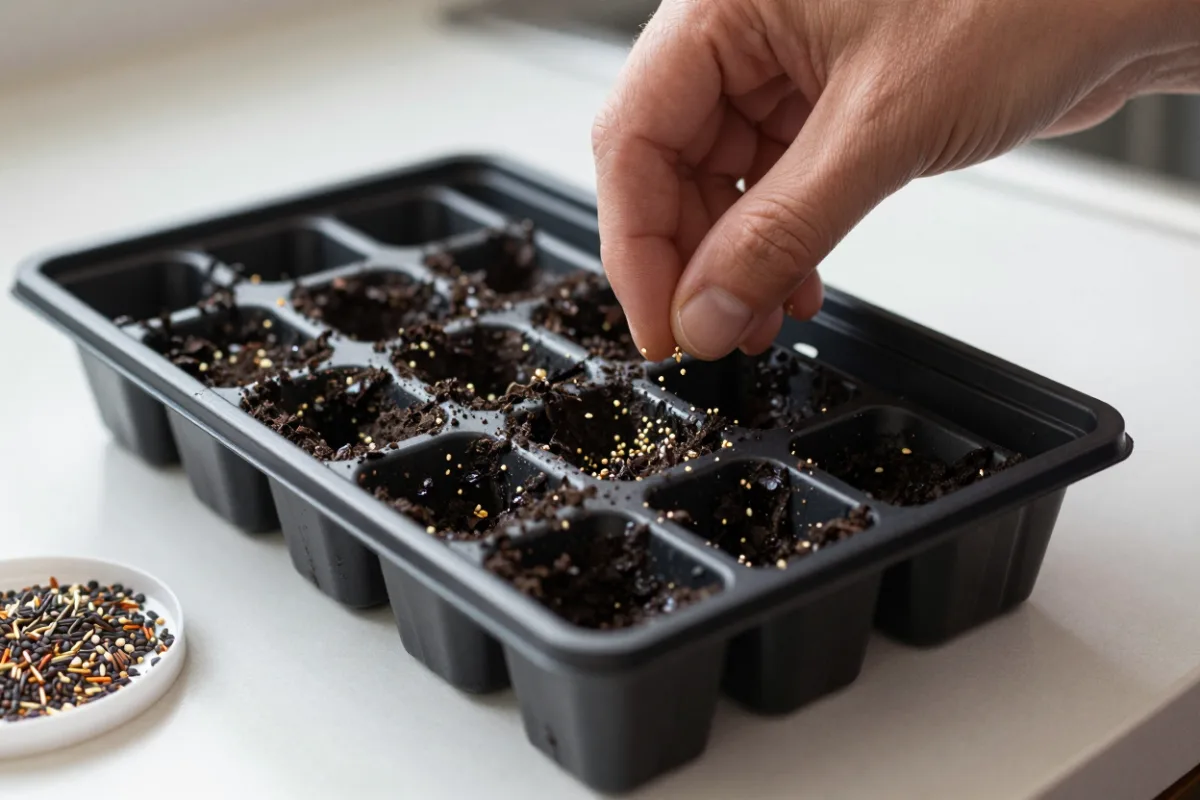
- Sow two or three seeds per cell at the depth on the packet. As a rule, about two to three times the seed's width.
- Label each row so you remember what's what.
- Cover with a dome or plastic to keep humidity in.
- Keep warm, around 70 to 80°F for most warm-season crops.
Caring for seedlings
- Remove the cover as soon as seedlings appear.
- Give strong light right away. Keep a grow light a few inches above the seedlings and raise it as they grow. Run it about 14 to 16 hours a day.
- Water from below by adding water to the tray, so stems stay dry and disease is less likely.
- Thin to one seedling per cell by snipping extras at soil level.
- Run a fan gently for a few hours a day to build sturdier stems.
- Pot up into bigger containers if plants outgrow their cells before it's time to plant out.
- Feed lightly with a diluted fertilizer once true leaves appear.
Harden off before planting
Seedlings raised indoors need to adjust to sun, wind and cooler nights. Over 7 to 10 days, set them outside in a sheltered spot for an hour or two, increasing the time and sun each day. Then plant out after your last frost for warm-season crops.
Common questions
A sunny window can work for some crops, but seedlings often stretch and flop toward the glass. An inexpensive LED shop light or grow light kept a few inches above the seedlings gives much sturdier plants.
Tall, thin seedlings are usually not getting enough light. Lower the light closer to the plants, increase the hours of light, and run a gentle fan to make the stems stronger. Too much warmth can also cause stretching.
Root crops like carrots, radishes and beets, and fast growers like beans, peas, squash and cucumbers usually do better sown directly outdoors, because they grow quickly or don't like their roots disturbed.