Why Are My Pond Fish Dying? Common Causes and Fixes
When pond fish die, the cause is usually water quality, low oxygen, temperature stress, disease or predators. Here's how to work out what happened, what to do right away, and how to prevent it from happening again.
By Pond.com editors Updated 3 min read

Quick answer
- Most pond fish deaths come from poor water quality or low oxygen, often after hot weather, overfeeding or overstocking.
- If fish are gasping at the surface, add aeration right away, stop feeding and do a partial water change with dechlorinated water.
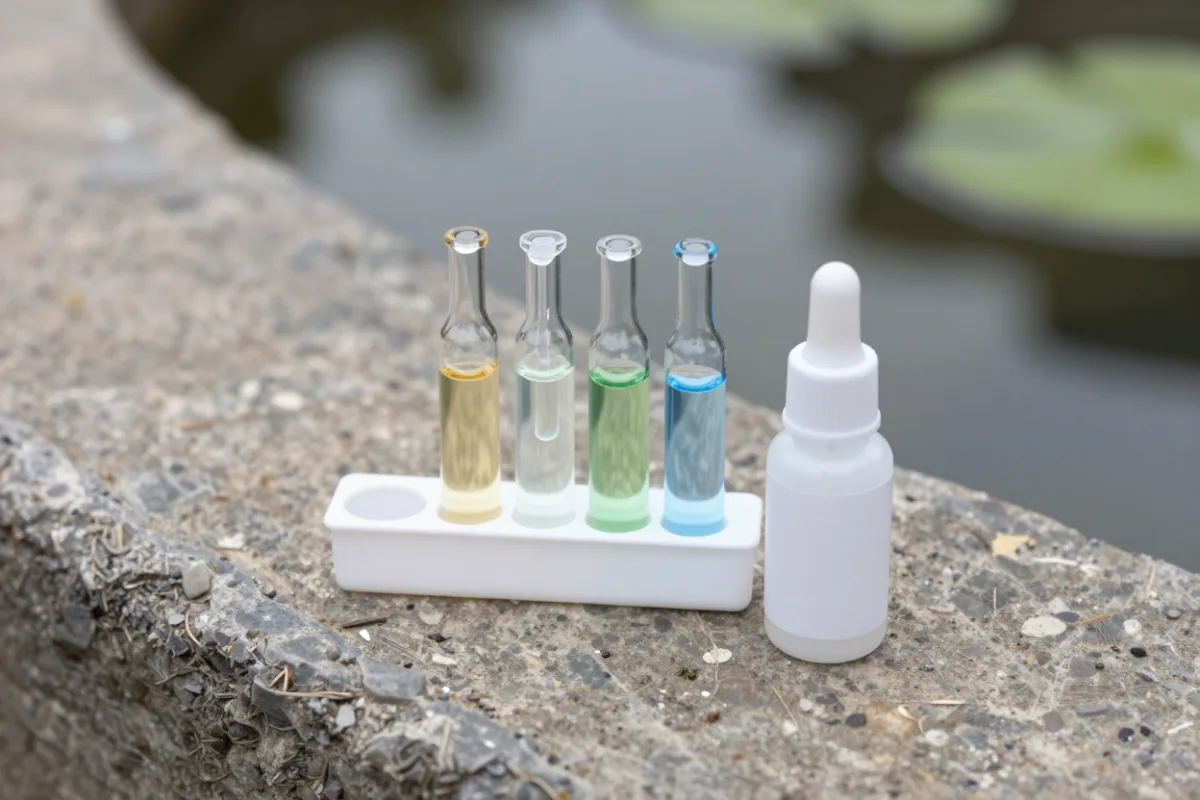
- Test for ammonia, nitrite and pH. Ammonia and nitrite should be zero.
- Sudden deaths of several fish point to oxygen or a toxin; one fish at a time over weeks suggests disease.
- Prevent problems with good filtration, aeration, sensible fish numbers and light feeding.
Losing fish is upsetting, and when it happens it's important to act quickly. Most pond fish deaths have a handful of causes, and working through them in order usually reveals what went wrong.
What to do right now
If fish are dying or struggling:
- Add aeration immediately. Turn on a fountain or waterfall, or add an air pump.
- Stop feeding for a few days.
- Remove any dead fish and look at them for sores, spots, frayed fins or wounds.
- Test the water for ammonia, nitrite and pH.
- Do a partial water change of about 10% to 20% with dechlorinated water, matching the temperature as closely as you can.
- Check the pump and filter are running properly.
Common causes
Low oxygen
Signs: fish gasping at the surface, especially early in the morning; several deaths at once. Causes: hot weather, a stopped pump, overstocking, decaying debris, or an algae bloom that dies off and uses up oxygen. Fix: add aeration, remove sludge and debris, and reduce fish numbers if the pond is overstocked.
Ammonia and nitrite
Signs: lethargy, gasping, red or inflamed gills, clamped fins. Causes: a new pond whose filter isn't established, overfeeding, too many fish, or a filter cleaned with tap water. Fix: partial water changes, feed less, add beneficial bacteria, and make sure the filter is large enough. See pond filters.
Temperature stress
Signs: deaths during heat waves or sudden cold snaps. Fix: give shade with plants, keep a deep area of at least 2 feet (3 feet or more for koi), and top up gradually with dechlorinated water. See pond fish in winter for cold-weather behavior.
Disease and parasites
Signs: white spots, fuzzy patches, ulcers, rubbing against rocks, or fish dying one at a time over weeks. Causes: stress, poor water quality, or new fish added without quarantine. Fix: improve water quality first, then use a treatment for the specific problem. A local aquatic store or a vet who treats fish can help identify it.
Toxins
Signs: sudden deaths with no other explanation. Causes: lawn chemicals, pesticides or fertilizer washing in; untreated tap water; or products used near the pond. Fix: large partial water changes with dechlorinated water, and stop runoff reaching the pond.
Predators
Signs: fish disappearing, or wounds and scales on the edge. Causes: herons, raccoons, cats and other animals. Fix: add deep areas, fish caves and netting. See our fish pond guide.
Prevent it happening again
- Don't overstock: a cautious rule is about 1 inch of grown fish per 10 gallons.
- Feed lightly, only what fish eat in a few minutes.
- Keep water moving with good circulation and aeration, especially in summer.
- Test the water regularly, and after any change.
- Quarantine new fish for 3 to 4 weeks.
Common questions
Gasping at the surface usually means low oxygen, poor water quality, or both. It's common on hot nights, after algae dies off, or when the pump has stopped. Add aeration or turn on a fountain right away, test the water and do a partial water change.
Warm water holds less oxygen, while fish need more and waste breaks down faster. Hot weather, overstocking, overfeeding and algae blooms that crash overnight can all cause oxygen to drop suddenly.
Yes. Tap water often contains chlorine or chloramine, which harm fish and filter bacteria. Always treat tap water with a pond dechlorinator and avoid big, sudden temperature changes when topping up.
Yes, as soon as you see them. A dead fish quickly pollutes the water. Check the body for sores, spots or damage, which can help you work out the cause.
Step 15 of 15 in the complete pond guide Back to the full guide