Oxygenating Pond Plants: What They Do and Which to Choose
Submerged "oxygenating" plants live underwater, soak up nutrients that feed algae and give fish and wildlife cover. Here's what they really do, which ones to grow, how many you need and how to keep them under control.
By Pond.com editors Updated 2 min read
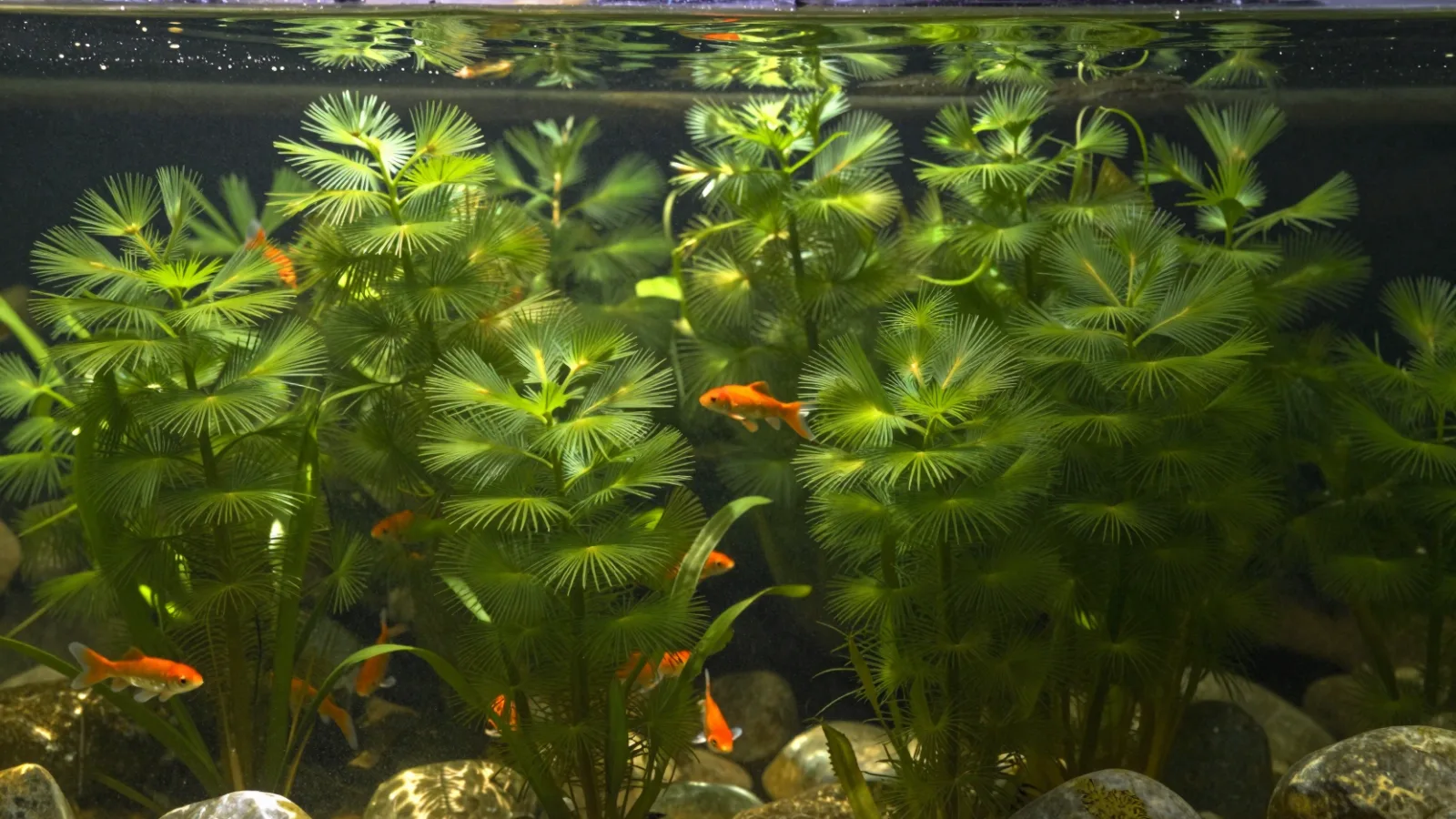
Quick answer
- Oxygenating plants grow underwater and absorb nutrients straight from the water, which helps starve algae.
- They add some oxygen by day but use it at night, so they don't replace a pump or aerator.
- Hornwort and native pondweeds are common, easy choices.
- Plant a bunch or two for every 50 to 100 square feet of pond surface.
- Avoid invasive species such as hydrilla and Brazilian elodea, which are banned in many states.
Submerged plants, often sold as "oxygenators," are the hidden workers of a healthy pond. You don't see much of them from the surface, but they compete directly with algae for nutrients, give fish places to hide and spawn, and shelter tiny creatures that wildlife feeds on.
What oxygenating plants actually do
- Absorb nutrients: they take up nitrates and phosphates directly through their leaves, the same nutrients that fuel algae blooms.
- Provide cover: fish hide among them from predators and lay eggs on them.
- Add oxygen by day: they release oxygen in daylight, but use it at night.
Because they use oxygen at night, oxygenating plants don't replace good circulation. A pump, fountain or air pump is still the reliable way to keep oxygen levels healthy, especially in warm weather. See pond pumps.
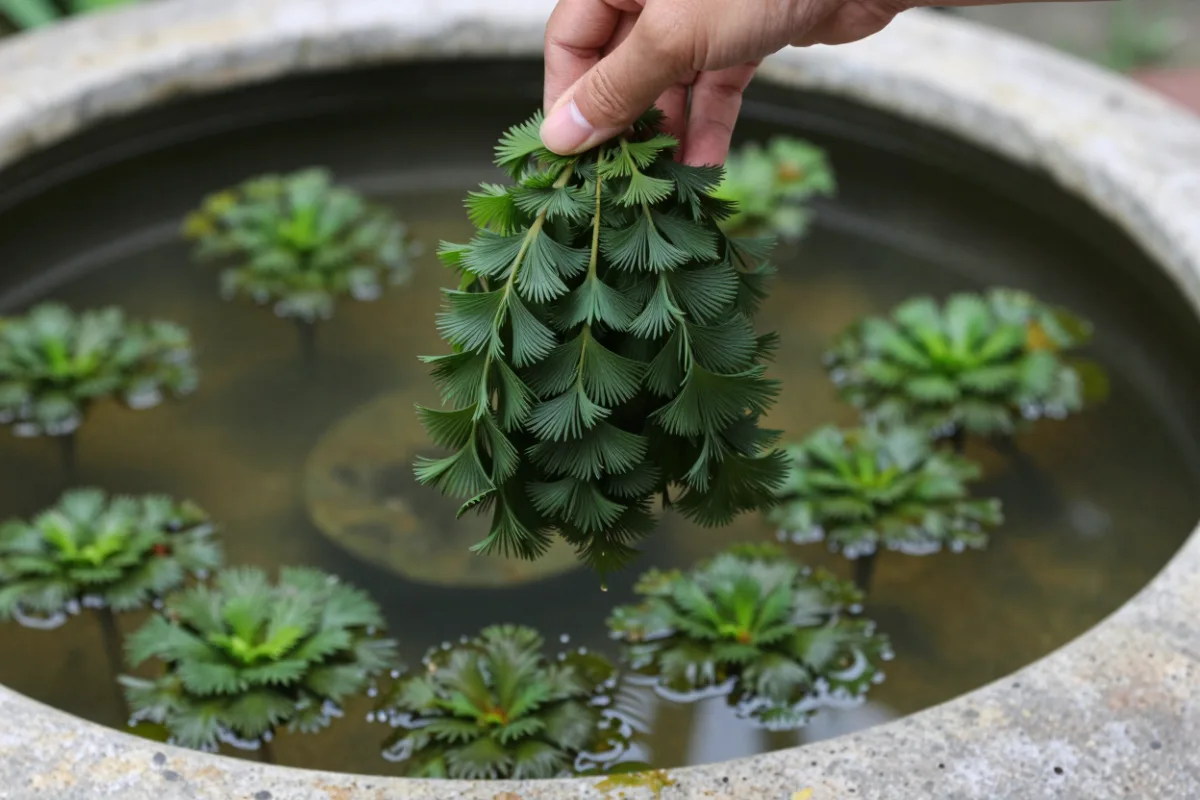
Good choices
- Hornwort (coontail): fast-growing, tolerates shade and cold, and can float freely or be weighted down. Tougher than most, so fish do less damage.
- Native pondweeds: several species suit garden ponds; ask a local aquatic nursery what's native to your area.
- Eelgrass (tape grass): long, ribbon-like leaves, best in larger ponds.
- Water starwort: fine foliage that forms soft mats in cooler water.
How many and how to plant them
- Quantity: about a bunch or two for every 50 to 100 square feet of surface area.
- Planting: push weighted bunches into aquatic baskets filled with gravel or heavy aquatic soil, or let free-floating types like hornwort drift.
- Depth: most do well 1 to 3 feet deep, where they get some light.
- Timing: plant in spring or early summer when the water is warming.
Keeping them under control
- Thin regularly: in summer, pull out handfuls when they fill more than about a third of the water.
- Leave removed plants on the edge for a few hours so creatures can crawl back in, then compost them.
- Trim back in fall so dying growth doesn't rot over winter.
Common questions
They release oxygen during the day while they photosynthesize, but they use oxygen at night like fish do. Their bigger benefits are soaking up nutrients that feed algae and giving fish cover. Moving water from a pump, fountain or aerator is the reliable way to keep oxygen levels up.
They're not essential, but they help. Even a well-filtered pond benefits from plants that compete with algae for nutrients, and fish and wildlife use them for shelter and spawning.
Goldfish and koi often nibble soft submerged plants. Tougher plants like hornwort tend to survive better, and planting more than you think you need helps.
Step 7 of 15 in the complete pond guide Next: Fish Ponds: How to Keep Healthy Fish in Your Garden Pond