How to Overwinter Tropical Pond Plants
Tropical water lilies, taro and other warm-climate pond plants won't survive a cold winter outside, but you can keep them alive indoors. Here's when to bring them in, three ways to overwinter them, and how to get them going again in spring.
By Pond.com editors Updated 2 min read
Quick answer
- Tropical pond plants need to come indoors before the water drops below about 60 to 65°F, or before the first frost.
- Hardy plants can stay in the pond; only tropicals need protecting.
- You can keep tropicals growing in a tub of water in a bright, warm room or under a grow light.
- Tropical water lilies can be stored as dormant tubers in damp sand in a cool, frost-free place.
- Floating plants like water hyacinth are often easier to replace each year, and may be banned in your state.
Tropical pond plants add bold leaves and long-lasting flowers, but they can't take cold. In most of the US, they'll die if left outside over winter. With a little effort, you can keep your favorites going until spring.
Hardy or tropical?
Only tropicals need to come in. Hardy water lilies, marginals like iris and rush, and oxygenators can stay in the pond; just trim them back and move hardy lilies to the deepest part. See how to winterize a pond.
Common tropicals include:
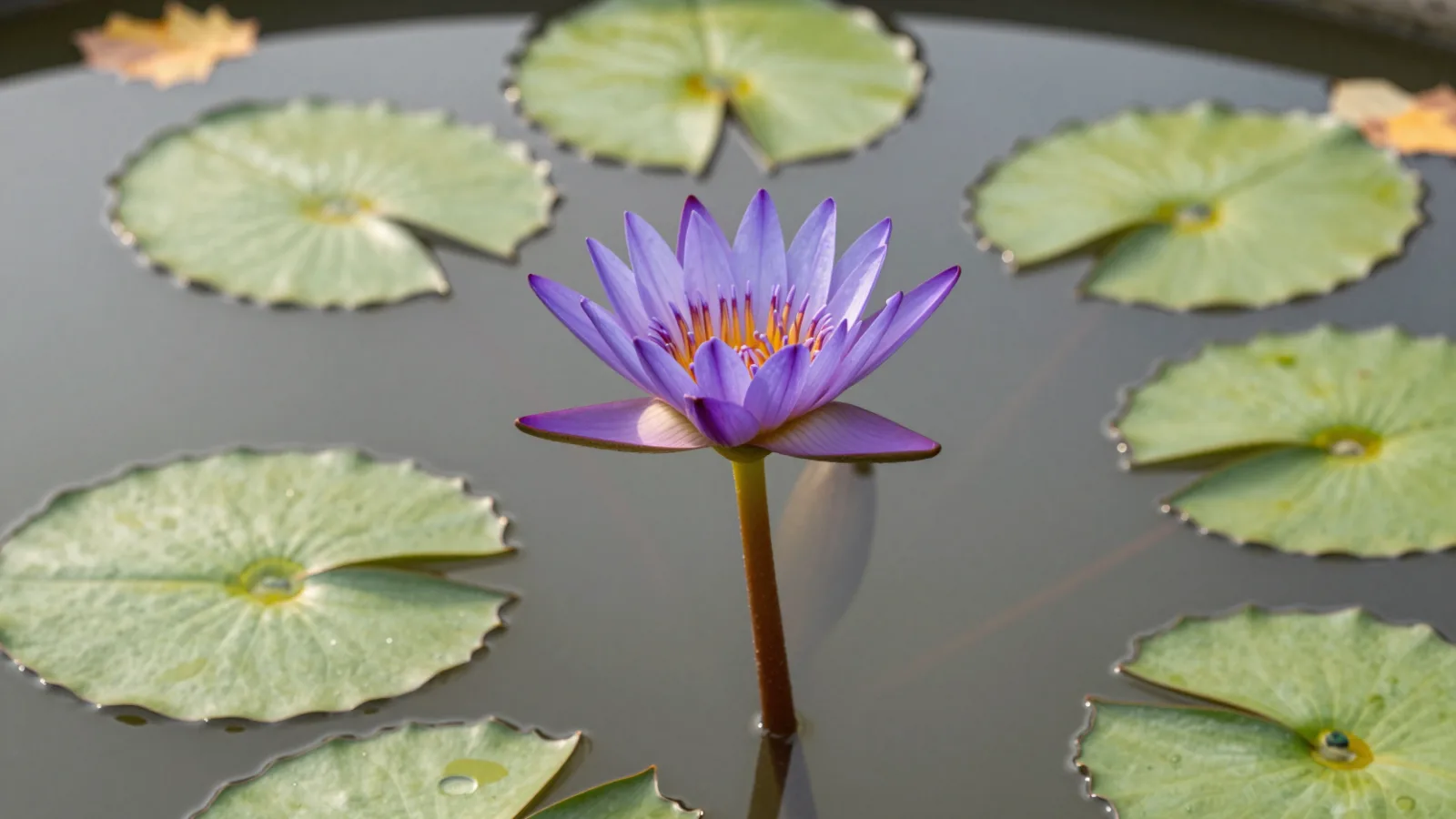
- Tropical water lilies, often with flowers held above the water
- Taro (elephant ear) and papyrus
- Water canna and umbrella palm
- Floating plants like water hyacinth and water lettuce
When to bring them in
Move tropicals indoors before the water drops below about 60 to 65°F, or before the first frost, whichever comes first. Once they're damaged by cold, they rarely recover.
Option 1: Keep them growing indoors
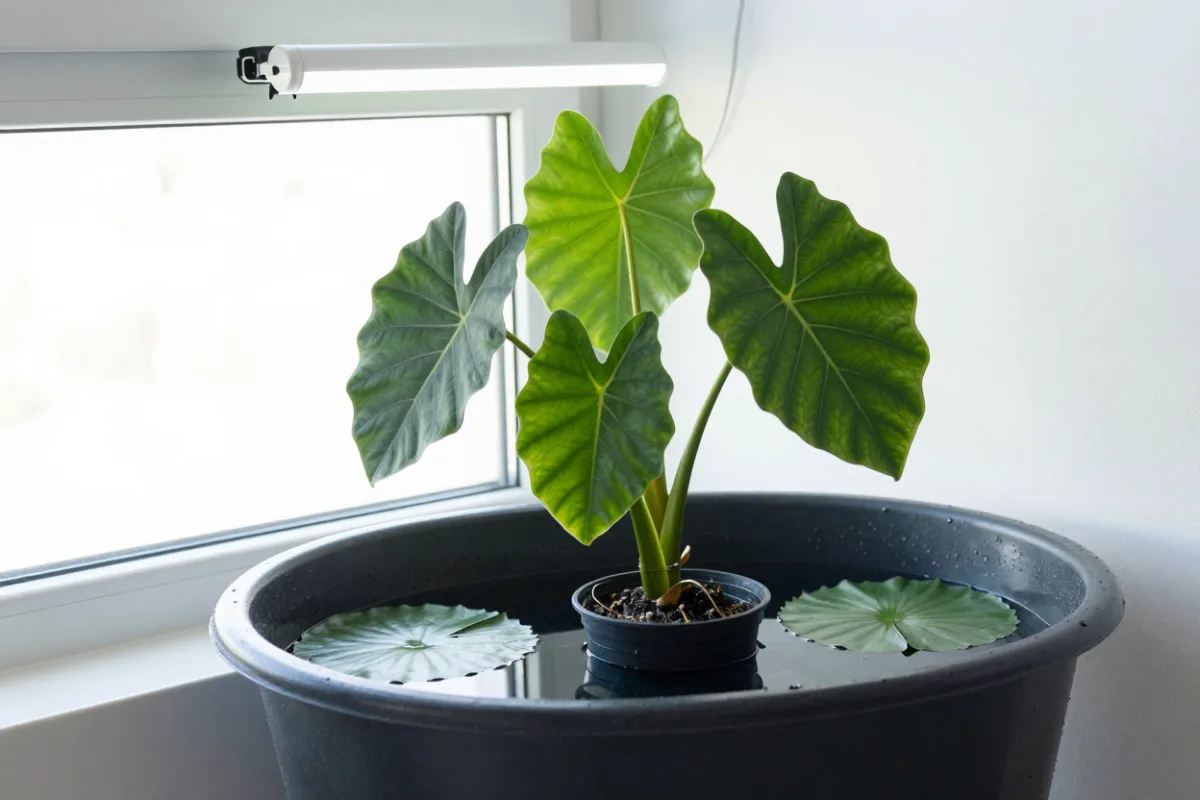
Best for taro, papyrus, canna and umbrella palm.
- Lift the pots from the pond and rinse off debris.
- Set them in a tub or bucket of water so the soil stays covered.
- Place in bright light, such as a sunny window, or under a grow light for 12 to 14 hours a day.
- Keep the room warm, ideally above 60°F.
- Top up the water and change it if it smells.
Option 2: Store tropical lily tubers
Many tropical water lilies form small, hard tubers at the base of the plant by late summer.
- Lift the lily after the first cool nights, before frost.
- Find the tubers, about the size of a walnut, and clean off the soil.
- Let them air-dry for a day or two.
- Store in a jar of damp sand or distilled water in a cool, dark, frost-free place, around 55°F.
- Check monthly and discard any that rot.
Option 3: Replace them
Floating plants and fast growers are often cheaper to buy again in spring. Check your state's rules: water hyacinth and some other floating plants are invasive and banned in parts of the US.
Spring restart
When the pond water warms to about 70°F, usually late spring, put tropicals back outside. Plant stored lily tubers in a pot of heavy soil in a warm tub until they sprout, then move them to the pond.
Common questions
Check the plant tag or ask where you bought it. Tropical water lilies often hold their flowers high above the water and may bloom at night, while hardy lilies float their flowers on the surface. Taro, papyrus, canna and water hyacinth are usually tropical.
Most garden ponds aren't heated enough. A de-icer only keeps a small hole open and doesn't warm the water, so tropicals will still die. They need water that stays warm, usually above about 65°F, to keep growing.
For expensive or favorite plants like tropical water lilies, yes. For cheaper plants that grow quickly, many pond owners simply buy new ones each spring.
Step 7 of 15 in the complete pond guide Next: Fish Ponds: How to Keep Healthy Fish in Your Garden Pond