Where to Keep Your Savings: Accounts Compared
Where you keep your savings matters almost as much as how much you save. Here's how high-yield savings accounts, money market accounts, CDs, Treasury bills and I bonds compare, which suits each goal, and how to keep your money safe while it earns more.
By Pond.com editors Updated 4 min read
Quick answer
- Match the account to when you'll need the money; the sooner you need it, the easier it should be to reach.
- High-yield savings accounts suit emergency funds and goals in the next year or two.
- CDs and Treasury bills can pay a set rate if you won't need the money for a while.
- I bonds protect savings from inflation but must be held for at least a year.
- Keep bank and credit union savings within FDIC or NCUA insurance limits, and invest only money you won't need for five years or more.
Saving money is only half the job. Where you keep it decides how much it earns, how safe it is and how easy it is to reach when you need it. Leaving savings in a checking account or a traditional savings account paying almost nothing can cost you hundreds of dollars a year.
This guide compares the main options and helps you match each one to what you're saving for. It's general information, not financial advice.
Start with when you'll need the money
The most important question is timing:
- Any day now: an emergency fund or money for upcoming bills needs to be safe and easy to reach.
- In one to five years: a car, a wedding or a down payment can earn a bit more if you lock part of it away for a set time.
- Five years or more: retirement and other long-term goals are usually better invested. See how to start investing.
Your main options
| Option | Best for | Access | Rate |
|---|---|---|---|
| High-yield savings account | Emergency fund, short-term goals | Any time | Variable |
| Money market account | Savings you also want to write checks or use a debit card from | Any time, sometimes with limits | Variable |
| Certificate of deposit (CD) | Money you won't need for a set period | Penalty to withdraw early | Fixed for the term |
| Treasury bills | Short-term savings, especially in high-tax states | Hold to maturity or sell | Fixed for the term |
| I bonds | Savings protected from inflation | Locked for 1 year | Changes every 6 months |
| Traditional savings account | Convenience at your main bank | Any time | Usually very low |
High-yield savings accounts
For most people, this is the best home for an emergency fund. Online banks and credit unions often pay many times the national average savings rate, with no fees and easy transfers. The rate can change at any time. See high-yield savings accounts explained.
Money market accounts
These work like savings accounts but may come with checks or a debit card. Rates are often similar to high-yield savings, sometimes with higher minimum balances. See money market accounts explained.
CDs
A certificate of deposit pays a fixed rate if you leave the money for a set term, from a few months to five years. You'll usually pay a penalty, often a few months' interest, to withdraw early. CDs suit money you know you won't need until a certain date.
Treasury bills and I bonds
Both are backed by the US government, and their interest is free from state and local income tax. Treasury bills pay a set return over terms of up to a year. I bonds earn a rate tied to inflation, but you can't cash them in for a year. See Treasury bills and I bonds explained.
Keep your savings safe
- Check for insurance. Banks should be FDIC-insured and credit unions NCUA-insured. Each protects up to $250,000 per depositor, per institution, per ownership category.
- Be careful with apps. Some savings apps aren't banks themselves; make sure your money is held at an insured bank.
- Spread large amounts across banks or ownership categories if you're over the insurance limit.
Organize savings by goal
It's easier to stay on track when each goal has its own place:
- Emergency fund in a high-yield savings account. See how to build an emergency fund.
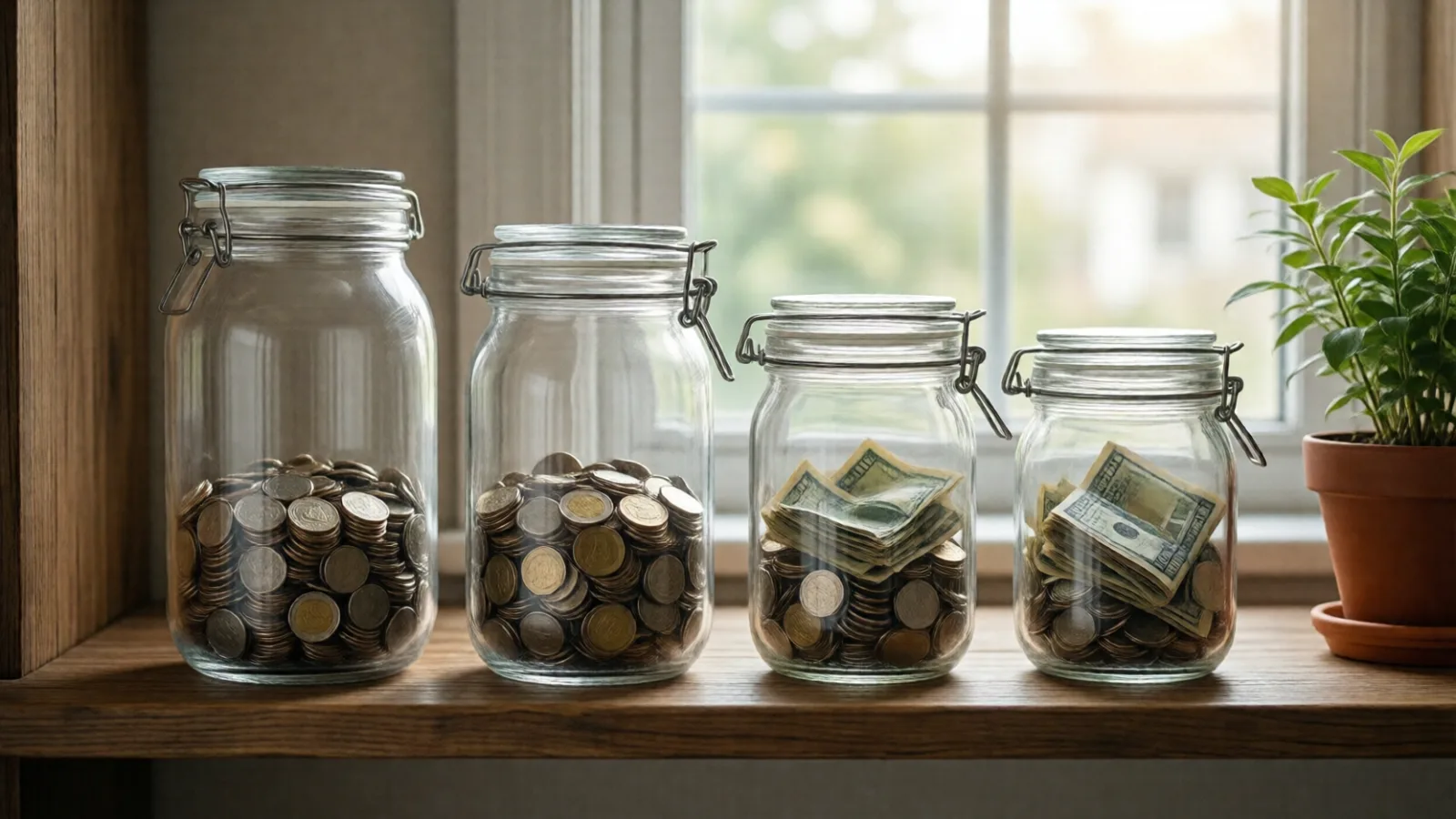
- Known future costs, like car repairs, gifts or insurance bills, in separate savings "pots." See sinking funds.
- Bigger goals a few years away in high-yield savings, CDs or Treasury bills.
- Long-term goals invested, usually in retirement accounts. See retirement accounts explained.
Common questions
Accounts at FDIC-insured banks and NCUA-insured credit unions are protected up to $250,000 per depositor, per institution, per ownership category. Treasury bills and I bonds are backed by the US government. All of these are very safe for money you need to keep.
It's better not to. Checking accounts usually pay little or no interest, and savings mixed with spending money are easier to spend by accident. A separate savings account, ideally a high-yield one, keeps it safe and earning.
Money you won't need for at least five years, such as retirement savings, is usually better invested, because investments have historically grown faster than savings over long periods. Money you need sooner should stay in safe accounts, since investments can fall in value.
It can be. Many people keep an emergency fund in one high-yield savings account and save for specific goals, like a car or vacation, in separate accounts or sub-accounts. Seeing each goal grow makes it easier to stay on track.