Kitchen Organization Ideas That Work
A well-organized kitchen makes cooking faster and cleanup easier. Here are practical ideas for decluttering, setting up zones, and organizing cabinets, drawers, the pantry and the fridge, without buying a lot of new containers.
By Pond.com editors Updated 3 min read
Quick answer
- Declutter first, removing duplicates, broken items and gadgets you never use.
- Organize by zones, keeping items near where you use them, such as pots by the stove and glasses by the sink.
- Keep everyday items in easy-to-reach spots and rarely used ones up high or in the back.
- Use drawer dividers, shelf risers and turntables to make use of space you already have.
- Group pantry foods by type, put the oldest in front, and label shelves or bins.
An organized kitchen isn't about perfect matching containers. It's about being able to find what you need, cook without hunting through cabinets, and put things away easily. These ideas work in any size kitchen and mostly use what you already have.
Start by decluttering
Take everything out of one area at a time and keep only what you use and love:
- Duplicate utensils and extra mugs
- Gadgets you haven't used in a year
- Mismatched food storage containers without lids
- Chipped dishes
- Expired food, spices and condiments
Our guide to decluttering your home, room by room has a full kitchen checklist.
Set up zones
Store things where you use them:
| Zone | What goes there |
|---|---|
| Cooking | Pots, pans, cooking utensils, oils, spices |
| Prep | Knives, cutting boards, mixing bowls, measuring cups |
| Cleaning | Dish soap, towels, trash and recycling near the sink |
| Dishes | Plates, glasses and cutlery near the dishwasher |
| Food storage | Containers, wraps and bags near the fridge |
Cabinets
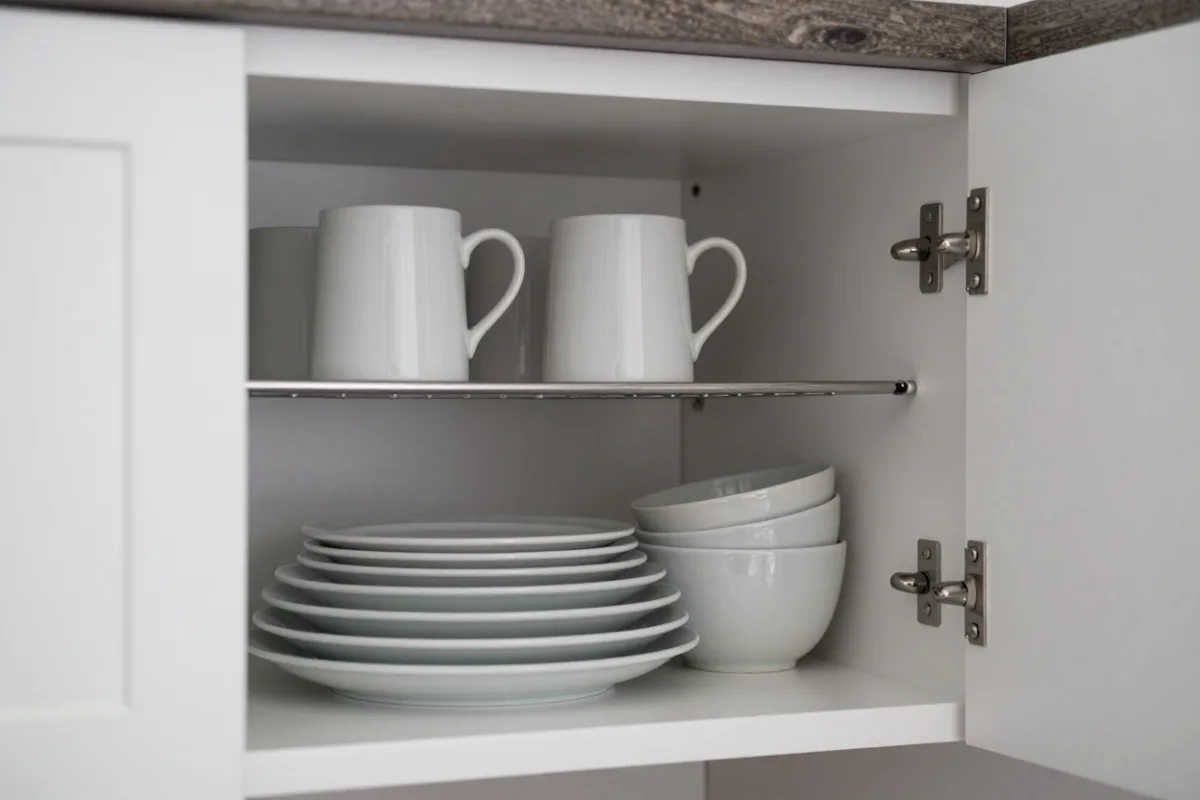
- Everyday items at waist to eye level; rarely used items up high or in the back.
- Shelf risers double the space for plates and mugs.
- Turntables in corner cabinets make everything reachable.
- Store pans vertically with a rack, so you don't unstack them every time.
- Inside cabinet doors: add hooks or racks for lids, cutting boards or measuring spoons.
Drawers
- Use dividers so utensils stay in place.
- Keep one junk drawer, and clean it out a few times a year.
- Store knives safely in a drawer insert or on a magnetic strip, not loose.
Pantry
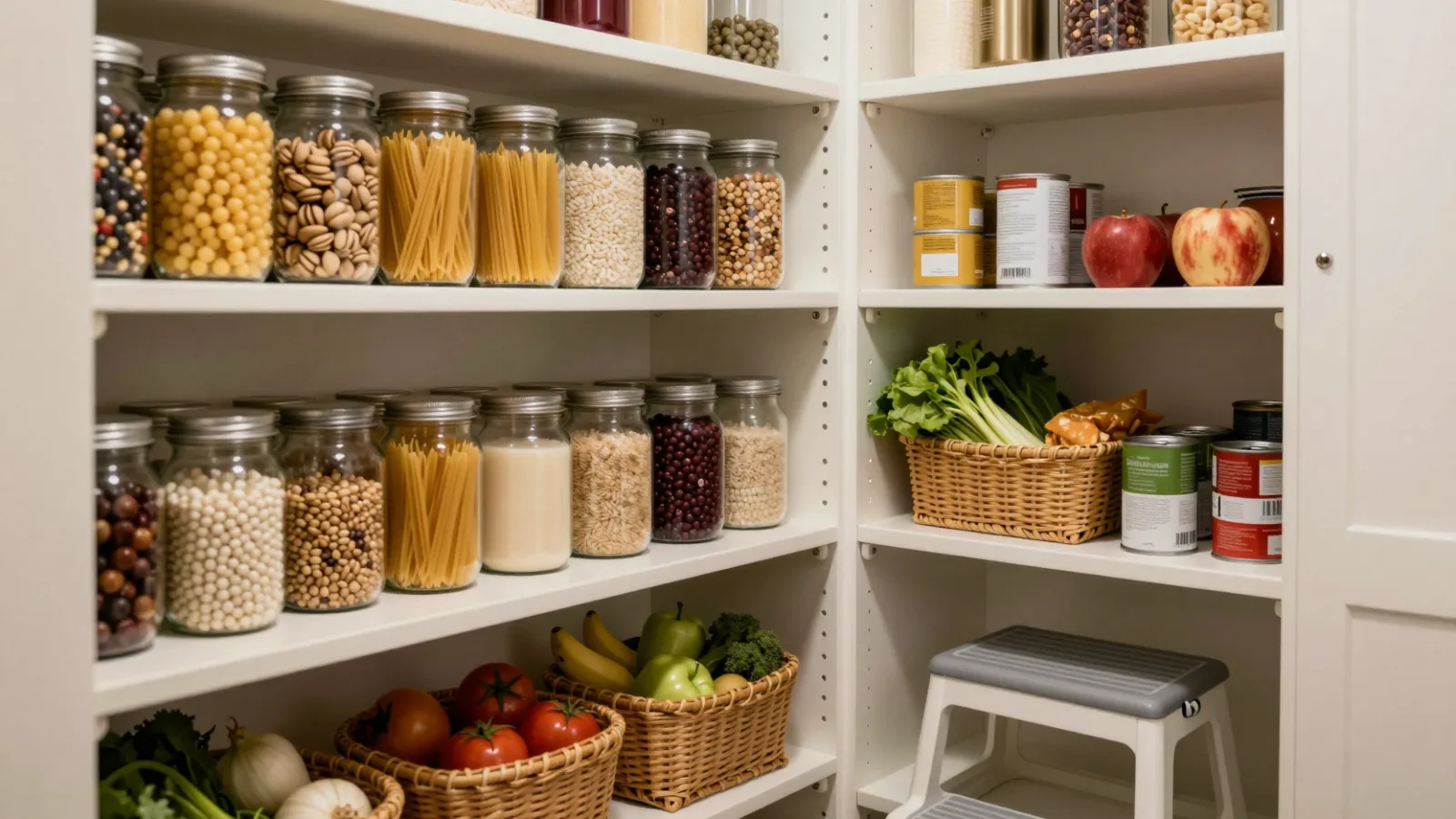
- Group by type: baking, breakfast, snacks, canned goods, pasta and grains.
- Oldest in front so food gets used before it expires.
- Bins and baskets corral small items and pull out like drawers.
- Label shelves or bins so everyone puts things back.
Fridge
- Keep similar foods together and use clear bins for small items.
- Raw meat on the bottom shelf to prevent drips onto other foods.
- Check the use-by dates each week before you shop.
Under the sink
Use a small caddy for cleaning supplies, add a tension rod to hang spray bottles, and fit a drip tray to catch leaks. Keep chemicals out of reach of children with a safety latch.
Common questions
Put items near where you use them. Pots, pans and cooking utensils near the stove; dishes and glasses near the dishwasher or sink; knives and cutting boards near your main prep space; and food storage containers near the fridge.
Use vertical space with shelf risers, wall rails and hooks, put the inside of cabinet doors to work, keep counters clear of anything you don't use daily, and store rarely used items elsewhere in the home.
No. They look nice, but grouping foods by type in bins or baskets you already own works just as well. Buy containers only once you know what you need to store.