How to Clean a Pond Without Harming Fish
Most ponds don't need a full drain and scrub. Here's how to remove sludge and debris, clean the filter and do a partial water change while keeping your fish safe and your pond's beneficial bacteria alive.
By Pond.com editors Updated 3 min read

Quick answer
- Most ponds only need a partial clean, not a full drain and scrub.
- Net out leaves and debris, and remove bottom sludge with a pond vacuum or net.
- Rinse filter media in a bucket of pond water, never tap water, to protect beneficial bacteria.
- Change no more than about 10% to 20% of the water at a time, and dechlorinate tap water.
- Clean in mild weather, ideally in spring or early fall, and avoid stressing fish in very hot or cold water.
A pond doesn't need to be spotless to be healthy. In fact, scrubbing everything clean can do more harm than good, because the film on rocks, liner and filter media is home to beneficial bacteria that break down fish waste. The goal of cleaning is to remove excess debris and sludge while keeping that living balance intact.
When to clean
- Weekly: skim floating debris and check the pump intake.
- When flow drops: rinse filter media.
- Spring and fall: a bigger partial clean to remove sludge and dead plant material.
- Every few years, if ever: a full clean-out, only when sludge is very deep or you need to repair the liner.
Clean in mild weather. Avoid big jobs in summer heat, when oxygen is low, or when the water is very cold, when fish are sluggish and stress easily.
How to do a partial clean
- Turn off the pump if you'll be working near it, and unplug any electrical equipment before putting your hands in the water.
- Remove floating debris with a skimmer net.
- Remove sludge from the bottom with a pond vacuum or a fine net, working slowly so you don't stir everything up. Leave a little behind; it's part of the ecosystem.
- Trim plants: cut back dead and yellowing leaves, and divide overgrown plants. See pond plants.
- Clean the filter in a bucket of pond water (see below).
- Top up with dechlorinated water, changing no more than about 10% to 20% of the volume.
- Turn the pump back on and check that everything is flowing.
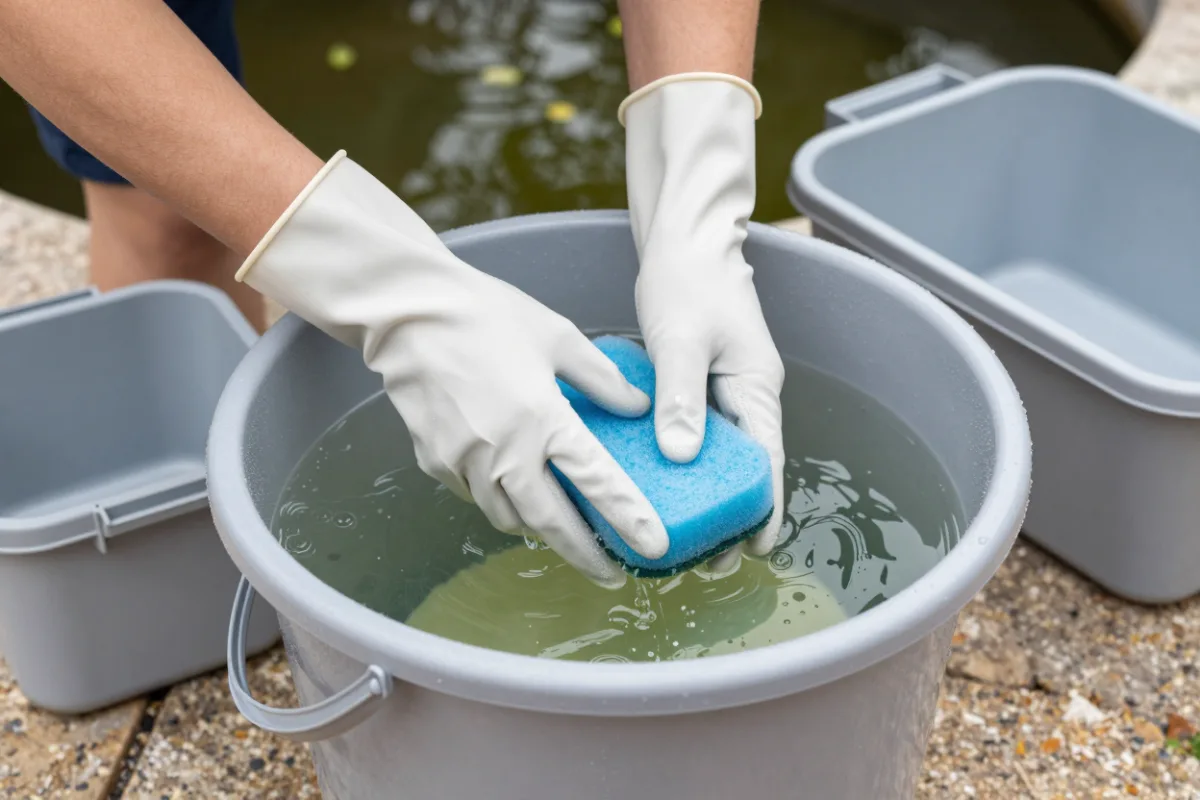
Cleaning the filter without killing bacteria
Your filter's biological media holds the bacteria that turn ammonia from fish waste into less harmful compounds. Tap water contains chlorine or chloramine, which kills them.
- Rinse sponges and media in a bucket of pond water, just enough to clear clogged debris.
- Don't replace all the media at once. If something needs replacing, do it in stages over several weeks.
- Clean the UV clarifier's quartz sleeve if it's cloudy, with the power off. See pond filters and UV clarifiers.
If you do need a full clean-out
- Prepare a holding tank or large, clean container filled with pond water, with an air pump, out of direct sun.
- Pump the pond down into the holding tank first, so fish stay in familiar water.
- Net the fish gently and move them across. Cover the tank so they can't jump out.
- Remove sludge, rinse gravel and rocks lightly with pond water or a low-pressure hose, and inspect the liner for damage.
- Refill slowly with dechlorinated water, and match the temperature as closely as possible before returning fish.
- Add beneficial bacteria to help the filter recover, and test the water for ammonia and nitrite for the next few weeks.
Common questions
Spring and early fall, when the weather is mild. Avoid big cleans in summer heat, when oxygen is low, and in very cold water, when fish are sluggish and stress easily.
Yes, and for most cleans you should leave the fish in. Draining removes the beneficial bacteria that keep water healthy and stresses fish, so only drain fully if sludge is very deep, you need to repair the liner, or water quality can't be fixed another way.
Yes, if you treat it with a pond dechlorinator that removes chlorine and chloramine, both of which harm fish and filter bacteria. Add water slowly, and avoid large changes in temperature.
A thin layer is normal. A thick layer of rotting leaves and waste releases nutrients that feed algae and can use up oxygen, especially in warm weather, so it's worth removing.
Step 13 of 15 in the complete pond guide Next: Pond Supplies: A Checklist for Every Season