
Choosing a Pond Liner & Installation
The pond liner will be one of the most important decisions one makes regarding the construction of their pond. The first question to ask is whether one wishes to design their pond around the liner or to purchase a liner that conforms to their ideal pond.
Flexible vs. Preformed
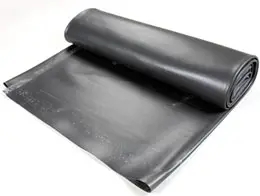
With a bit of work, a flexible pond liner can be cut to fit the shape of any pond. This is an excellent choice for those who are going for a very natural look for their fish or garden pond. Liners made of PVC (Polyvinylchloride), HDPE (High Density Polyethylene), EPDM (Ethylene Propylene Diene Monomer) and Butyl Rubber are the most common choices for flexible liners.
One may also use concrete as a sort of flexible liner. Though it will obviously be completely inflexible when it dries, a professional can lay concrete to fit any shape desired.
Preformed liners have the disadvantage of not allowing the owner to choose their own shape but sometimes this is actually desirable. It simplifies the process of digging out the pond and a preformed liner can provide years of good service. Most of these are made out of fiberglass. Remember that one must lay a layer of brick sand under the liner for it to function correctly.
Advantages & Disadvantages
Each type of pond liner has an edge in certain regards. EPDM liner, for example, is very long-lasting (able to withstand a couple of decades of use), is resistant to ultraviolet radiation and can offer excellent performance in cold climates. It is, however, expensive compared to some of the other options.
PVC is very inexpensive and is easy to use. This material conforms to the pond layout with little work and can provide about 10 years of service, in most cases. This material is not desirable for cold climates, however, and one should take this into consideration if they live in a more northern zone. Direct sunlight can also have a detrimental effect on this material.
Somewhere in between the aforementioned options is HDPE. These liners have a life expectancy of 15 years. They do not offer good performance in cold zones. They are one of the less-expensive options, however, and are generally safe for flora and fauna. The material of which these are made is famously tough.
Rubber liners, specifically Butyl Rubber, are probably what most people have in mind when they think of a liner. These are long-lasting, on the same level as EPDM and are fairly easy to work with though they are hard to fold. These liners tend to be thick and heavy. If one is installing a fish pond, make very certain that the fish will not be negatively affected by these liners. They are toxic to some animals and, therefore, may not be the best choice for those who want a koi pond.
Fiberglass has been in use for almost a century and it is famously tough. A fiberglass liner is not flexible and, therefore, the pond must be designed around the liner. For sheer durability, there are few better choices. These have the disadvantages of looking artificial and being complex to install. One must put in a layer of very compacted brick dust to accommodate these liners.
Some fiberglass liners will come with features such as planting shelves added into the design. Remember that the hole dug for the pond must support these features and that they can't be simply placed into a bowl-shaped hole which will place the weight of the water entirely on the fiberglass.
If one really wants to go all-out, a concrete liner is likely the option they'll choose. Concrete is incredibly durable and can be patched and repaired when needed. However, installing a concrete fish pond or water garden will require a professional. Installing concrete on a slope requires that additional materials be added to the concrete and is a very precision job.
Concrete ponds tend to grow more algae than other types. They are also very expensive compared to the other liner choices. Concrete may crack in cold climates and it can take sometimes weeks for the concrete to cure after it's installed. Remember that footings are required for this type of pond and that the installation will be a very time-consuming and expensive task.
Aesthetics
Flexible liners of the various plastic types described offer the most natural look. These are usually dark in color and disappear when the water is added, creating the illusion of great depth. They are less intrusive than concrete or fiberglass liners.
A fiberglass and concrete liner will be the most restrictive where shape is concerned. Though it is flexible, the rubber used for fish pond liners can be challenging to adapt to very curved and flowing designs.
Determining Size
Determining the size of the garden pond liner will require some math, alternatively the online pond liner calculator can work out the required size. One will have to purchase their liner a bit big for safety and so that there is adequate room for edging, as well.
To determine the length of the liner required, the formula is: Pond Length + (Pond Depth * 2) + Overlap
To determine the width of the liner, the formula is: Pond Width + (Pond Depth * 2) + Overlap
Remember to measure the length and width at the longest and widest parts. The Overlap provides the extra material for safety and for edging. Normally adding 4" to 6" to the Length and Width for Overlap (this is equivalent to adding 2" to 3" per side of the liner) should be enough for safety and to provide the extra material which will be placed underneath the edging.
Fish or No Fish
Fish require a greater water depth, particularly if one lives in a cold region of the country. Remember to dig out the pond to at least 3 feet deep for goldfish in a cold area of the country and to at least 4 feet for koi or larger fish. Also ensure that the chosen liner material will not be toxic to the fish.
Aquatic plants are usually placed in pots which are, in turn, placed on the plant shelves or in the bottom of the pond. If one happens to have a great deal of complex design in their pond, the more flexible liners will be much easier to install.